This program will not be offered in Summer 2026.
Ghana, Multiple
The Food Security, Community Nutrition, and Public Health in Ghana program, offered by the College of Agricultural and Life Sciences (CALS) in partnership with IAP, provides opportunities for students of diverse majors and interests to explore health and food systems of Ghana through collaboration with universities, NGOs, GOs, schools, and health organizations.
Guided by instructors whose teaching, research, and clinical practice encompasses ready-to-use-therapeutic food (RUTF) development for the home-based treatment of severe acute malnutrition (SAM) in children, public health and community nutrition within mobile primary care, and the creation of culturally responsive nutrition security tools, students will explore dietary intake and child feeding practices, nutrition interventions, and sustainable agricultural practices and policies aimed at achieving food and nutrition security. This program includes visits to hospitals and clinics and organizations such as the World Food Program and Peace Corps. Key teaching and research sites include the University of Ghana – Legon, Cocoa Research Institute, and the Center for Medicinal Plants.
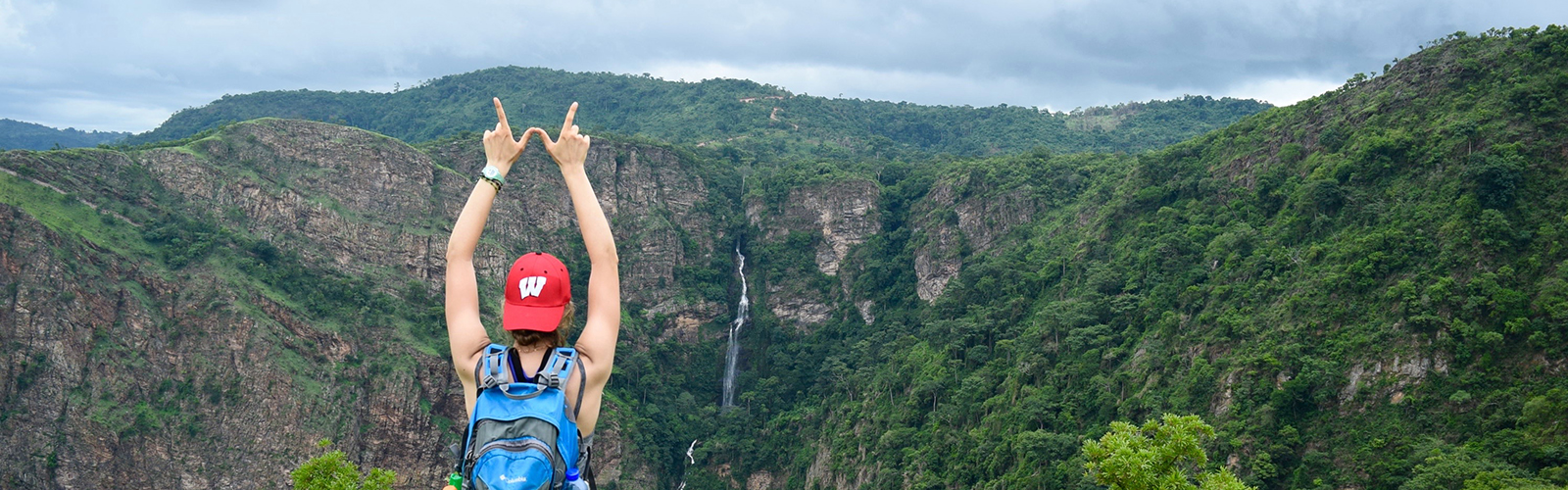
Integrating physical activity with environmental appreciation, students will also experience Ghana’s natural beauty through hikes to waterfalls, Kakum National Park canopy walks, and beach swimming.
Daily debriefings with program leaders and peers foster meaningful reflection. Travel within Ghana is via private, and chartered bus, and meals are enjoyed in restaurants and private homes, supervised by in-country partners and UW program leaders.
Why Ghana? As the first sub-Saharan African country to gain independence in 1957, Ghana offers a unique context for studying public health, nutrition, and food security. Despite increasing urbanization, 60% of Ghanaians are employed in agriculture. Did you know that in 2022, Ghana exported $1.08B in Cocoa Beans, making it the 2nd largest exporter of Cocoa Beans in the world? Our pre-departure seminar includes an exploration of cocoa and chocolate led by Dr. Yaa Klu, instructor of Food Sci 120: The Chocolate Experience.
Learning Objectives
We have overall Goals and Expectations for Study Abroad Participants, covering the personal, academic and professional aspects of study abroad. Additionally on this program, you can:
- Identify and explain multiple and complex socio-cultural, political, and economic factors that influence human health and wellness, food systems, and environmental health in Ghana.
- Describe the relationships between the components of human and environmental health.
- Practice community engagement skills by interacting with local populations during site and community visits.
- Develop and articulate a general world view and personal philosophy of integrated “health” and “wellbeing”.
- Demonstrate critical thinking and comparative perspectives from first-hand experiences in Ghana relevant to human health and environmental challenges.
Diversity & Inclusion
We are committed to providing quality study abroad and domestic study away programs for every UW-Madison student. We work strategically to identify, address, and remove barriers that may prevent participation and to provide a welcoming and inclusive environment for students. Our staff actively engages with students, faculty, and staff from diverse backgrounds and prioritizes the continuous development of our knowledge and cultural competence. We also recognize the importance of increasing access to study abroad for historically underrepresented student populations. We are committed to diversity and inclusion so that every student can engage with and understand their identity through a new lens and continue to develop and make progress on their personal, professional, and academic goals.
Sustainability
We recognize that the future of study abroad, domestic study away, and international internship programming requires a Commitment to Sustainability. We are devoted to examining, developing, and improving sustainability in all our endeavors, aligning with campus priorities and following through with UW-Madison's climate action and Resilience Commitment. Join our efforts and learn more about how to study abroad sustainably.
Request Information
Join our email list to receive program updates-including application notices, scholarship information, and more!
Eligibility
- 2.0 cumulative GPA
- Sophomore, Junior, Senior, Graduate Student
- Open to UW-Madison degree-seeking students only
- Good academic and disciplinary standing
- At the time of application and the semester prior to participation, UW-Madison students must be currently enrolled. Transfer Students to UW-Madison need to be currently enrolled at their home institution
Advising Location

Program Structure
UW Signature
Subjects
Agriculture, Environmental Studies, Gender and Women's Studies, Public Health, Community and Non-Profit Leadership
Classroom Language
English
Housing
Hotels
Program Duration
Mid May - Early June
Application Deadline(s)
Future durations will be posted at a later date.
APPLY NOW
On this field study you will observe and learn about how food and nutrition and various facets of public health and how those issues influence human and environmental well-being. While in Ghana you will visit with local educators, service providers, non-government organizations, and public and private health care providers, and food producers while becoming immersed in local culture. This immersion focuses on helping you develop a firsthand understanding of the multiple and overlapping determinants to health and wellbeing that people and communities navigate as part of their everyday lives. We’ll link each activity to some of the United Nations’ sustainable development goals.
You will gain an appreciation for how gender impacts health and wellbeing in several ways. Through involvement with Days for Girls, a non-profit focused on reproductive health you’ll learn how international organizations team to provide menstrual hygiene literacy and materials. We’ll visit a village health care provider to observe resources and programs that help young mothers and babies get off to a healthy start, visit teaching and private hospitals, a hydroelectric power generator, e-waste and urban slum sites, and a village water project.
Food and nutrition are an important part of health. You’ll visit 4-H Ghana clubs in schools to see firsthand how 4-H teaches gardening, health, and life skills. A food scientist will show us how her work in food preservation will address a growing need for food in school feeding programs. Popular visits include the Center for Research on Medicinal Plants, a cassava processing center, a cocoa research center, a commercial fish farm, and several markets to observe the challenges and practices of keeping food safe in a tropical climate. We may be able to sit in on a relevant class at the University of Ghana. Ghana was one of the first countries to host Peace Corps Volunteers and we’ll learn the role of international volunteers in developing community-based health programs. We’ll see how the World Food Program addresses the UN Sustainable Development Goals in their school feeding program.
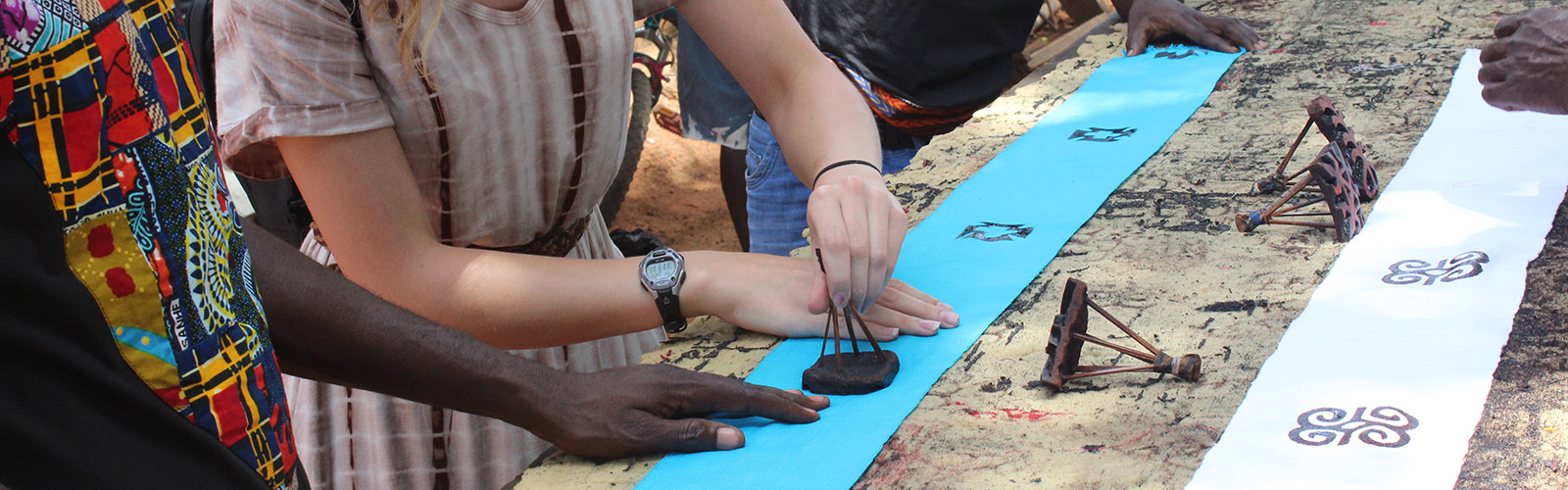
Visiting UNESCO Heritage sites at Cape Coast, making traditional arts, optional church services, and touring significant historical sites in Accra will provide a context for local culture and historical influences on health and wellbeing in this friendly country. Note that all academic and cultural activities depend on speakers’ availability and the overall schedule of the program.
This study abroad program is approved as a field experience for the Global Health Certificate. Students from all majors/departments are welcome on CALS Global Health Programs. Participants will earn two credits of Nutritional Sciences 421.
Course Equivalents
Use the links below to see a list of courses that past students have taken on this program and the UW equivalents. Note: This list only includes pre-approved courses for your program and may not be an exhaustive list of courses, departments or equivalents. Courses may not be available the semester you are abroad. You will receive instructions on the course equivalent process after acceptance. View Course Equivalents
Program Leader
Yaa Asantewaa Kafui Klu, Department of Food Science; Erika Anna, Department of Family Medicine and Community Health