This program will first be offered in Summer 2027 and the application will open on August 1st, 2026. Applications will not be reviewed until after the application deadline.
Panama, Panama City
Offered through Loop Abroad, this program is an approved affiliate program under the College of Agricultural and Life Sciences (CALS) in partnership with International Academic Programs. You will be working closely with both CALS and Loop Abroad on this program.
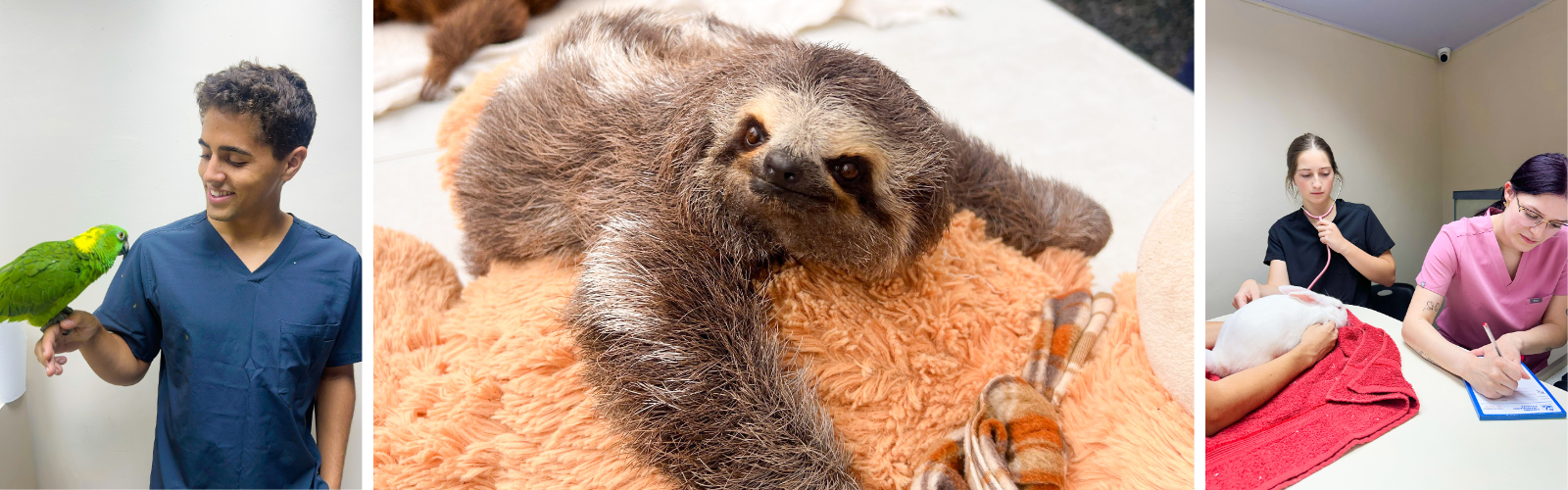
Designed for pre-veterinary students, this two-week program is based in Panama City and focuses on the treatment and process of rehabilitation of Central American wildlife. Participants will shadow and observe veterinary care at Centro Veterinario Panamá, a veterinary clinic serving wildlife, exotics, and small animals, and the Pan-American Conservation Association (APPC), a busy wildlife rehabilitation facility, which has an emphasis on the rehabilitation and release of sloths. The program participants will shadow any surgeries, rescues, or releases during the program dates and develop practical skills, including clinical examinations, handling, restraint, recognizing common diseases, and administering medical therapies.
- The care of sloths, anteaters, toucans, cats, kinkajous, monkeys, and other Central American wildlife
- Dedicated workshops to learn about and practice in the handling and restraint of small mammals, reptiles, and birds (including birds of prey)
- Chemical restraint and anesthesia of wildlife
- Types of injuries sustained by wildlife and their treatment
- The advanced medical care of wildlife, including physiotherapy, laser therapy and orthopaedic surgeries
- Completing a physical exam of a sloth
- Performing veterinary labs such as wildlife necropsies, coprological exams, and suturing techniques
- Learning about the rescue, rehabilitation, and release process, including what makes an animal fit for release back into the wild, and the behavior and welfare of wildlife in care
- Radiology and ultrasonography of wildlife and exotic species
- Daily rounds in the clinic to discuss current hospital in-patients and cases
- Surgical shadowing opportunities
In addition to learning about the animals of Latin America and their conservation and care, participants have the opportunity to explore their surroundings in their free time. Optional program activities may include learning and practicing veterinary Spanish (no prior experience required; exploring in and around Panama City, including the famous Panama Canal; an evening in the old town of Casco Viejo; visiting Portobelo National Park; full day trip to San Blas Islands to enjoy the brilliant white sand beaches and the warm blue water of Panama’s tropical archipelago; and hiking to view waterfalls in the spectacular Gamboa Rainforest.
Learning Objectives
We have overall Goals and Expectations for Study Abroad Participants, covering the personal, academic and professional aspects of study abroad. Additionally on this program, you can:
- Apply techniques in approaching, restraining and handling patients
- Apply physical examination techniques
- Understand how physical examination findings are linked with overall patient health
- Apply techniques in treatment and diagnostic sampling
- Analyze and interpret diagnostic results such as radiographs, blood analysis, cytology, and physical exam findings
- Analyze differences and similarities between host country and US clinic protocols and standards.
- Evaluate patient progress during treatment courses
- Create treatment plans for patients encountered during the course
Diversity & Inclusion
We are committed to providing quality study abroad and domestic study away programs for every UW-Madison student. We work strategically to identify, address, and remove barriers that may prevent participation and to provide a welcoming and inclusive environment for students. Our staff actively engages with students, faculty, and staff from diverse backgrounds and prioritizes the continuous development of our knowledge and cultural competence. We also recognize the importance of increasing access to study abroad for historically underrepresented student populations. We are committed to diversity and inclusion so that every student can engage with and understand their identity through a new lens and continue to develop and make progress on their personal, professional, and academic goals.
Sustainability
We recognize that the future of study abroad, domestic study away, and international internship programming requires a Commitment to Sustainability. We are devoted to examining, developing, and improving sustainability in all our endeavors, aligning with campus priorities and following through with UW-Madison's climate action and Resilience Commitment. Join our efforts and learn more about how to study abroad sustainably.
Request Information
Join our email list to receive program updates-including application notices, scholarship information, and more!
Eligibility
- 2.0 cumulative GPA
- Freshman, Sophomore, Junior, Senior
- Open to UW-Madison degree-seeking students only
- Good academic and disciplinary standing
- At the time of application and the semester prior to participation, UW-Madison students must be currently enrolled. Transfer Students to UW-Madison need to be currently enrolled at their home institution
Advising Location

Program Structure
Provider
Subjects
Veterinary medicineClassroom Language
English
Housing
Guesthouse
Program Duration
Summer: Mid-May to Late MayApplication Deadline(s)
| Summer 2027 | 1/1/2027 | Cost Details |
Future durations will be posted at a later date.
APPLY NOW
Participants will receive 3 credits of Animal Science 400 upon successful completion of the program course.
This course will give students practical experience in an exotics veterinary clinic, wildlife center, and/or animal sanctuary/shelter. Students will observe husbandry, diagnostic, and treatment techniques. When appropriate, the supervising veterinarians may also ask for assistance depending on a student’s experience and abilities. Students will have the opportunity to see how husbandry, diagnostics, and treatment techniques are adapted to the unique management challenges at the center as well as the budget constraints of the animal owners or center. Students will encounter a variety of conditions and needs, which will help build examination, diagnostic, and research skills. Students are expected to observe and support veterinarians and assist only according to the veterinarian’s judgment of patient condition and the student’s experience level.
Participants engage in observation, shadowing, and to learn about the medicine and treatment of Panamanian wildlife under the instruction of experienced veterinarian Dr. Julio Reyes. Dr. Reyes is the Medical Director of Centro Veterinario Panamá in Panama City, which sees and treats a range of animals – from companion pets to exotic animals and wildlife. Dr. Reyes is also the consulting veterinarian for APPC Panama, the Pan-American Conservation Association, which is Panama’s leading wildlife rescue organization. Since 2005, the APPC has rescued, rehabilitated and released more than 5,000 wild animals – including kinkajous, jaguars, porcupines, margays, toucans, monkeys, anteaters, and sloths. The APPC is dedicated to saving the region’s most vulnerable species, which face threats from deforestation, over-development, poaching, and the illegal pet trade.
Course Equivalents
Use the links below to see a list of courses that past students have taken on this program and the UW equivalents. Note: This list only includes pre-approved courses for your program and may not be an exhaustive list of courses, departments or equivalents. Courses may not be available the semester you are abroad. You will receive instructions on the course equivalent process after acceptance. View Course Equivalents