Attend an upcoming virtual info session!
Wednesday, September 9, 2 pm, Zoom
Register to attend
Argentina, Buenos Aires
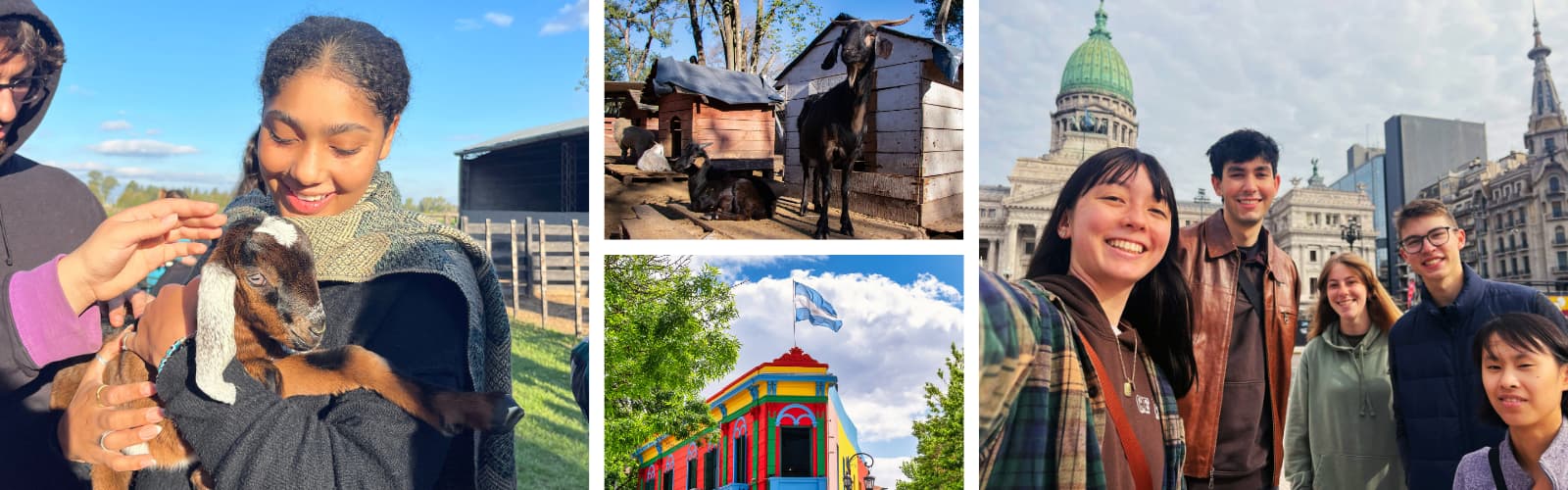
This study abroad program is designed for pre-veterinary students to gain relevant knowledge through classroom coursework and hands-on learning through volunteering, internships, directed research, and networking. Take classes on topics like animal health management, animal genetics, and veterinary Spanish and engage in volunteer days or internships at an equine shelter, agricultural school, or veterinary college. In your free time, connect with porteños and explore Buenos Aires, a multicultural city known for its dynamic cultural scene, fascinating history, electic architecture, beautiful city parks, bookstores, and passion for tango.
This program includes excursions and day trips to destinations like Salta, Jujuy, Tigre and Exaltación de la Cruz, allowing you experience other parts of Argentina.
Volunteer Opportunities
The IFSA Buenos Aires Program Center organizes non-credit bearing volunteer opportunities throughout the semester, usually as one-time activities or events. On occasion, more sustained involvement may be possible. Opportunities vary each semester. Possible opportunities include:
-
Ecoparque: Located in the former Zoo of Buenos Aires, the Ecopark is now a public park dedicated to environmental education, wildlife conservation, and sustainable landscaping, with hands-on opportunities in ecological restoration and wildlife care. Volunteers could assist in landscaping projects, planting native trees, nursery work (seeding, pruning), and supporting ecological conservation efforts. The Ecopark also has a Wildlife Veterinary Hospital in which students may aid in the care and rehabilitation of rescued wildlife, as well as participating in wildlife rescue and rehabilitation activities at the Wildlife Rescue and Rehabilitation Center.
-
CRRE Horse Rescue: CRRE Horse Rescue is a horse rescue organization located in Magdalena dedicated to rehabilitating and rehoming abused, neglected, or abandoned horses. Volunteers assist with horse rehabilitation, feeding, grooming, medical care, and daily stable management. They could also support veterinary care, help with rescue operations, and rehoming efforts. Magdalena is located approximately 40 miles southeast of Buenos Aires.
-
Horse Shelter: A horse rescue shelter dedicated to the care and rehabilitation of neglected or abandoned horses offers volunteer opportunities to support their mission. The horse shelter in located approximately 32 miles west of Buenos Aires.
-
The School of Agronomy at Universidad de Buenos Aires: The School of Agronomy of the University of Buenos Aires is one of Argentina’s leading agronomy schools. The campus is located in Buenos Aires and it offers hands-on experience in agricultural research, sustainable farming, and animal husbandry. Interns and volunteers may assist in agricultural fieldwork, crop management, research projects, and sustainable development initiatives. This community-oriented opportunity offers volunteers the chance to work on animal care and public outreach initiatives, such as animal welfare education, public health campaigns, animal vaccination drives, and assisting veterinary teams in underserved areas.
Directed Research (*Four semesters of university-level Spanish or equivalent required)
Engage in individualized field research with faculty experts on a contemporary issue of interest. Regular meetings with faculty will assist in the formation and execution of research plans, and they will guide you on how to thoughtfully and critically integrate academic research with experiential learning. You will sharpen your written and oral communication skills through the development of articulate and comprehensive research that is respectful to the sensitivities of the local culture.
If you chose to research live human subjects, live animals or another topic that is deemed by IFSA to be required to be reviewed by the Institutional Research Board (IRB) at your home institution, then you will have to file your project with your home institution’s IRB board and submit your result to IFSA. Your IFSA Enrollment Counselor will review your application materials to help determine if you must file with IRB.
Research opportunities are conducted in Spanish. For more detailed information and examples of previous student placements, contact your IFSA Enrollment Counselor.
Internships (*Four semesters of university-level Spanish or equivalent required)
IFSA internships include real-world work experience, along with developing intercultural skills and experiences that are key to personal, academic, and professional success. Expect to devote a total of 120 hours working with your host organization, with supervision from your seminar instructor, coordinated by on-site IFSA team members. In addition, interns complete the International Internship Seminar for 3 U.S. semester credit hours. Internships are not remunerated.
Your goals are carefully considered, tailoring the placement process to ensure the best possible fit. Keep in mind that final placements depend on your skills (including your Spanish language abilities), prior experience, and availability. Although every effort is made to match your placement with your preferred field or area of business, it can’t be guaranteed.
The following are examples of possible internship placements. Placement options vary from term to term.
- El Paraíso Animal: This animal sanctuary focuses on rescuing and rehabilitating animals, providing them with a safe and caring environment. Interns and volunteers may assist in daily animal care, feeding, grooming, and habitat maintenance, support rehabilitation efforts, participate in rescue missions, and help with community outreach and education on animal welfare. El Paraiso in located approximately 32 miles west of Buenos Aires.
- Fundación Vida Silvestre: Fundación Vida Silvestre is one of Argentina’s renown conservation organizations focused on protecting biodiversity and promoting sustainable practices to preserve wildlife habitats. Interns and volunteers may assist in supporting conservation projects, wildlife monitoring, habitat restoration, environmental education campaigns, and community engagement efforts to promote biodiversity protection and sustainable development.
- Peludos Buenos Aires: Peludos is an NGO dedicated to improving animal welfare by organizing sterilization and vaccination campaigns, rescuing street animals, and facilitating adoptions. Interns and volunteers may assist in animal sterilization and vaccination campaigns, help in providing care for rescued animals, support adoption events and community outreach events on responsible pet ownership and animal welfare.
- The School of Agronomy at Universidad de Buenos Aires: The School of Agronomy of the University of Buenos Aires is one of Argentina’s leading agronomy schools. The campus is located in Buenos Aires and it offers hands-on experience in agricultural research, sustainable farming, and animal husbandry. Interns and volunteers may assist in agricultural fieldwork, crop management, research projects, and sustainable development initiatives.
- Veterinary Hospital: The school’s teaching hospital provides care for animals, with a strong focus on clinical practice and research. This site could offer a hands-on clinical experience for aspiring veterinarians.
- Community Program: This program is dedicated to improving animal health and community wellbeing through outreach initiatives. Volunteers could assist in organizing community health events, participate in animal vaccination campaigns and educational workshops on pet care and zoonotic diseases.
- UBA Green Volunteers: This sustainability initiative promotes environmental stewardship and ecological conservation within the university and the community. Interns and volunteers could participate in environmental education, sustainable project development, urban gardening, community awareness campaigns, and eco-friendly animal care initiatives.
- University of Business and Social Sciences: The rural Cañuelas campus of the UCES offers hands-on experience in veterinary and agricultural sciences through its degree programs. Interns and volunteers could assist with farm animal care, livestock management, animal health monitoring, and participating in veterinary clinical practice on large animals. Assignments may vary depending on specific agreements and placement positions available within the institution. Cañuelas is approximately 40 miles southwest of Buenos Aires.
- Veterinary College: The Veterinary College is an umbrella organization of professional veterinarians who oversees veterinary practices in Buenos Aires, potentially offering internships or volunteer opportunities in private veterinary clinics. Given the chance, interns and volunteers could gain practical experience in private veterinary practices, assisting with routine exams, surgeries, diagnostics, animal care, and client communication in clinical settings, and participating in professional development activities.
Learning Objectives
We have overall Goals and Expectations for Study Abroad Participants, covering the personal, academic and professional aspects of study abroad. Additionally on this program, you can:
- Build students' knowledge and understanding of preveterinary topics
- Expose students to a variety of veterinary professional paths
- Increase students’ knowledge of host culture through community interaction
- Extend students learning to explore new perspectives and to challenge themselves, maximizing their learning in unexpected ways
- Help students feel connected to their peers, IFSA staff and others within the local community
- Be facilitated through active and engaged learning through appreciative advising
Diversity & Inclusion
We are committed to providing quality study abroad and domestic study away programs for every UW-Madison student. We work strategically to identify, address, and remove barriers that may prevent participation and to provide a welcoming and inclusive environment for students. Our staff actively engages with students, faculty, and staff from diverse backgrounds and prioritizes the continuous development of our knowledge and cultural competence. We also recognize the importance of increasing access to study abroad for historically underrepresented student populations. We are committed to diversity and inclusion so that every student can engage with and understand their identity through a new lens and continue to develop and make progress on their personal, professional, and academic goals.
Sustainability
We recognize that the future of study abroad, domestic study away, and international internship programming requires a Commitment to Sustainability. We are devoted to examining, developing, and improving sustainability in all our endeavors, aligning with campus priorities and following through with UW-Madison's climate action and Resilience Commitment. Join our efforts and learn more about how to study abroad sustainably.
Request Information
Join our email list to receive program updates-including application notices, scholarship information, and more!
Eligibility
- 2.0 cumulative GPA
- No language requirement for the general program. Four semesters of university-level Spanish or equivalent are required for internship or directed research options.
- Sophomore, Junior, Senior
- Good academic and disciplinary standing
- At the time of application and the semester prior to participation, UW-Madison students must be currently enrolled. Transfer Students to UW-Madison need to be currently enrolled at their home institution
Advising Location

Program Structure
Provider
Subjects
Veterinary MedicineClassroom Language
English, Spanish
Housing
Apartments, Local Hosts
Program Duration
Fall: Late August to Early DecemberSpring: Mid-January to Early May
Application Deadline(s)
| Spring 2026-27 | 9/18/2026 | Cost Details |
Future durations will be posted at a later date.
APPLY NOW
Students on this program take 4-5 IFSA classes for a total of 12-16 credits, selecting from topics within preveterinary medicine and across the other IFSA tracks. Classes are taught in English.
UW-Madison students are required to take at least 3 classes within the Preveterinary track. They can choose their remaining classes from within the Preveterinary track or from other tracks offered at this IFSA program location, which include Spanish language, arts and humanities, and health sciences courses.
Review the list of Preveterinary track courses.
Course Equivalents
Use the links below to see a list of courses that past students have taken on this program and the UW equivalents. Note: This list only includes pre-approved courses for your program and may not be an exhaustive list of courses, departments or equivalents. Courses may not be available the semester you are abroad. You will receive instructions on the course equivalent process after acceptance. View Course Equivalents