The study abroad program is approved as a field experience for the Global Health Certificate.
During the program, students are enrolled in International Studies 523: Culture and the Global Workplace course, an asynchronous 3-credit course you will complete while abroad with your Badger peers who are also interning around the world. The primary goal of the course is to provide students a processing space for the personal and professional cultural experiences they are having. The course is designed to complement your internship experience while encouraging you to think more critically about culture, identity, and other global issues, as well as your own experiences abroad. The course is discussion-focused (written) and includes sharing your own personal cultural reflections and engaging with your classmates regarding their own experiences. The IAP Intern Abroad team coordinates the course.
In the spring, students have the option to add 1-3 credits of directed/independent study with a UW-Madison faculty member. Students identify and set this up on their own and it must follow campus policy for directed study.
When adding a directed study or other coursework it is important to consider the many responsibilities you will have while abroad: a full-time internship, IS-523 online course, independent travel, etc. Intern Abroad staff strongly discourages enrolling in more than six credits.
Course Equivalents
Use the links below to see a list of courses that past students have taken
on this program and the UW equivalents. Note: This list only includes
pre-approved courses for your program and may not be an exhaustive list of
courses, departments or equivalents. Courses may not be available the
semester you are abroad. You will receive instructions on the course
equivalent process after acceptance.
View Course Equivalents
Location
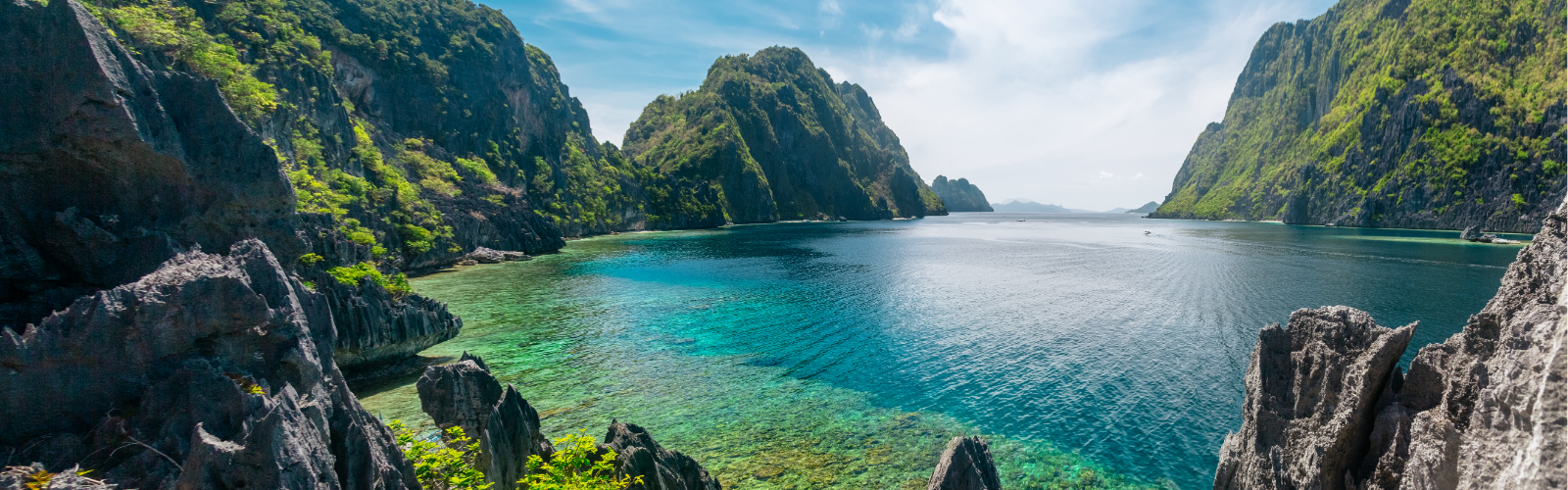
Comprised of over 7,100 islands in Southeast Asia, the Philippines is an archipelago filled with natural beauty and rich culture. Along with its biodiversity, white sandy beaches, mountain ranges, and tropical rainforests, the country’s colorful history is filled with a unique blend of cultures. Known for their warm hospitality, contagious smiles and delicious food, Filipinos truly make the Philippines a very special country to visit.
Metro Manila – Also known as the National Capital Region (NCR) of the Philippines, Metro Manila is composed of 16 cities and one municipality, whose overall population is estimated at 12 million. It is considered one of the most densely populated cities in the world. NCR is the center of culture, economy, education and government of the Philippines, which makes it the country’s hub for finance and commerce.
Alabat Island – Alabat Island is located in the province of Quezon and is one of the program’s original sites. It is located about 250 km (155 miles) southeast of Metro Manila, situated between the Pacific Ocean and Lamon Bay. From Metro Manila, Alabat Island is reachable by 6-8 hours land travel plus one hour boat ride. It is composed of three municipalities or towns: Perez in the north, Alabat in the middle and Quezon in the south. Participants who will be assigned to Alabat Island will be specifically placed in the town of Alabat, working closely with the Rural Health Unit staff.
Lubang Island – Lubang Island is located 183 km (75 miles) southwest from Metro Manila. It is separated from the main island of Mindoro and Luzon by the Verde Island passage. The island is divided into two municipalities: Lubang and Looc. The Municipality of Lubang is one of the eleven municipalities of Occidental Mindoro and it occupies the northeastern part of Lubang Island, including the island of Cabra. From Metro Manila, Lubang is reachable by a 3-hour van ride to Nasugbu Port, Batangas, followed by a 3-hour boat ride to Tilik Port, Lubang. Participants who will be assigned to Lubang will be placed within the Poblacion, working closely with the Rural Health Unit staff.
Marinduque Island – The town of Torrijos is the primary immersion site in the island province of Marinduque. Located 249 kilometers (156 miles) southeast of Manila, it can be reached via a 45-minute flight from Metro Manila, or a passenger ship from the Port of Lucena City in Quezon Province. Dubbed as the “Heart of the Philippines”, Marinduque is composed of 6 municipalities all reachable through a three-hour trip around the island via the Marinduque Circumferential Road. Participants who will be assigned in Marinduque will be specifically placed in the municipality of Torrijos, working closely with its Rural Health Unit staff.
Tablas Island – Tablas Island is about 367 km (228 miles) south of Metro Manila, situated between Tablas Strait and Sibuyan Sea near the geographic center of the Philippines. It is the largest island among the 7 islands that comprise the province of Romblon. From Metro Manila, Tablas Island is reachable by 2-3 hours bus trip to the Port of Batangas, followed by an 8-10 hours travel by passenger ship to the Port of Odiongan. It can also be reached via a one-hour plane ride from Manila. Participants who will be assigned to Tablas Island will be specifically placed in the town of Alcantara, working closely with the Rural Health Unit staff.
Tingloy Island – The radish-shaped 5th class island Municipality of Tingloy is situated about 2 nautical miles off the southwest coast of Batangas mainland, 11.2 nautical miles from Batangas City and about a 3 hour drive from Manila, including a 45 minute boat ride through ferry boats from the ports (Anilao/Talaga) of Mabini, Batangas. It is the only island municipality in the Province of Batangas and a part of the 2nd District. It consists of 15 barangays that include shoreline areas, lowland plains and valleys and rugged hills and sloping mountains. Participants assigned in Tingloy will be specifically placed in the whole municipality and will be working closely with the Rural Health Unit staff.
Housing
For the first week and towards the end of the program, participants stay in a 3-star hotel near the bustling city center of Manila. On the remote island sites, participants will find their home away from home in either in a homestay, an apartment, or dorm-type lodging. All housing is screened by CFHI Local Coordinators in the Philippines and following CFHI’s health and safety guidelines.
Going beyond mere lodging, staying in a local housing provides a unique opportunity to learn about the local culture. Accommodations include two meals per day. Accommodations may vary depending on the number and location of students throughout the month. At the welcome orientation, participants will be instructed on culture and work etiquette to have the best experience in both the home and the health settings. Accommodations include two meals per day.
Program Considerations
In a physical sense, the on-site experience may be very different from life on the UW campus. You may walk or take public transportation more than you are used to in Madison. The physical activity level will vary by program, but in general you should be prepared for extended periods of time walking, potentially on uneven terrain.
For many students, discovering and experiencing new foods is a part of the experience. It is important to consider any dietary restrictions, whether they are due to health conditions, religious beliefs, or individual needs, and look into whether you can get the foods you need locally.
How you identify yourself in Madison may differ from how people will view you on-site. Consider exploring our Identity Resources to reflect on how your identities may impact your experience. Students with disabilities should keep in mind that attitudes and laws related to disabilities vary by country, and these differences may impact the level of accommodation available in a particular location. More details are available on our page on Study Abroad for Students with Disabilities.
We encourage you to contact your Study Abroad Advisor and share your accommodation needs with us as early as possible. This will allow us to help you explore your options in advance.
Excursions and Activities
Only program activities are covered in the program fees. Additional personal excursions and weekend activities are organized and financed by each student. On-site staff can provide recommendations of local cultural sites and activities.
On-Site Support
Dr. Joel Buenaventura MD, MPH – CFHI Philippines Country Director
Dr. Buenaventura is a doctor who is involved in global health diplomacy and in issues addressing health disparities and inequities. Dr. Buenaventura graduated with honors at the University of Santo Tomas Faculty of Medicine and Surgery and completed his postgraduate internship at the University of the Philippines General Hospital. He earned a Master’s in Public Health at Boston University, doing internships at the World Health Organization Headquarters in Geneva, Switzerland and the Médecins Sans Frontières (or Doctors Without Borders) US Office in New York. He has served as a Doctor-to-the Barrio, with 7 years of grassroots experience as a rural health physician and later as a Municipal Health Officer on a remote island, serving as the only doctor in a town of approximately 10,000 people. Dr. Buenaventura currently serves as the Chief Health Program Officer for the Department of Health-Philippines, with a focus on alignment of international health cooperation to local health system needs.
Dr. Paolo Victor Medina, MD – CFHI Local Medical Director
Dr. Medina is a Community Medicine and Primary Health Care practitioner with more than five years of experience in local health systems development as the Municipal Health Officer of the island municipality of Quezon. Since 2015, he has taught at his alma mater, the University of the Philippines (UP) College of Medicine, as an Assistant Professor for Community Medicine and is presently pursuing his Master in Health Professions Education from the National Teachers Training Center for the Health Professions in UP Manila.
Ayessa Mae V. Bometivo - Local Coordinator (Metro Manila)
Ms. Bometivo graduated in 2024 with a degree of BS Public Health (Population Health track) from the University of the Philippines Manila. With a background that focuses on promoting health, prolonging life, and preventing diseases, she has become equipped with knowledge and skills in community assessment, health promotion, and policy advocacy. Upon graduation, she had previously worked as a research analyst at the University of the Philippines Manila – Healthy University Office, as well as a research assistant under the Foundation for the Advancement of Clinical Epidemiology, Inc.
Orientation
We expect you to be an active participant in preparing yourself for your study abroad experience.
Participants are required to attend any pre-departure sessions offered by CFHI.
Guidance from CFHI staff before departure:
-
1-2 pre-departure webinars with live Q&A
-
Program-specific materials with information on making travel arrangements, visa requirements, recommended immunizations, etc.
-
Virtual Pre-Departure Training (PDT)
After arrival, you will receive an on-site orientation from the local CFHI team covering safety, transportation, and other logistics.
Visa
E-Traveler registration and a visa are required. US citizens must have a US passport valid for at least six months beyond the end of the program. CFHI will provide you with visa information.
You may incur additional fees to expedite a visa application or to re-apply if your original visa application is rejected for any reason. You may also incur additional fees if your visa is delayed and you need to change your flight departure date.
E-Traveler Registration
The Philippine government requires all arriving passengers to register individually on the eTravel platform and show proof of eTravel registration upon flight check-in/boarding and arrival to the Philippines. You can register up to three days in advance of your departure for the Philippines through the provided website. Please only use this site. There should not be a fee associated with registration. Following registration, you should save a copy of the QR code, which will be required by Philippine immigration authorities.
Visa for Stays of over 30 Days
US citizens who plan to visit the Philippines for longer than 30 days will need to apply for and receive a tourist visa prior to arrival in the Philippines. You will want to apply for a "Temporary Visitor's Visa", which, for nationals of countries with a visa agreement with Philippines (includes the US), typically costs USD $30.00 for a single entry that is valid for 3 months.
Getting to Your Program
You are responsible for arranging round-trip transportation to the program site. Participants should plan to arrive on the designated arrival date (a Saturday) and depart on the designated departure date, also a Saturday. If you wish to arrive before the program start date or depart after the program end date, you must contact students@cfhi.org to determine if lodging and transport are available on your preferred dates. CFHI cannot guarantee airport pick-up or accommodations outside of designated program dates.
Participants should arrive in Manila on the program start date and will be picked up from the airport by a CFHI representative and taken to their accommodations. A welcome orientation will take place the Sunday after arrival.
Insurance
You will be enrolled in the UW System required health insurance through Cultural Insurance Services International (CISI) and the cost of the insurance coverage is included in program fees.
If you are a citizen of a country other than the United States and will remain/study in, or travel to your country of record (the location of your permanent residence), the insurance provided for you is the same as the “study away” insurance provided to U.S. citizens studying on domestic U.S. programs. You may want to explore alternative or additional international health and medical insurance that will cover your needs both while in and during any period of transit to/from your country of record. This may include participation in a national healthcare plan or coverage provided under a personal healthcare plan in your country of record. If you have questions about the coverage of the “study away” plan, please speak with your Study Abroad Advisor.
All other students participating on an international program will automatically be enrolled in Cultural Insurance Services International (CISI), the university's international health, medical and repatriation insurance policy.
Program cost information includes program fees, as well as out-of-pocket expenses with notes to help explain costs. Program fees are estimated and can be adjusted at any time. Once accepted, you will receive a cost sheet that includes confirmed program fees and additional out-of-pocket expenses. "The IAP Program Fee" and all processes and policies stated on this cost sheet apply to all participants on programs managed by International Academic Programs (IAP) and in partnership with the College of Agricultural and Life Sciences, the College of Engineering, and Wisconsin School of Business. All students participating on approved programs are all eligible to apply for scholarships administered through IAP when they meet the scholarship eligibility and selection criteria.
Summer 2027 - [June, 5 weeks] Cost Details
Summer 2027 - [July, 5 weeks] Cost Details
Financial Aid
UW–Madison students can typically use their financial aid on UW–Madison study abroad, domestic study away, and international internship programs. You need to complete a FAFSA if you want to be eligible to receive federal and state financial aid.
Beginning in 2026-27, the Office of Student Financial Aid will require all incoming undergraduate students to submit a CSS profile.
Review our financial aid and funding your experiences pages for more information.
Scholarships
Check out our scholarships page to find:
- A scholarship chart listing internal and external opportunities, with descriptions, deadlines, and amounts.
- Timelines of when UW-Madison study abroad scholarship applications open and close.
- Tips for writing scholarship essays.
Find scholarships
Program Scholarships
This scholarship list includes scholarships we know are relevant to this program. It is not an exhaustive list of all available scholarship opportunities for study abroad. Although we make our best effort to ensure the list is up-to-date, this information changes frequently, and it is the responsibility of the applicant to verify information. For additional scholarship information, please visit our scholarship page.
Affiliate
CFHI Scholarships
IAP Administered
IAP Study Abroad Scholars
Bryan Davia Scholarship
IAP WISc Scholarship
National Scholarships
Benjamin A. Gilman Int'l Scholarship Prgm
National
Social, Environmental, and Economic Development (SEED) Scholarship
Returned Student Network
View the Returned Student Network to contact a returned student
Student Quotes
"I attended the Global Health in the Philippines program in July 2024, and I found the experience extraordinary—not only did it help me grow as a future physician, but also as a person. The Philippines will always hold a special place in my heart." - Joys W.
How to Apply
First, make sure you have reviewed the information for Prospective Students on the IAP website.
There is also specific Academic Planning information that you should review.
Next login to the IAP Online Application.
Wondering when applications will open for this program?
View our application schedule.
After the Deadline
IAP completes a review of all applications to determine if students meet minimum eligibility requirements.
| Session |
Application Status |
| Summer 2027 - [June, 5 weeks] |
Apply Now
|
| Summer 2027 - [July, 5 weeks] |
Apply Now
|
Disclosure
Students Requiring Accommodations: Consult and register with the McBurney Disability Resource Center McBurney Services if you will need academic, housing, and/or other disability-related accommodations or services abroad.
International Students: Talk with International Student Services about your visa status and study abroad.
Military-Connected Students with Veteran’s Benefits: Talk with University Veteran Services about how your benefits can be used for study abroad.