USA, Baraboo
The UW Ho-Chunk House of Wellness program is a 4-week, instructor-led experiential program for UW-Madison School of Nursing (SoN) students in partnership with the Ho-Chunk Nation, the Ho-Chunk Nation’s House of Wellness, and International Academic Programs.
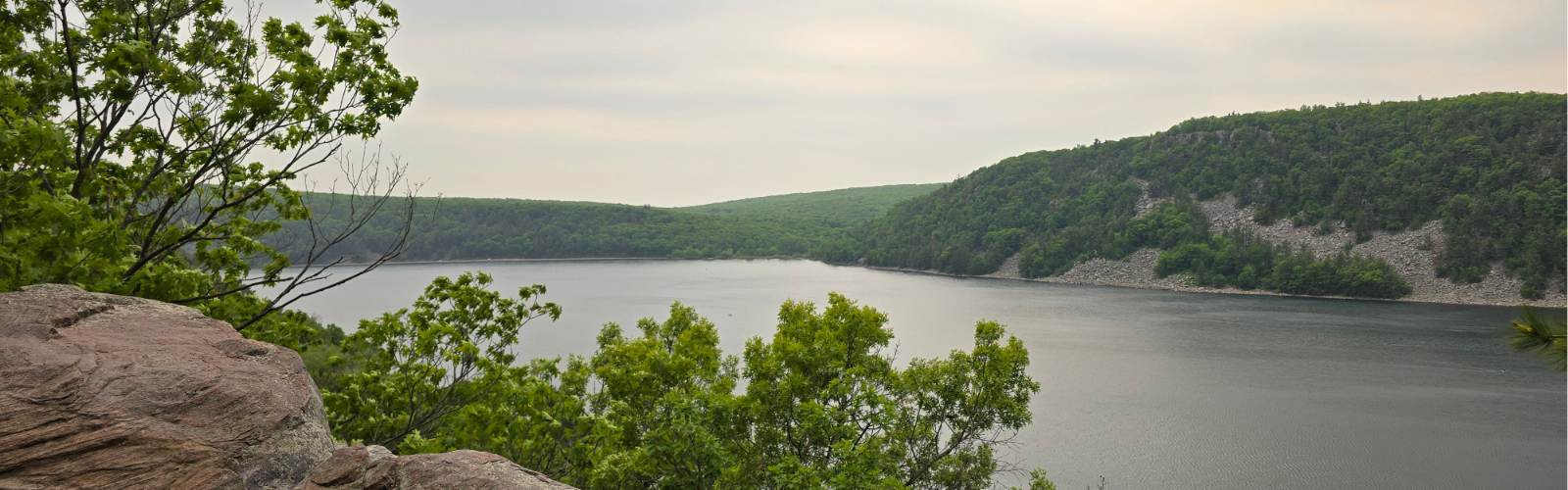
The School of Nursing's experiential learning experiences allow students to spend time 1:1 with preceptors or in small instructor-led groups of four students in both community and acute care settings caring for patient populations across the life span in multiple settings. This specific program takes place in and around Baraboo, WI, located an hour north of Madison.
Students will work with nurses in at least three areas including clinic, public health, and community health. Additionally, participants will shadow other specialties including optometry, dentistry, nutrition, and environmental services (which conducts water quality and mold inspection testing as well as food inspections). These areas are all housed in the Ho-Chunk House of Wellness.
The program also works with Baraboo EMS/Fire where students complete a ride-along shift or two. This allows for a discussion of the specific needs of the community as well as an opportunity to see the care and health related transportation needs in a rural area.
Learning Objectives
We have overall Goals and Expectations for Study Abroad Participants, covering the personal, academic and professional aspects of study abroad. Additionally on this program, you can:
- Take part in providing care to individuals, families and communities, planning, prioritizing and evaluating nursing care that is consistent with clients' needs, goals, preferences and social identities.
- Utilize strategies to promote social justice in health, and culturally congruent care while developing a global perspective to care-giving.
- Determine collaborative approach to effectively work within nursing and inter-professional teams, fostering open communication, mutual respect and shared decision-making to achieve quality individual, family, community and system care.
- Develop partnerships with individuals, family, community and systems in decision-making about care and planning for care.
- Utilize concepts related to health promotion and disease prevention based on genetics, family history, social ecological factors, and environmental exposure.
- Apply learning related to health and illness concepts, and their interrelationships among individuals, families and communities as encountered in experiential practice setting.
Diversity & Inclusion
We are committed to providing quality study abroad and domestic study away programs for every UW-Madison student. We work strategically to identify, address, and remove barriers that may prevent participation and to provide a welcoming and inclusive environment for students. Our staff actively engages with students, faculty, and staff from diverse backgrounds and prioritizes the continuous development of our knowledge and cultural competence. We also recognize the importance of increasing access to study abroad for historically underrepresented student populations. We are committed to diversity and inclusion so that every student can engage with and understand their identity through a new lens and continue to develop and make progress on their personal, professional, and academic goals.
Sustainability
We recognize that the future of study abroad, domestic study away, and international internship programming requires a Commitment to Sustainability. We are devoted to examining, developing, and improving sustainability in all our endeavors, aligning with campus priorities and following through with UW-Madison's climate action and Resilience Commitment. Join our efforts and learn more about how to study abroad sustainably.
Request Information
Join our email list to receive program updates-including application notices, scholarship information, and more!
Eligibility
- In progress course pre-requisites: N323 and N326. Successful completion of both courses is required to participate in a clinical immersion.
- Nursing cumulative GPA of at least 2.5
- 2.5 cumulative GPA
- Eligibility determined by course pre-requisites
- Open to UW-Madison degree-seeking students only
- Good academic and disciplinary standing
- At the time of application and the semester prior to participation, UW-Madison students must be currently enrolled. Transfer Students to UW-Madison need to be currently enrolled at their home institution
Advising Location

Program Structure
UW Signature
Subjects
Nursing, Indigenous StudiesClassroom Language
English
Housing
Rented Room
Program Duration
Summer: Mid-May - Early JuneTentative 2027 Dates:
May 10: Program starts at UW-Madison
May 17-June 4: Program in Baraboo, WI
Application Deadline(s)
| Summer 2027 | 2/5/2027 | Cost Details |
Future durations will be posted at a later date.
APPLY NOW
Upon successful completion of the program, you will earn 3 credits of N436: Health and Illness Concepts with Individuals, Families, and
Communities: Experiential Learning. N436 is a degree requirement in the Bachelor of Science-Nursing program, and as with all experiential learning courses in the BSN program, is graded Credit/No Credit.
Affiliate Institution(s)
Ho-Chunk House of Wellness Site
Course Equivalents
Use the links below to see a list of courses that past students have taken on this program and the UW equivalents. Note: This list only includes pre-approved courses for your program and may not be an exhaustive list of courses, departments or equivalents. Courses may not be available the semester you are abroad. You will receive instructions on the course equivalent process after acceptance. View Course Equivalents