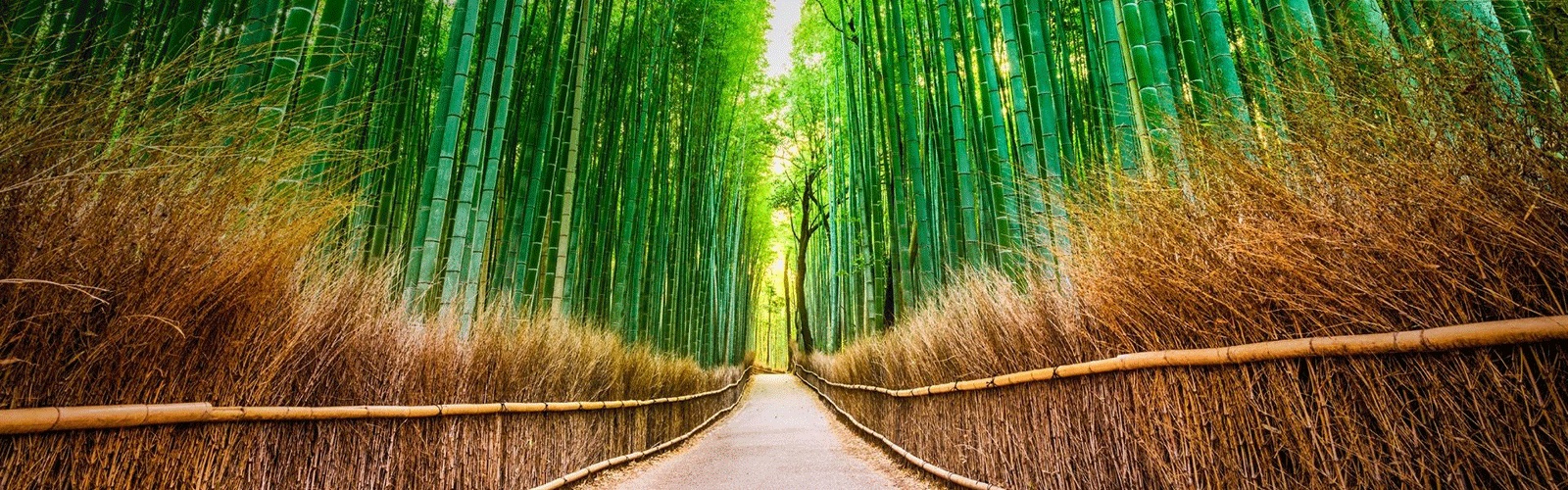
Japan, Kyoto
Limited Capacity Program: This program can accept a limited number of students each term. In the past we have received more qualified applications than available spots. Review of applicants is based on these criteria. You may only have one application per term, however, please have an alternate program in mind in the event that you are not accepted to this program.
In the age of digital media and increasing mental health challenges, spend two weeks in Kyoto, Japan’s sparkling artistic capital, exploring the connections between mental health, nature, and art. Through a series of forest walks and hands on workshops, students will examine the concept of shinrin-yoku (forest bathing) and the process of artistic creation as important aspects of preventive healthcare and wellbeing in Japan, where recent studies have demonstrated how forest bathing can improve sleep quality, mood, ability to focus, and stress levels. The five senses will serve as a grounding framework on this walking-intensive program to experience the psychological effects of immersion in forest preserves, gardens, meditative practices, and participation in the arts.
Surrounded by bamboo forests and renowned for its skilled artisans and museums, Kyoto provides the perfect context for students to practice shinrin-yoku. Local experts will lead forest walks and introduce the concept of forest bathing and its foundations in Japanese culture, concepts of healing, and medical research, inviting students to understand the various meanings assigned to the practice.The program also includes visits to the Kyoto Botanical Garden and Garden of Fine Arts, Kyoto Museum of Crafts and Design, and other museums of note. Students will participate in workshops taught by local artisans, some designated as "living treasures" by the city. Workshops may include ceramics, Zazen meditation, a tea ceremony, incense making, shibori hand dyeing, and traditional Japanese drumming.
As mentioned in the Eligibility Requirements, this program is open to students in all schools and colleges with preference given to students in the College of Agricultural and Life Sciences (CALS) and in the Global Health major/certificate, as well as students with Junior or Senior standing.
Learning Objectives
We have overall Goals and Expectations for Study Abroad Participants, covering the personal, academic and professional aspects of study abroad. Additionally on this program, you can:
- Describe sensory experiences, with reference to sight, smell, hearing, touch, and taste, encountered during forest-based health programs
- Evaluate the principles and benefits of forest bathing through engagement with scientific articles and presentations/demonstrations by local experts in Japan
- Identify the principles of Japanese aesthetics and discuss the importance of heritage crafts and material culture in shaping identity, traditions, and well-being
- Demonstrate cultural competency and respect for cultural diversity during groups activities and local engagements
Diversity & Inclusion
We are committed to providing quality study abroad and domestic study away programs for every UW-Madison student. We work strategically to identify, address, and remove barriers that may prevent participation and to provide a welcoming and inclusive environment for students. Our staff actively engages with students, faculty, and staff from diverse backgrounds and prioritizes the continuous development of our knowledge and cultural competence. We also recognize the importance of increasing access to study abroad for historically underrepresented student populations. We are committed to diversity and inclusion so that every student can engage with and understand their identity through a new lens and continue to develop and make progress on their personal, professional, and academic goals.
Sustainability
We recognize that the future of study abroad, domestic study away, and international internship programming requires a Commitment to Sustainability. We are devoted to examining, developing, and improving sustainability in all our endeavors, aligning with campus priorities and following through with UW-Madison's climate action and Resilience Commitment. Join our efforts and learn more about how to study abroad sustainably.
Request Information
Join our email list to receive program updates-including application notices, scholarship information, and more!
Eligibility
- Open to students in all schools and colleges, with preference given to students in the College of Agricultural and Life Sciences (CALS) and in the Global Health major/certificate
- Preference given to students with Junior or Senior standing
- 2.0 cumulative GPA
- Freshman, Sophomore, Junior, Senior
- Open to UW-Madison degree-seeking students only
- Good academic and disciplinary standing
- At the time of application and the semester prior to participation, UW-Madison students must be currently enrolled. Transfer Students to UW-Madison need to be currently enrolled at their home institution
Advising Location

Program Structure
UW Signature
Subjects
Global Health, Arts
Classroom Language
English
Housing
Hotels, Local Hosts
Program Duration
Winter Intersession: Early January-Mid January
Application Deadline(s)
| Winter Intersession 2026-27 | 5/1/2026 | Cost Details |
Future durations will be posted at a later date.
APPLY NOW
Students will earn two credits of Nutritional Sciences 421 upon successful completion of the two-week program in Japan. Assignments include a journal where students reflect on daily experiences and what they learned and observed, completing several assigned readings and discussion, a team project/presentation on an assigned topic, and participation in program activities.
This program fulfills the field experience requirement for the Undergraduate Certificate in Global Health.
Course Equivalents
Use the links below to see a list of courses that past students have taken on this program and the UW equivalents. Note: This list only includes pre-approved courses for your program and may not be an exhaustive list of courses, departments or equivalents. Courses may not be available the semester you are abroad. You will receive instructions on the course equivalent process after acceptance. View Course Equivalents
Program Leader
Dr. Maria Moreno and Dr. Jenny Angus