This program is offered by the College of Agricultural and Life Sciences (CALS) in partnership with International Academic Programs.
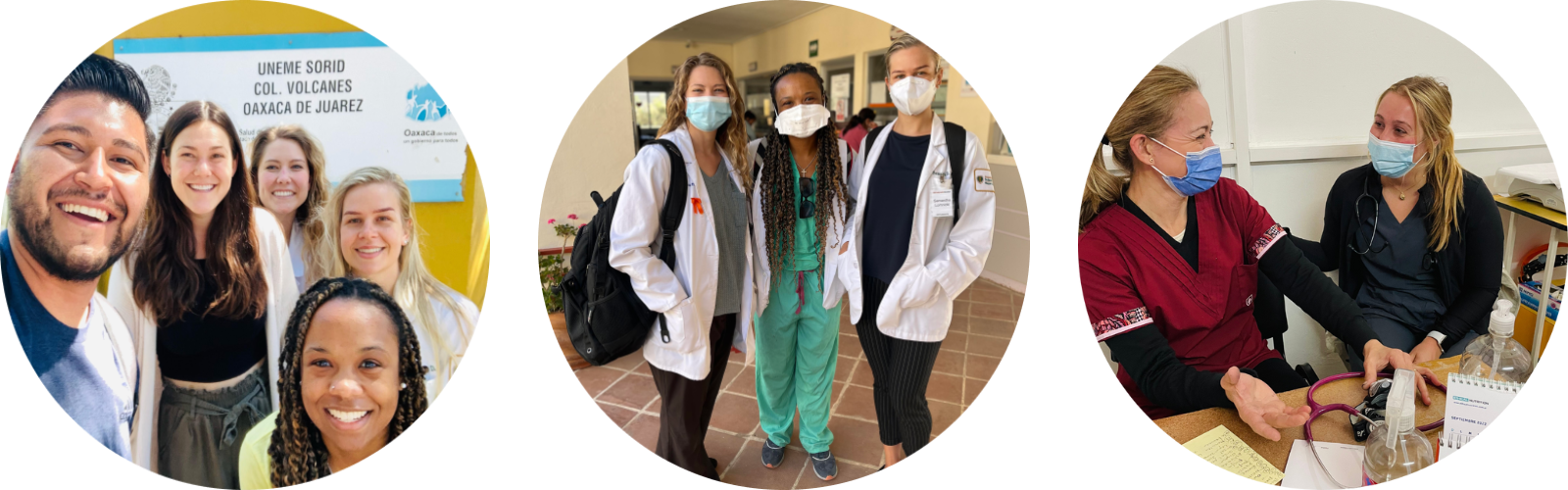
Participants in this five-week program engage in clinical rotations in the city of Oaxaca, learning about rural and community health in this region of Mexico, while also engaging in Spanish language coursework. Participants will join local healthcare professionals and learn firsthand about primary care, hospital care, and preventive medicine. Rotate at community level clinics and hospitals serving low income populations. Observe Mexico’s three-tiered insurance system, its approach to the rapidly rising burden of non-communicable diseases, and various efforts to address health inequities. This program will provide participants with unique insight and cultural competency when serving the growing Mexican immigrant population in the US and abroad. Become immersed in Oaxacan culture and language through Spanish lessons and living with a local family. In the city of Oaxaca, shop for local crafts and artisanry, explore museums and art galleries, or hang out with locals in the vibrant Zócalo or main plaza. CFHI participants may also organize weekend trips to nearby destinations, such as the Zapotec ruins of Monte Albán.
CFHI's programs are rooted in strong ethical principles. The organization offers first and foremost, a global learning opportunity, where interns learn by shadowing and talking with local experts. As such, the internship will be learning-heavy, with the opportunity to join service-delivery and project-based work only once an intern is fully oriented to the scope of the organization's work. In line with best practices in global health, clinical rotations, and public health activities in CFHI are strictly observational. Participants join the local team as learners and observers. CFHI is considered a global health ethics leader and CFHI programs uphold strict standards and comply with all local laws regarding student involvement in health settings.
The following hospitals, clinics, and public health sites are a sample of possible rotations during this program. After acceptance, students can indicate any preferences on their application. The local team does its best to accommodate learners’ preferences, based on local availability and conditions.
Primary Healthcare Centers
Located in every neighborhood, these clinics provide services including health education and promotion, diagnosis and treatment of disease, prenatal care and family planning, and primary care services including vaccinations and well-child checkups. Learn from physicians and nurses educating the local population about chronic conditions like hypertension and diabetes, and infectious diseases including dengue, malaria and tuberculosis. These facilities also offer vaccinations, pap smears, and cancer screenings.
General Government Hospital
This teaching hospital, located in the northern part of the city, receives funding from the government and civil organizations in Oaxaca. It provides primary, secondary and tertiary care at low cost. Rotate alongside Mexican medical students and learn from residents and physicians in ob/gyn, pediatrics, surgery and emergency wards. Shadow local healthcare professionals as they conduct morning rounds, general consults and follow-up treatment.
Nonprofit Rehabilitation Center
This state-of-the-art facility receives most of its funding from a national telethon campaign televised annually. It provides genetic counseling for families, as well as physical and speech therapy. It also provides services and equipment for children with disabilities from across the state of Oaxaca. Learn from orthopedic specialists, general practitioners and rehabilitation experts as they engage in patient consultations and rounds. Since its opening in 1997, this facility has provided care for over 4,000 children.
Through ethical engagement with patients and populations, articulate the relationship between health and the social determinants of health.
Demonstrate an understanding of cultural and ethical issues in working with and learning within the context of underserved populations.
Outline assets, health needs, health challenges and inequities among different communities.
Recognize the barriers to health and healthcare delivery in low-resource settings.
Demonstrate a commitment to professional behavior while working collaboratively with health care team members and being respectful of differences in knowledge, practices, and culture.
Identify the major causes of morbidity and mortality affecting the populations across the world.
Diversity & Inclusion
We are committed to providing quality study abroad and domestic study away programs for every UW-Madison student. We work strategically to identify, address, and remove barriers that may prevent participation and to provide a welcoming and inclusive environment for students. Our staff actively engages with students, faculty, and staff from diverse backgrounds and prioritizes the continuous development of our knowledge and cultural competence. We also recognize the importance of increasing access to study abroad for historically underrepresented student populations. We are committed to diversity and inclusion so that every student can engage with and understand their identity through a new lens and continue to develop and make progress on their personal, professional, and academic goals.
Sustainability
We recognize that the future of study abroad, domestic study away, and international internship programming requires a Commitment to Sustainability. We are devoted to examining, developing, and improving sustainability in all our endeavors, aligning with campus priorities and following through with UW-Madison's climate action and Resilience Commitment. Join our efforts and learn more about how to study abroad sustainably.
Request Information
Join our email list to receive program updates-including application notices, scholarship information, and more!
Eligibility
2.5 cumulative GPA
Completion of Spanish 102: Second Semester Spanish
Sophomore, Junior, Senior
Language Prerequisite(s): 2nd Semester Spanish
Open to UW-Madison degree-seeking students only
Good academic and disciplinary standing
At the time of application and the semester prior to participation, UW-Madison students must be currently enrolled. Transfer Students to UW-Madison need to be currently enrolled at their home institution
Advising Location
Program Structure
Provider
Subjects
Global Health
Classroom Language
Spanish
Housing
Local Hosts
Program Duration
Spring: Early February to mid-March (5 weeks)
Summer June Session: Early June to mid-July (5 weeks)
Summer July Session: Early July to mid-August (5 weeks)
Sessions always begin on the first Saturday of the month.
This study abroad program is approved as a field experience for the Global Health Certificate.
During the program, students are enrolled in International Studies 523: Culture and the Global Workplace course, an asynchronous 3-credit course you will complete while abroad with your Badger peers who are also interning around the world. The primary goal of the course is to provide students a processing space for the personal and professional cultural experiences they are having. The course is designed to complement your internship experience while encouraging you to think more critically about culture, identity, and other global issues, as well as your own experiences abroad. The course is discussion-focused (written) and includes sharing your own personal cultural reflections and engaging with your classmates regarding their own experiences. The IAP Intern Abroad team coordinates the course.
In the spring, students have the option to add 1-3 credits of directed/independent study with a UW-Madison faculty member. Students identify and set this up on their own and it must follow campus policy for directed study.
When adding a directed study or other coursework it is important to consider the many responsibilities you will have while abroad: a full-time internship, IS-523 online course, independent travel, etc. Intern Abroad staff strongly discourages enrolling in more than six credits.
Use the links below to see a list of courses that past students have taken
on this program and the UW equivalents. Note: This list only includes
pre-approved courses for your program and may not be an exhaustive list of
courses, departments or equivalents. Courses may not be available the
semester you are abroad. You will receive instructions on the course
equivalent process after acceptance.
View Course Equivalents
Location
The southern state of Oaxaca is the most ethnically and linguistically diverse state in Mexico. It is home to a vibrant craft and art scene, outstandingly colorful festivities amongst beautiful architecture and unique cuisine. Despite its cultural riches, Oaxaca ranks among the country’s most impoverished states, lags in its health and economic indicators, and faces a complex social environment.
Housing
Program participants will find their home away from home in carefully selected homestays, screened by CFHI Local Coordinators in Oaxaca and following CFHI’s health and safety guidelines. Nestled within the historic center of Oaxaca city, these homestays offer the perfect blend of comfort and authenticity, situated in middle-class neighborhoods with excellent access to public transportation, shops, restaurants, and cafes. In some cases, CFHI scholars share a house or a room in the same homestay with fellow program participants.
Going beyond mere lodging, these homestays provide a unique opportunity to learn about the local culture and practice Spanish skills on a daily basis in an informal setting. Accommodations include two meals per day. At the welcome orientation, participants will be instructed on culture and work etiquette to have the best experience in both homestay and the health setting.
CFHI scholars may share a house, room, and/or bathroom in the same homestay with fellow program participants. All of the homestays have electricity and running water. Beds, bedding, and bathing towels are provided.
Program Considerations
In a physical sense, the on-site experience may be very different from life on the UW campus. You may walk or take public transportation more than you are used to in Madison. The physical activity level will vary by program, but in general you should be prepared for extended periods of time walking, potentially on uneven terrain.
For many students, discovering and experiencing new foods is a part of the experience. It is important to consider any dietary restrictions, whether they are due to health conditions, religious beliefs, or individual needs, and look into whether you can get the foods you need locally.
How you identify yourself in Madison may differ from how people will view you on-site. Consider exploring our Identity Resources to reflect on how your identities may impact your experience. Students with disabilities should keep in mind that attitudes and laws related to disabilities vary by country, and these differences may impact the level of accommodation available in a particular location. More details are available on our page on Study Abroad for Students with Disabilities.
We encourage you to contact your Study Abroad Advisor and share your accommodation needs with us as early as possible. This will allow us to help you explore your options in advance.
Excursions and Activities
Only program activities are covered in the program fees. Additional personal excursions and weekend activities are organized and financed by each student. On-site staff can provide recommendations of local cultural sites and activities.
On-Site Support
CFHI Oaxaca Medical Director: Dr. Magaly Chavez The local Medical Director oversees and arranges all clinical and public health-related activities and is also responsible for coordinating healthcare and emergency services for participants as needed. They coordinate a cadre of preceptors who mentor and supervise program participants at both clinical and public/community health sites. Dr. Chavez is the expert on socioeconomic determinants of health in the region and healthcare delivery strategies in low-resource settings.
The CFHI Local Coordinators The CFHI Local Coordinators manage the logistics of housing, transportation, and cultural immersion throughout the program. They are a valuable resource for any questions related to navigating the program locale, cultural norms, and tips on planning weekend travel.
Sandra Rivera Martha Canseco
Orientation
We expect you to be an active participant in preparing yourself for your study abroad experience.
Participants are required to attend the International Internship Program's pre-departure orientation as well as any pre-departure sessions offered by CFHI.
Guidance from CFHI staff before departure
• 1-2 pre-departure webinars with live Q&A
• Program-specific materials with information on making travel arrangements, visa requirements, recommended immunizations, etc.
• Virtual Pre-Departure Training (PDT)
After arrival, you will receive an on-site orientation from the local CFHI team covering safety, transportation, and other logistics.
Visa
A visa is not required for US citizens for this program. US citizens must have a US passport valid for at least six months beyond the end of the program. Non US Passport holders may have different visa requirements. Ask your Study Abroad Advisor, if you have any questions.
Getting to Your Program
You are responsible for arranging round-trip transportation to the program site. Participants should arrive in Oaxaca, Mexico on the program start date and will be picked up from the airport by a CFHI representative and taken to their housing.
Insurance
You will be enrolled in the UW System required health insurance through Cultural Insurance Services International (CISI) and the cost of the insurance coverage is included in program fees. If you are a citizen of a country other than the United States and will remain/study in, or travel to your country of record (the location of your permanent residence), the insurance provided for you is the same as the “study away” insurance provided to U.S. citizens studying on domestic US programs. You may want to explore alternative or additional international health and medical insurance that will cover your needs both while in and during any period of transit to/from your country of record. This may include participation in a national healthcare plan or coverage provided under a personal healthcare plan in your country of record. If you have questions about the coverage of the “study away” plan, please speak with your Study Abroad Advisor.
All other students participating on an international program will automatically be enrolled in Cultural Insurance Services International (CISI), the university's international health, medical and repatriation insurance policy.
If you are a citizen of a country other than the United States and will remain/study in, or travel to your country of record (the location of your permanent residence), the insurance provided for you is the same as the “study away” insurance provided to U.S. citizens studying on domestic U.S. programs. You may want to explore alternative or additional international health and medical insurance that will cover your needs both while in and during any period of transit to/from your country of record. This may include participation in a national healthcare plan or coverage provided under a personal healthcare plan in your country of record. If you have questions about the coverage of the “study away” plan, please speak with your Study Abroad Advisor.
All other students participating on an international program will automatically be enrolled in Cultural Insurance Services International (CISI), the university's international health, medical and repatriation insurance policy.
Program cost information includes program fees, as well as out-of-pocket expenses with notes to help explain costs. Program fees are estimated and can be adjusted at any time. Once accepted, you will receive a cost sheet that includes confirmed program fees and additional out-of-pocket expenses. "The IAP Program Fee" and all processes and policies stated on this cost sheet apply to all participants on programs managed by International Academic Programs (IAP) and in partnership with the College of Agricultural and Life Sciences, the College of Engineering, and Wisconsin School of Business. All students participating on approved programs are all eligible to apply for scholarships administered through IAP when they meet the scholarship eligibility and selection criteria.
UW–Madison students can typically use their financial aid on UW–Madison study abroad, domestic study away, and international internship programs. You need to complete a FAFSA if you want to be eligible to receive federal and state financial aid.
Beginning in 2026-27, the Office of Student Financial Aid will require all incoming undergraduate students to submit a CSS profile.
This scholarship list includes scholarships we know are relevant to this program. It is not an exhaustive list of all available scholarship opportunities for study abroad. Although we make our best effort to ensure the list is up-to-date, this information changes frequently, and it is the responsibility of the applicant to verify information. For additional scholarship information, please visit our scholarship page.
Students Requiring Accommodations: Consult and register with the McBurney Disability Resource Center McBurney Services if you will need academic, housing, and/or other disability-related accommodations or services abroad.
Military-Connected Students with Veteran’s Benefits: Talk with University Veteran Services about how your benefits can be used for study abroad.
This program is offered by the College of Agricultural and Life Sciences. We have a team that works with each program. Each member of this program team is able to help students with different kinds of questions. Visit the advising webpage to learn how to schedule an appointment.
Enrollment Manager
For questions on application advising, program eligibility, course equivalency request process, grade processing.
The U.S. Department of State's Benjamin A. Gilman Internatonal Scholarship is a grant program that enables students of limited financial means to study or intern abroad, thereby gaining skills critical to our national security and economic competitiveness. The Gilman Scholarship Program is open to U.S. citizen undergraduate students who are receiving Federal Pell Grant funding at a two-year or four-year college or university to participate in study and intern abroad programs worldwide.
Award Amount
Varies (up to $5,000)
Eligibility Criteria
Scholarships available for undergraduate students who receive federal Pell Grant funding. Scholarships up to $5,000 for a semester/year in addition to a possible $3,000 Critical Need Language Supplement.
The Gilman Scholarship Program aims to support a diverse range of students who have been traditionally under-represented in study abroad, including but not limited to: 1. Students with high financial need 2. Students studying in non-traditional countries, especially those outside of Western Europe, Australia and New Zealand (Note: Students may not study in a country currently on the Department of State's travel warning list) 3. Students with diverse ethnic backgrounds 4. All recipients are required to carry out a Follow-on Service Project that promotes international education and the Gilman Scholarship Program at the students' home institution or in their home community.
All applicants are strongly encouraged to contact their Study Abroad Advisor for assistance with the application essays.
Corinne Jeannine Schillings Foundation
Description
The Foundation supports Silver or Gold Award Girl Scouts undergrads who plan to study abroad, regardless of their major/minor. It is not necessary to be an Academic Scholarship recipient to apply; nor are Academic Scholarship recipients excluded from applying. Study abroad may occur during first/second/summer semester, or the full academic year.
Award Amount
$1000
Eligibility Criteria
Provide proof verifying receipt of the Silver and/or Gold Award. Submit a letter of recommendation from a Girl Scout volunteer or staff member who is not a relative. The letter of recommendation MUST be written within the past six months, specifically for this scholarship. Provide proof of acceptance to study in an accredited “study abroad” program. Show proof that the cumulative grade point is at least a “B”. ----------------------- How to Apply
Follow instructions on website for application details
Fund for Education Abroad
Description
The FEA is committed to increasing the opportunities for dedicated American students to participate in high-quality, rigorous education abroad programs by reducing financial restrictions through the provision of grants and scholarships. This scholarship is great for students who are early in the planning process of their study abroad experience as the deadline is early.
Award Amount
Varies
Eligibility Criteria
1. Must be a U.S. citizen or permanent resident of the U.S. 2. Must plan to study abroad for a minimum of 4 weeks in country 3. Is committed to supporting education abroad in his/her campus community through work with the FEA and his/her campus education abroad staff upon return
How to Apply
For more information and to apply, visit the FEA website.
Going Abroad Scholarship
Description
Our mission at Going is to help people travel and experience the world. Since 2017, we've helped young travelers get out there and get going. Twice a year, two outstanding students will win $1500 towards their study abroad programs. Students must be U.S. citizens or residents enrolled full-time at an accredited institution of higher learning.
Award Amount
$1,500
Eligibility Criteria
Students must be U.S. citizens or residents enrolled full-time at an accredited institution of higher learning. How to Apply
Phi Kappa Phi Study Abroad Grants are designed to help support undergraduates as they seek knowledge and experience in their academic fields by studying abroad. Fifty $1,000 grants are awarded each year. Students do not have to be a member of Phi Kappa Phi to apply.
Award Amount
$1,000
Eligibility Criteria
1. The competition is open to Phi Kappa Phi members and nonmembers in all fields of study. 2. You must be enrolled as an undergraduate student at an institiution that has an active Phi Kappa Phi chapter. 4. You must have a cumulative grade point average (GPA) of at least a 3.75 on a 4.0 scale (3.74 GPA does not qualify). 5. You must be accepted into an accredited study abroad program before the date provided and provide the letter of acceptance as part of your application. 6. Your study abroad plan should relate directly to your academic preparation, potential career choice, or commitment to the welfare of others.
Description
This scholarship is available to degree-seeking UW-Madison undergraduate students studying abroad on any UW-Madison study abroad program. Preferences for this scholarship include a minimum 2.75 cumulative GPA, financial need, first generation college student, and first time abroad.
The Bryan Davia Scholarship was created in his honor to commemorate his life and to continue to share his gift of enriching the lives of everyone around him. As someone who loved to explore the world and everything life had to offer, Bryan would want nothing more than to help others do the same. Bryan was a compassionate, outgoing, hard working alumni of UW-Madison who cherished his time studying abroad in Barcelona. During his time abroad, Bryan set out to discover everything his new home had to offer. Bryan possessed the ability to extract the energy of a city through the exploration of its music, nightlife, and food allowing him to fully integrate himself within his environment and it’s culture. Bryan understood the value of knowledge gained from experiences and social interactions, rather than just in a classroom. We hope the recipient of this scholarship shares his devotion to balancing hard work with an unrelenting desire to explore, discover, and enjoy every moment in their new city.
This scholarship is available to UW-Madison degree-seeking undergraduates or graduates studying abroad on a UW-Madison IAP program, in partnership with CALS, Engineering, and Business, for a semester or longer. There is a preference for academic year long programs, and those in STEM fields.
This award is made possible through the generous donation of Mary and Wilbert DuPont. It is their wish to help current UW-Madison students study abroad as they strongly believe the experience to be fulfilling and a factor in leading an engaged, positive and successful life.
Award Amount
Varies
How to Apply
This scholarship is an auto-match application. Students who submit an application for the IAP Study Abroad Conditional Application in the Wisconsin Scholarship Hub (WiSH) will be automatically considered if they meet the eligibility criteria.
Sarah Perry Fund for International Study
Description This funding comes from Sarah Perry, who having studied abroad for a year, wishes to support the same opportunity for students. Recipients may attend the University’s Approved Study Abroad Program of their choice (of any duration, international location, or subject matter), but may lack the necessary financial resources to do so.Award Amount
$5000
How to Apply
This scholarship is an auto-match application. Students who submit an application for the IAP Study Abroad Conditional Application in the Wisconsin Scholarship Hub (WiSH) will be automatically considered if they meet the eligibility criteria.
Study Abroad Alumni & Friends Scholarship
Description
This scholarship is available to degree-seeking UW-Madison students participating on an IAP study abroad program. This award is made possible through generous donations from UW-Madison alumni and friends of study abroad programs. These donors value the benefits of study abroad and are committed to making this opportunity available to UW-Madison students.
Award Amount
Varies
Eligibility Criteria
This scholarship is available to degree-seeking UW-Madison students participating on an IAP study abroad program.
How to Apply
This scholarship is an auto-match application. Students who submit an application for the IAP Study Abroad Conditional Application in the Wisconsin Scholarship Hub (WiSH) will be automatically considered if they meet the eligibility criteria.
IAP Study Abroad Scholars
Description
This competitive scholarship provides students with financial awards starting at $1,500 towards the eligible study abroad program of your choice, and the chance to share your experience with the UW-Madison community upon return. Students attending any program, except the funded Global Gateway programs, in IAP, CALS, ENGR, or WSB are encouraged to apply to become a Study Abroad Scholar. Please read full scholarship details, including eligibility requirements, and considerations on the Study Abroad Scholars page.
CALS majors must apply for Study Abroad Scholars to be considered for CALS donor scholarships. Award Amount
$1,500-$8,000
Eligibility Criteria
In order to be considered for the Study Abroad Scholars scholarship for this application round, an applicant must:
Be in the process of applying, or have already applied, to an IAP study abroad program (UW Global Gateway Programs are not eligible)
Be a full-time, degree-seeking undergraduate UW-Madison student
Academic merit and financial need will be considered
Submit completed application materials online by the posted deadline
UW Global Gateway Fellowships for Semester and Year-long Study Abroad are designed to provide undergraduate students the access to the UW-Madison approved semester or year-long study abroad program of their choice, including the semester-long domestic study away program, UW Wisconsin in Washington, DC Internship Program, which best meets their academic and professional goals.
The Global Gateway Initiative is based on the following values:
Global competency and experience is necessary to succeed in today’s world.
Global learning continues throughout a student’s career at UW-Madison, both on campus and away.
Financial barriers should not prevent access to these opportunities.
This prestigious scholarship was established by International Academic Programs, in partnership with the Office of Student Financial Aid, to introduce students to the issues of globalization and prepare students for success in an increasingly interconnected world.
Description
IAP will provide a guaranteed $1000 scholarship to students applying to the Benjamin A. Gilman International Scholarship for the first time and meet the Gilman's scholarship eligibility requirements and application deadlines.
Students can only receive the IAP Gilman Incentive one time in their academic career. No additional application to IAP is needed and our staff will notify recipients after the Gilman scholarship deadline. Award Amount
$1000
How to Apply
For more information and to apply, visit the Benjamin A. Gilman International Scholarship website. No additional application is needed for the IAP Gilman Incentive award. Students can only receive the IAP Gilman Incentive one time.
IAP WISc Scholarship
Description
This scholarship was established by International Academic Programs (IAP) to assist undergraduate student participants in the Wisconsin International Scholars (WISc) Program with building their global competence and citizenship skills, which is the core goal of the WISc Program. Each WISc Scholar is eligible to receive scholarships as follows:
1) 1 scholarship of $2500 toward participation on a short-term study abroad program duration (winter intersession, spring break, or summer), and
2) 1 scholarship of $4000 toward participation on a semester program OR 1 $6000 towards a year long program.
These scholarships can be used for students attending any approved UW-Madison study abroad program.
Award Amount
$2500-$6000
Eligibility Criteria
Eligible for student participants of the Wisconsin International Scholars (WISc) Program at UW-Madison.
Students must have their primary academic program in CALS are eligible to apply for scholarships specifically for CALS majors. Students must apply for the Study Abroad Scholars scholarship through IAP to be considered for these awards. Students must have also completed/submitted their study abroad application in order to be considered for a CALS study abroad scholarship.
Students who are completing the Global Health Certificate, but whose majors are outside of CALS (such as L&S) are not eligible.
Award Amount
Varies ($1000-$2500)
Eligibility Criteria
Students must have their primary academic program in CALS to be eligible to apply. Students who are completing the Global Health Certificate, but whose majors are outside of CALS (such as L&S) are not eligible. Students must have also completed/submitted their study abroad application in order to be considered for a CALS scholarship.
History Department Global Perspectives Scholarship
Description
History majors at UW-Madison are eager to study and intern abroad and bring what they learn in the classroom to life. The Department of History’s Global Perspectives Scholarship hopes to make this possible for History Majors and those pursuing a Certificate in History. This scholarship provides students with financial awards starting with $1500 towards short term study abroad and intern abroad programs, $3000 towards semester programs, and $4000 towards year-long programs. The scholarship can be used toward the eligible study or intern abroad program of your choice. Award Amount
$1500-$4000
Eligibility Criteria
To be considered for the Department of History Global Perspective Scholarship, an applicant must be: 1. a full-time, degree-seeking undergraduate student at UW-Madison in good academic and disciplinary standing 2. a History Major or pursuing a Certificate in History 3. Be in the process of applying, or have already applied, to a UW-Madison Study or Intern Abroad program for Summer, Fall, Winter Intersession Spring, or Academic Year. International Internship participants must be enrolled in the Worldwide Internship Program (WIP) online course. Additional consideration will be given to:
-Members of traditionally underrepresented groups in higher education: African American, Hispanic/Latinx, American Indian, and Southeast Asian (i.e., Cambodian, Hmong, Laotian, Vietnamese) -Students with financial need (EFC of $12,000 or lower preferred) -Students from socioeconomically disadvantaged backgrounds (educational or social disadvantage, such as coming from a low-income family, an underserved rural or farming community, attending a school with a limited college preparatory curriculum, or other family circumstances that have affected your educational opportunities) -First generation college students -Students traveling abroad for the first time -Additional funding may be available for students completing internships in Africa while enrolled in the Worldwide Internship Program (WIP).
How to Apply
This scholarship is an auto-match application. Students who submit an application for the IAP Study Abroad Conditional Application in the Wisconsin Scholarship Hub (WiSH) will be automatically considered if they meet the eligibility criteria.
CFHI Scholarships
Description
Students participating on a CFHI study abroad program are eligible to apply for CFHI scholarships. Award Amount
Varies
Social, Environmental, and Economic Development (SEED) Scholarship
Description
SEED stands for Social, Environmental and Economic Development. The Authentica SEED Scholarship is a $1,500 study abroad sustainability scholarship — $1,200 toward your program cost and a further $300 once you submit a post-program report on your project — awarded twice a year to a student who turns a real observation abroad into a practical, SDG-aligned idea. It is open to students worldwide, with any program or provider — no application fee and no minimum GPA. Award Amount
$1500 $1,200 applied toward your program cost · $300 released once you submit your post-program repor
How to Apply
For more information and to apply, visit the scholarship website.