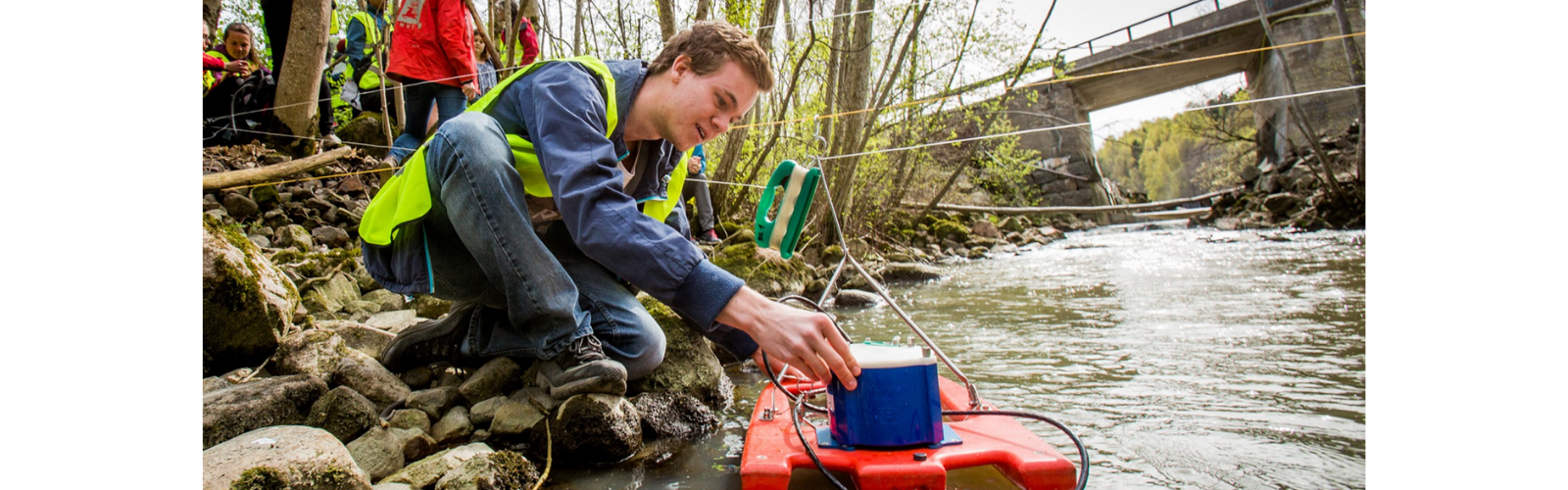
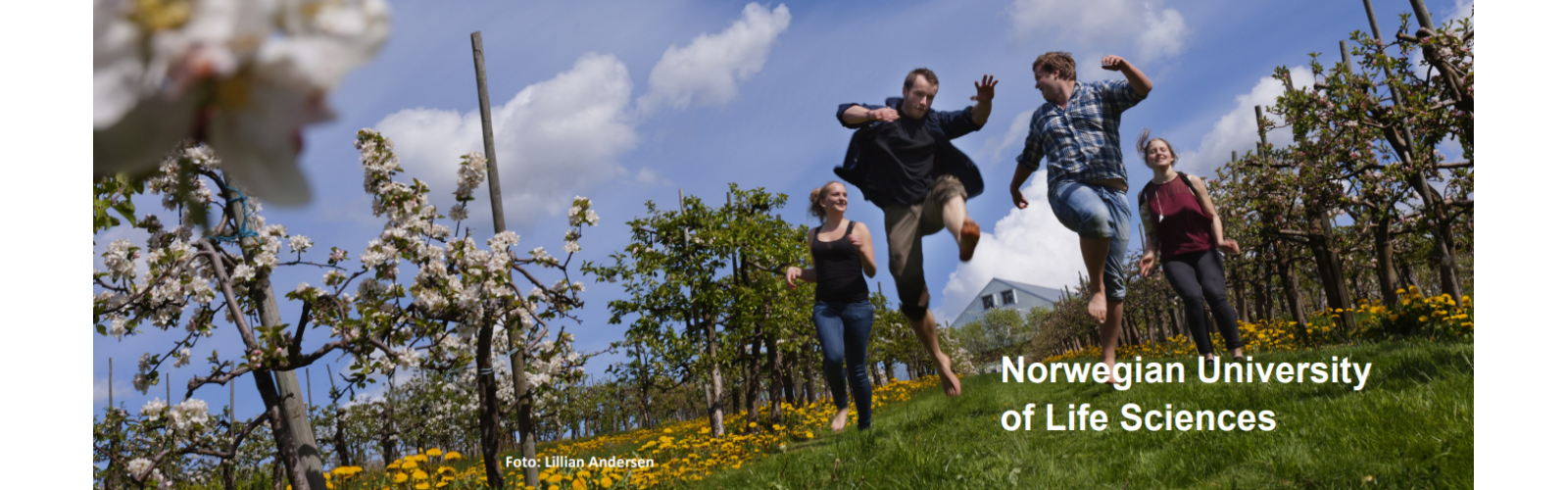
Students on this program take classes (minimum of 30 ECTS credits per semester) alongside local students and other international students. Classes are taught by NMBU instructors.
The academic year at NMBU is organized into two semesters, known as "parallel periods." Each parallel period is preceded by an intensive three-week block in August and in January. It is not mandatory to sign up for a course in the 3-week intensive Aug/Jan blocks. You can meet the full-time studies requirement (30 ECTS/semester) without the blocks and only courses in the Spring parallel/Autumn parallel. However, you are welcome to participate in the blocks as well. Parallels are considered the main part of the semester, during which you will take several courses. Exams are held at the end of the parallel period.
Fall Semester
- August block - one intensive three-week course in August
- Autumn parallel - September to December
Spring Semester
- January block - one intensive three-week course in January
- Spring parallel - February to May
You can find important dates on the Academic Calendar.
NMBU offers classes within the following schools/colleges, known as "Faculties":
· Faculty of Biosciences - Department of Animal Sciences and Aquaculture (IHA)
· Faculty of Biosciences - Department of Plant Sciences (IPV)
· Faculty of Chemistry, Biotechnology and Food Sciences (KBM)
· Faculty of Environmental Sciences and Natural Resource Management (MINA)
· School of Economics and Business (HH)
· Faculty of Landscape and Society (LANDSAM)
· Faculty of Science and Technology (REALTEK)
A list of available classes taught in English within each Faculty can be found under “Courses, levels, and teaching periods” section of the Incoming Students page.
Affiliate Institution(s)
Norwegian University of Life Sciences - Incoming Exchange Students Webpage
Norwegian University of Life Sciences
Foreign Courses
List of Classes Taught in English (scroll down to “Courses, levels, and teaching periods” section)
Course Equivalents
Use the links below to see a list of courses that past students have taken
on this program and the UW equivalents. Note: This list only includes
pre-approved courses for your program and may not be an exhaustive list of
courses, departments or equivalents. Courses may not be available the
semester you are abroad. You will receive instructions on the course
equivalent process after acceptance.
View Course Equivalents
Location
When you arrive at NMBU, you will see why it are known as Norway's most beautiful campus. The charming historic buildings and state-of-the-art new builds are surrounded by stunning, well-maintained gardens. NMBU provides a backdrop to your student life that is hard to beat.
NMBU is located in the town of Ås, with a population of approximately 21,000 and home to the amusement park Tusenfryd. Here, you can enjoy campus life but travel to Oslo, Norway's capital with a population just over 700,000, in just 30 minutes on the local train. Once you get past the awe-inspiring landscape of Norway, you realize that Oslo is a gem amongst the sweeping countryside. Featuring world-class museums and art galleries, a thriving café scene, and top-notch restaurants, it’s easy to see why so many have chosen to make Oslo their home (immigrants make up 25% of Oslo’s population). From the Nobel Prize Ceremony to the annual rock festival Øyafestivalen which attracts over 60,000 people, the city always has an interesting event to attend, or exhibit to see, or restaurant to try. Mirroring the surrounding landscapes of Norway, Oslo itself offers an impressive array of parks and green spaces, making the city feel wonderfully natural and clean.
Learn about the cost of living in Norway here.
Housing
You are responsible for securing housing. There are numerous housing options available. You will receive housing information with your admission letter from NMBU. On-campus student housing is not guaranteed and exchange students should contact the Student Housing Office as soon as possible after admission is granted. You will need your admission letter from NMBU to be able to apply.
SiÅs Housing (On-Campus) The Foundation for Student Life in Ås (SiÅs) is a non-profit organization that provides all student welfare services on campus including housing. NMBU and SiÅs work closely together but operate independently.
The most common type assigned to exchange students is a single room with a shared bathroom and shared kitchen. Some units are only partially furnished (without a bed) and this information is included in the unit description. Otherwise, single rooms are furnished with a bed, desk and chair as indicated in the unit description. A pillow, duvet and bedsheets can be purchased from SiÅs Housing. Kitchen equipment can either be rented or purchased from SiÅs Housing. SiÅs Housing units are primarily located in Pentagon (the student village), houses or apartment buildings around campus as well as in the center of Ås. There are often social events at Pentagon making it a convenient and fun place to live.
Housing Contracts
One-year contracts run from 1 July to 30 June. Semester-contracts run from 1 July to 31 December or 1 January to 30 June.
Students can move in after July 1 or January 1 without a problem – they will be required to confirm their arrival date as part of the housing application process, which they can later update if necessary.
Private Housing
Students can find approved private housing listings on the SiAs (non-profit organization serving as the Student Housing Office) website, which they can apply for directly. Local landlords who prefer to rent to students often use only this website to market single rooms, apartments or houses in the Ås area.
Students can research their commute time, bus and train routes on the websites Ruter and VY.
Program Considerations
In a physical sense, the on-site experience may be very different from life on the UW campus. You may walk or take public transportation more than you are used to in Madison. The physical activity level will vary by program, but in general you should be prepared for extended periods of time walking, potentially on uneven terrain.
For many students, discovering and experiencing new foods is a part of the experience. It is important to consider any dietary restrictions, whether they are due to health conditions, religious beliefs, or individual needs, and look into whether you can get the foods you need locally.
How you identify yourself in Madison may differ from how people will view you on-site. Consider exploring our Identity Resources to reflect on how your identities may impact your experience. Students with disabilities should keep in mind that attitudes and laws related to disabilities vary by country, and these differences may impact the level of accommodation available in a particular location. More details are available on our page on Study Abroad for Students with Disabilities.
We encourage you to contact your Study Abroad Advisor and share your accommodation needs with us as early as possible. This will allow us to help you explore your options in advance.
Excursions and Activities
Get involved in one or more of the over 50 student clubs, associations and sports teams! There is always something happening on campus, so it is easy to find something to do when you are not studying.
-
The International Student’s Union (ISU) and the Erasmus Student Network (ESN) plan trips throughout the year. The trips are usually at a reduced price and give you a chance to explore Norway, and sometimes other Scandinavian countries.
-
Take a break from your studies and go hunting for mushrooms in the forests surrounding campus or borrow skis from Eika Sports Centre and go cross country skiing in the fresh tracks just outside the student housing.
-
If you are lucky, you can catch a glimpse of the Northern Lights in Ås. Ot-herwise plan a trip up north with fellow students for guaranteed spectular viewing.
On-Site Support
Your primary contacts at NMBU are housed in the Student Information Centre (SIT). After arrival, you are welcome to visit SIT to pick up your Welcome Package with useful information about campus, among other things. SIT staff will be able to answer questions and give further information about important things to remember after arrival to Norway. SIT is located on the ground floor in the Clock building.
Handbooks
Use the links below to find out more information on academics, daily life and student impressions for this program.
2026-2027 Pre-Arrival Guide for NMBU (2026-27) 2026-2027 Pre-Arrival Guide for NMBU (2026-27)
Orientation
We expect you to be an active participant in preparing yourself for your study abroad experience. As a participant on an approved program, you will receive a pre-departure orientation, either in-person or online. The type and format of this orientation will vary by program and will be provided to you upon acceptance to the program.
The NMBU international team will provide information on student housing, the campus environment, safety, health and support resources, and finances (banking) prior to arrival. After arrival, you will attend an orientation session to further explore these topics and meet your peers, as well as the international staff. The on-site orientation helps new arrivals with creating student accounts, course registration as well as basic information about NMBU. If you are unable to attend the introduction week, you can stop by the SiT office once you arrive on campus. You will be given a registration packet and materials which will help you get started. In the Autumn Semester, there is a week-long orientation for both degree and exchange students. This is especially relevant for exchange students not taking an August Block course who may arrive later. Travel arrangements can be made accordingly.
Visa
Norwegian Study Permit
A Norwegian Study Permit is required. US citizens must have a US passport valid for at least six months beyond the end of the program. You will apply for your own Norwegian Study Permit. Non US Passport holders may have different visa requirements. You should apply for a
Norwegian study permit (also called residence permit) as soon as possible after receiving your official letter of admission from NMBU. The NMBU international team will share information about this process at that time. Ask your Study Abroad Advisor, if you have any questions.
European Travel Information and Authorisation System (ETIAS)
Starting in 2026, US citizens will need to get an
ETIAS travel authorization for travel to
30 countries in Europe. If you are planning on personal travel in these countries, we encourage you to get your ETIAS travel authorization before leaving the US It can take up to 30 days to process your application. ETIAS is valid for three years or until your passport expires, whatever comes first. If you are not a US citizen check the ETIAS travel authorization web page to determine if ETIAS or another visa is required.
ETA
US citizens will need to get an Electronic travel authorization (
ETA) for travel to the UK. If you are planning on personal travel to the UK, we encourage you to get your ETA before leaving the US. It can take up to 30 days to process your application. The ETA is valid for two years or until your passport expires, whatever comes first. If you are not a US citizen check the ETA travel authorization web page to determine if ETA or another visa is required.
Getting to Your Program
You are responsible for arranging your own transportation to Ås but are given guidelines for arrival dates and times. You should purchase a plane ticket only after your program dates are confirmed and after your acceptance is fully confirmed by your study abroad office and/or the host institution.The international team at NMBU will share details for how to arrive at the university from the closest two airports (Oslo Airport and TORP Sandefjord Airport) via public transportation, including detailed information about how to use the train, bus, and/or taxis.
Insurance
You will be enrolled in the UW System required health insurance through Cultural Insurance Services International (CISI) and the cost of the insurance coverage is included in program fees. UW students at NMBU can apply to the National Insurance Scheme, however this covers only hospitalization and membership enrollment can be a lengthy process.
If you are a citizen of a country other than the United States and will remain/study in, or travel to your country of record (the location of your permanent residence), the insurance provided for you is the same as the “study away” insurance provided to U.S. citizens studying on domestic U.S. programs. You may want to explore alternative or additional international health and medical insurance that will cover your needs both while in and during any period of transit to/from your country of record. This may include participation in a national healthcare plan or coverage provided under a personal healthcare plan in your country of record. If you have questions about the coverage of the “study away” plan, please speak with your Study Abroad Advisor.
All other students participating on an international program will automatically be enrolled in Cultural Insurance Services International (CISI), the university's international health, medical and repatriation insurance policy.
Program cost information includes program fees, as well as out-of-pocket expenses with notes to help explain costs. Program fees are estimated and can be adjusted at any time. Once accepted, you will receive a cost sheet that includes confirmed program fees and additional out-of-pocket expenses. "The IAP Program Fee" and all processes and policies stated on this cost sheet apply to all participants on programs managed by International Academic Programs (IAP) and in partnership with the College of Agricultural and Life Sciences, the College of Engineering, and Wisconsin School of Business. All students participating on approved programs are all eligible to apply for scholarships administered through IAP when they meet the scholarship eligibility and selection criteria.
Fall 2026-27 Cost Details
Year 2026-27 Cost Details
Spring 2026-27 Cost Details
Fall 2027-28 Cost Details
Year 2027-28 Cost Details
Financial Aid
UW–Madison students can typically use their financial aid on UW–Madison study abroad, domestic study away, and international internship programs. You need to complete a FAFSA if you want to be eligible to receive federal and state financial aid.
Beginning in 2026-27, the Office of Student Financial Aid will require all incoming undergraduate students to submit a CSS profile.
Review our financial aid and funding your experiences pages for more information.
Scholarships
Check out our scholarships page to find:
- A scholarship chart listing internal and external opportunities, with descriptions, deadlines, and amounts.
- Timelines of when UW-Madison study abroad scholarship applications open and close.
- Tips for writing scholarship essays.
Find scholarships
Program Scholarships
This scholarship list includes scholarships we know are relevant to this program. It is not an exhaustive list of all available scholarship opportunities for study abroad. Although we make our best effort to ensure the list is up-to-date, this information changes frequently, and it is the responsibility of the applicant to verify information. For additional scholarship information, please visit our scholarship page.
UW-Madison
CALS Study Abroad Scholarships
Global Scholars Scholarship
National Scholarships
Benjamin A. Gilman Int'l Scholarship Prgm
IAP Administered
Bryan Davia Scholarship
WAA Norway Chapter Scholarship for Study Abroad (IAP General Study Abroad Scholarship)
IAP Badgers Go Green Abroad
IAP Study Abroad Scholars
Study Abroad Promise Scholarship
UW Global Gateway Fellowships
IAP Gilman Incentive
IAP WISc Scholarship
National
Social, Environmental, and Economic Development (SEED) Scholarship
How to Apply
First, make sure you have reviewed the information for Prospective Students on the IAP website.
There is also specific Academic Planning information that you should review.
Next login to the IAP Online Application.
Wondering when applications will open for this program?
View our application schedule.
After the Deadline
IAP completes a review of all applications to determine if students meet minimum eligibility requirements.
| Session |
Application Status |
| Fall 2026-27 |
Application Closed |
| Year 2026-27 |
Application Closed |
| Spring 2026-27 |
Application Closed |
| Fall 2027-28 |
Apply Now
|
| Year 2027-28 |
Apply Now
|
Disclosure
Students Requiring Accommodations: Consult and register with the McBurney Disability Resource Center McBurney Services if you will need academic, housing, and/or other disability-related accommodations or services abroad.
International Students: Talk with International Student Services about your visa status and study abroad.
Military-Connected Students with Veteran’s Benefits: Talk with University Veteran Services about how your benefits can be used for study abroad.