Talk to a representative for this program at the Study Abroad Fair.
Italy, Multiple
During this two-week program in Southern Italy, students will explore the intricate connections between human health, agricultural practices, and environmental sustainability, and their profound impact on global and local food systems and human wellbeing. Visits and discussions with global organizations such as the United Nations Food and Agriculture Organization (FAO), World Food Program (WFP), and International Fund for Agricultural Development (IFAD) will provide insights into how international non-governmental organizations address agricultural development and food production challenges, aligning their efforts with the UN Sustainable Development Goals, including Zero Hunger, Clean Water, Sustainable Cities and Communities, Responsible Consumption and Production, Climate Action, Life Below Water, and Life on Land.
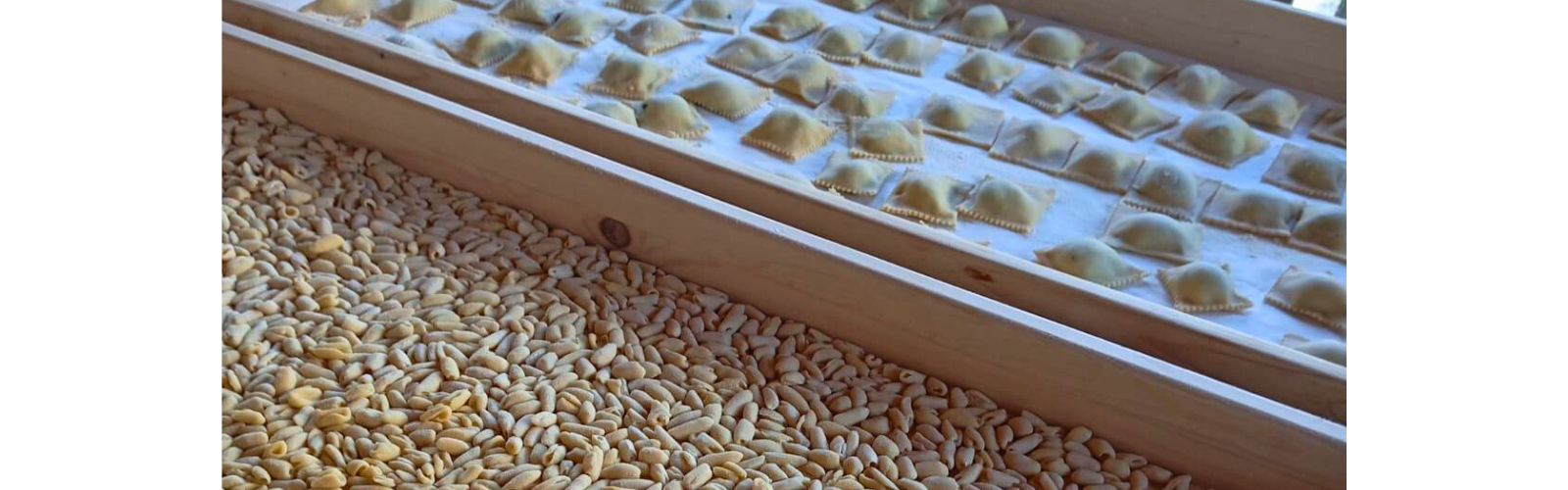
Exploration of sustainable Mediterranean food systems will be a focal point, featuring visits to organic farms, small-scale food processing facilities in peri-urban and rural areas, and tours of rural and urban food markets. Through these experiences, students will analyze alternative food networks that promote sustainability and resilience in food production. Students will gain insights into Italian food culture and history through guided tours, national park hikes, cooking and pasta-making classes, truffle hunting, and other immersive experiences.
Through experiential activities, course readings, and lectures by course leaders, partner organizations, & cultural experts, students will be encouraged to critically examine the influence of politics, inequity, education, and economics on food systems, environmental sustainability, and human health.
Learning Objectives
We have overall Goals and Expectations for Study Abroad Participants, covering the personal, academic and professional aspects of study abroad. Additionally on this program, you can:
- Identify and explain multiple and complex socio-cultural, political and economic factors that influence human health and wellness, food systems, and healthy ecosystems.
- Describe the relationships between the components of human and ecosystems health.
- Demonstrate critical thinking and comparative perspectives from first-hand experiences in Italy relevant to human health and ecosystem challenges.
- Develop and articulate a general world view as a citizen and a personal philosophy of integrated “health” and “wellbeing”.
Diversity & Inclusion
We are committed to providing quality study abroad and domestic study away programs for every UW-Madison student. We work strategically to identify, address, and remove barriers that may prevent participation and to provide a welcoming and inclusive environment for students. Our staff actively engages with students, faculty, and staff from diverse backgrounds and prioritizes the continuous development of our knowledge and cultural competence. We also recognize the importance of increasing access to study abroad for historically underrepresented student populations. We are committed to diversity and inclusion so that every student can engage with and understand their identity through a new lens and continue to develop and make progress on their personal, professional, and academic goals.
Sustainability
We recognize that the future of study abroad, domestic study away, and international internship programming requires a Commitment to Sustainability. We are devoted to examining, developing, and improving sustainability in all our endeavors, aligning with campus priorities and following through with UW-Madison's climate action and Resilience Commitment. Join our efforts and learn more about how to study abroad sustainably.
Request Information
Join our email list to receive program updates-including application notices, scholarship information, and more!
Eligibility
- Students must successfully complete a pre-departure course during the spring semester prior to the Italy program in order to be eligible to participate in the study abroad component of the program. Students will be given permission to enroll after confirming their participation on the program, and will earn 2 credits of Inter-Ag 321 for the pre-departure course. The course will take place in-person on Thursdays from 5:30–7:00 pm.
- 2.0 cumulative GPA
- Freshman, Sophomore, Junior, Senior
- Open to UW-Madison degree-seeking students only
- Good academic and disciplinary standing
- At the time of application and the semester prior to participation, UW-Madison students must be currently enrolled. Transfer Students to UW-Madison need to be currently enrolled at their home institution
Advising Location

Program Structure
UW Signature
Subjects
Classroom Language
English
Housing
Hotels
Program Duration
Summer: Mid-May - Late-May
Application Deadline(s)
| Summer 2026 | 12/5/2025 | Cost Details |
| Summer 2027 | 12/4/2026 | Cost Details |
Future durations will be posted at a later date.
APPLY NOW
A required 2-credit pre-departure course during the spring semester will serve as an in-depth introduction to global food security and sustainable agricultural practices.
Students will also earn two credits upon successful completion of the two-week program in Italy. Assignments include a short academic paper on topics that pertain to the field experience, and a field journal where students reflect on daily experiences and what they learned and observed.
This program fulfills the field experience requirement for the Undergraduate Certificate in Global Health.
Course Equivalents
Use the links below to see a list of courses that past students have taken on this program and the UW equivalents. Note: This list only includes pre-approved courses for your program and may not be an exhaustive list of courses, departments or equivalents. Courses may not be available the semester you are abroad. You will receive instructions on the course equivalent process after acceptance. View Course Equivalents
Program Leader
Geoff Siemering, Kirstin Siemering