Location
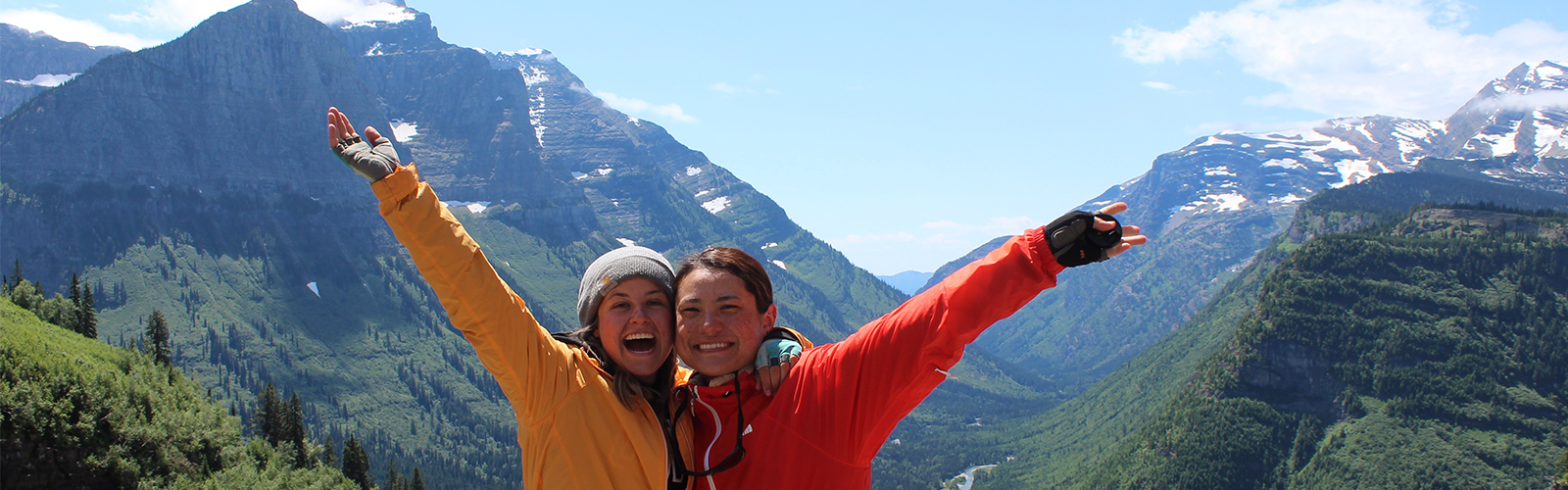
Location varies by course, but is typically in the states of Montana, Utah, New Mexico and Arizona. The Wild Rockies: Conservation Across Boundaries course does go into Canada, which will require a valid passport. Courses will split time between the back-country and front-country. Every course is a little different, but on average, students can expect to spend around 50-75% of their course in a backcountry setting. The other 25- 50% of time is spent in a front-country setting.
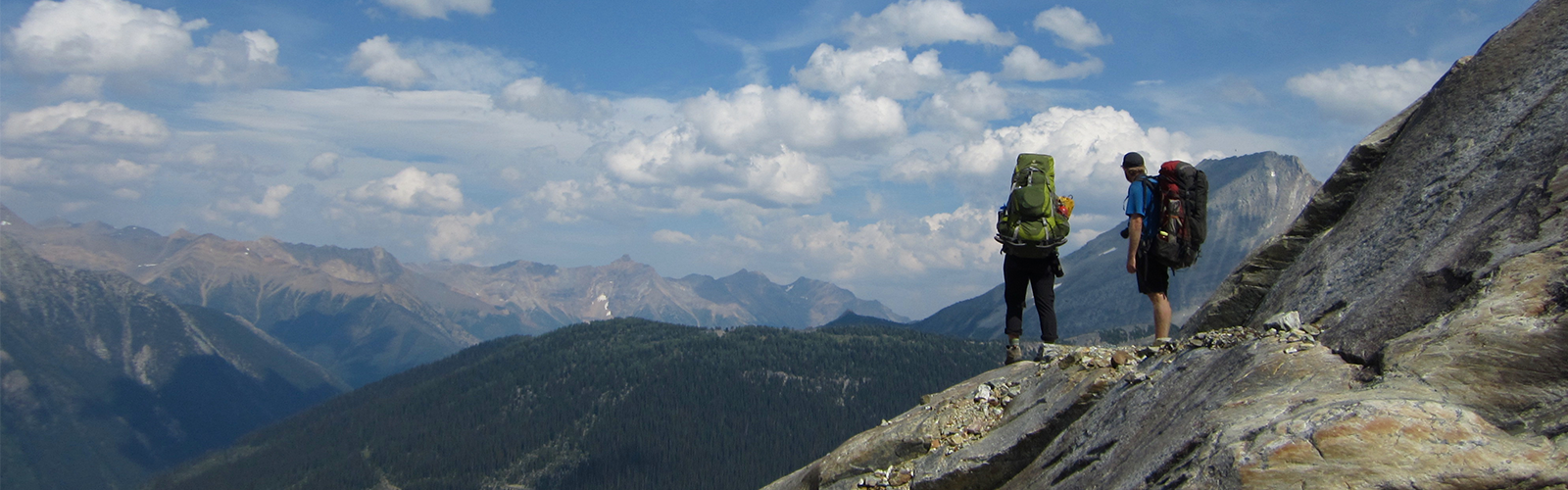
The back-country = wildlands setting with sparse human inhabitation or impact. WRFI courses explore backcountry settings by foot and by boat, depending on which course you choose.
The front-country = municipal setting characterized by human habitation and/or a built environment. WRFI courses travel through small rural communities in Montana, the American Southwest, and the Canadian provinces of Alberta and British Columbia. When in a front-country settings, you will still be camping.
Housing
All WRFI courses occur in an outdoor setting, with students sleeping in tents and cooking both individual and communal meals. Students share tents in either pairs or groups of four, although WRFI offers individual tents at student request.
Every eight to fifteen days, students have a frontcountry day or two which allows for showers and any resupply needs at grocery stores or pharmacies, etc. While in frontcountry settings, students stay in frontcountry campgrounds (think state park with bathroom facilities) or at other commercial camping options (RV park, etc). At times, you will also stay with families or at guest speakers’ properties during a frontcountry section - this is particularly common while visiting Indigenous communities on WRFI programs. When staying in the frontcountry, groups typically camp in their tents, regardless of whether on private property or in a public campground. At times, WRFI courses are invited to stay in a community center or other indoor facility; in these settings, the group “camps” inside, but doesn’t have private rooms like a hotel or dormitory.
All dinner meals are provided when in the field. Students are responsible for planning and purchasing food for their breakfasts and lunches and will have the opportunity to re-supply food for breakfast and lunch throughout the course. For breakfast each morning, the group will have hot water available for dehydrated foods or hot breakfast cereals; lunch is a cold meal, packed ahead of time during breakfast. For dinner, WRFI provides a meal for students, and their staff ensure that dietary requirements and restrictions are met. All WRFI-provided meals are vegetarian, though students have the option to bring supplemental ingredients if they so desire. Upon acceptance, students receive a detailed document designed to help plan meals.
Program Considerations
In a physical sense, the on-site experience may be very different from life on the UW campus. You may walk or take public transportation more than you are used to in Madison. The physical activity level will vary by program, but in general you should be prepared for extended periods of time walking, potentially on uneven terrain.
For many students, discovering and experiencing new foods is a part of the experience. It is important to consider any dietary restrictions, whether they are due to health conditions, religious beliefs, or individual needs, and look into whether you can get the foods you need locally.
How you identify yourself in Madison may differ from how people will view you on-site. Consider exploring our Identity Resources to reflect on how your identities may impact your experience. Students with disabilities should keep in mind that attitudes and laws related to disabilities vary by country, and these differences may impact the level of accommodation available in a particular location. More details are available on our page on Study Abroad for Students with Disabilities.
We encourage you to contact your Study Abroad Advisor and share your accommodation needs with us as early as possible. This will allow us to help you explore your options in advance.
A packing list will be provided by WRFI. Group gear (tents, cookware, water filters) is provided by WRFI. Students are required to bring their own individual gear; depending on the program, this can include a backpack, sleeping bag, sleeping pad, etc.
Outdoor UW offers rentals that are a great option if you're participating in a short-term program and don't own the necessary camping gear!
On-Site Support
Each WRFI program is co-taught between two instructors per section. WRFI instructors are required to hold a current Wilderness First Responder certification to teach in the field.
WRFI instructors carry two devices: Garmin InReach devices, and Iridium Network satellite phones. Both of these devices use the Iridium network of satellites, which has 100% coverage in the areas WRFI travels. Instructors are always able to contact WRFI headquarters, no matter how remote the program is. When it comes to communicating into the field, WRFI headquarters can reach out to instructors, and the next time the instructors turn on the InReach device, that message will be delivered. Typically instructors check their InReach devices one to two times per day. WRFI headquarters has a phone number that will ring 24/7 when courses are in the field, reaching one of WRFI's administrative staff to manage emergencies.
Orientation
We expect you to be an active participant in preparing yourself for your study abroad experience. As a participant on an approved program, you will receive a pre-departure orientation, either in-person or online. The type and format of this orientation will vary by program and will be provided to you upon acceptance to the program.
WRFI will provide pre-departure orientation online as part of the pre-course assignments and meetings. Throughout the semester, there will be on-going on-site orientations as the group moves to new locations.
WRFI students are encouraged to get Wilderness First Aid or higher certification prior to starting a course. Outdoor UW hosts certification courses, or ask Outdoor UW for the schedule.
Visa
For the Conservation Across Boundaries course that goes to Canada, US citizens must have a US passport valid for at least six months beyond the end of the program. Non-US passport holders may have different requirements. Ask your Study Abroad Advisor if you have any questions.
Getting to Your Program
You are responsible for arranging your own transportation to the program. WRFI will provide additional travel information upon acceptance.
Insurance
You will be enrolled in the UW System required health insurance through Cultural Insurance Services International (CISI) and the cost of the insurance coverage is included in program fees.
If you are a citizen of a country other than the United States and will remain/study in, or travel to your country of record (the location of your permanent residence), the insurance provided for you is the same as the “study away” insurance provided to U.S. citizens studying on domestic U.S. programs. You may want to explore alternative or additional international health and medical insurance that will cover your needs both while in and during any period of transit to/from your country of record. This may include participation in a national healthcare plan or coverage provided under a personal healthcare plan in your country of record. If you have questions about the coverage of the “study away” plan, please speak with your Study Abroad Advisor.
All other students participating on an international program will automatically be enrolled in Cultural Insurance Services International (CISI), the university's international health, medical and repatriation insurance policy.
Program cost information includes program fees, as well as out-of-pocket expenses with notes to help explain costs. Program fees are estimated and can be adjusted at any time. Once accepted, you will receive a cost sheet that includes confirmed program fees and additional out-of-pocket expenses. "The IAP Program Fee" and all processes and policies stated on this cost sheet apply to all participants on programs managed by International Academic Programs (IAP) and in partnership with the College of Agricultural and Life Sciences, the College of Engineering, and Wisconsin School of Business. All students participating on approved programs are all eligible to apply for scholarships administered through IAP when they meet the scholarship eligibility and selection criteria.
Fall 2025-26 - [Montana Afoot and Afloat: Human/Land Relations] Cost Details
Summer 2026 - [Cycle the Rockies: Energy and Climate Change in Montana] Cost Details
Summer 2026 - [Environmental Ethics: Climate Change and Visions of a Sustainable Future, Session I: July] Cost Details
Summer 2026 - [Environmental Ethics: Climate Change and Visions of a Sustainable Future, Session II: August] Cost Details
Summer 2026 - [Restoration Ecology in Greater Yellowstone, Session I: June] Cost Details
Summer 2026 - [Restoration Ecology in Greater Yellowstone, Session II: August] Cost Details
Summer 2026 - [Wild Rockies: Conservation Across Boundaries] Cost Details
Summer 2026 - [Southwest Climate Studio Art] Cost Details
Fall 2026-27 - [Montana Afoot and Afloat: Human/Land Relations] Cost Details
Spring 2026-27 - [Colorado Plateau: Desert Canyons and Cultures] Cost Details
Summer 2027 - [Cycle the Rockies: Energy and Climate Change in Montana] Cost Details
Summer 2027 - [Environmental Ethics: Climate Change and Visions of a Sustainable Future, Session I: July] Cost Details
Summer 2027 - [Environmental Ethics: Climate Change and Visions of a Sustainable Future, Session II: August] Cost Details
Summer 2027 - [Restoration Ecology in Greater Yellowstone, Session I: June] Cost Details
Summer 2027 - [Restoration Ecology in Greater Yellowstone, Session II: August] Cost Details
Summer 2027 - [Wild Rockies: Conservation Across Boundaries] Cost Details
Summer 2027 - [Southwest Climate Studio Art] Cost Details
Fall 2027-28 - [Montana Afoot and Afloat: Human/Land Relations] Cost Details
Financial Aid
UW–Madison students can typically use their financial aid on UW–Madison study abroad, domestic study away, and international internship programs. You need to complete a FAFSA if you want to be eligible to receive federal and state financial aid.
Beginning in 2026-27, the Office of Student Financial Aid will require all incoming undergraduate students to submit a CSS profile.
Review our financial aid and funding your experiences pages for more information.
Scholarships
Check out our scholarships page to find:
- A scholarship chart listing internal and external opportunities, with descriptions, deadlines, and amounts.
- Timelines of when UW-Madison study abroad scholarship applications open and close.
- Tips for writing scholarship essays.
Find scholarships
Program Scholarships
This scholarship list includes scholarships we know are relevant to this program. It is not an exhaustive list of all available scholarship opportunities for study abroad. Although we make our best effort to ensure the list is up-to-date, this information changes frequently, and it is the responsibility of the applicant to verify information. For additional scholarship information, please visit our scholarship page.
UW-Madison
Roland H. & Maude M. Becker Scholarship
L&S Honors Study Abroad Grant
IAP Administered
IAP Study Abroad Scholars
IAP Gilman Incentive
IAP WISc Scholarship
National
Social, Environmental, and Economic Development (SEED) Scholarship
Featured Scholarships
In an effort to increase accessibility to all students, WRFI has partial scholarships and discounts available for students. Learn more on WRFI's Financial Assistance page.
How to Apply
First, make sure you have reviewed the information for Prospective Students on the IAP website.
There is also specific Academic Planning information that you should review.
Next login to the IAP Online Application.
Wondering when applications will open for this program?
View our application schedule.
After the Deadline
IAP completes a review of all applications to determine if students meet minimum eligibility requirements.
| Session |
Application Status |
| Spring 2026-27 - [Colorado Plateau: Desert Canyons and Cultures] |
Application Closed |
| Summer 2027 - [Cycle the Rockies: Energy and Climate Change in Montana] |
Apply Now
|
| Summer 2027 - [Environmental Ethics: Climate Change and Visions of a Sustainable Future, Session I: July] |
Apply Now
|
| Summer 2027 - [Environmental Ethics: Climate Change and Visions of a Sustainable Future, Session II: August] |
Apply Now
|
| Summer 2027 - [Restoration Ecology in Greater Yellowstone, Session I: June] |
Apply Now
|
| Summer 2027 - [Restoration Ecology in Greater Yellowstone, Session II: August] |
Apply Now
|
| Summer 2027 - [Wild Rockies: Conservation Across Boundaries] |
Apply Now
|
| Summer 2027 - [Southwest Climate Studio Art] |
Apply Now
|
| Fall 2027-28 - [Montana Afoot and Afloat: Human/Land Relations] |
Apply Now
|
Additional Application Information
Applications for this program will be reviewed on a rolling basis by IAP and WRFI.
Disclosure
Students Requiring Accommodations: Consult and register with the McBurney Disability Resource Center McBurney Services if you will need academic, housing, and/or other disability-related accommodations or services abroad.
International Students: Talk with International Student Services about your visa status and study abroad.
Military-Connected Students with Veteran’s Benefits: Talk with University Veteran Services about how your benefits can be used for study abroad.