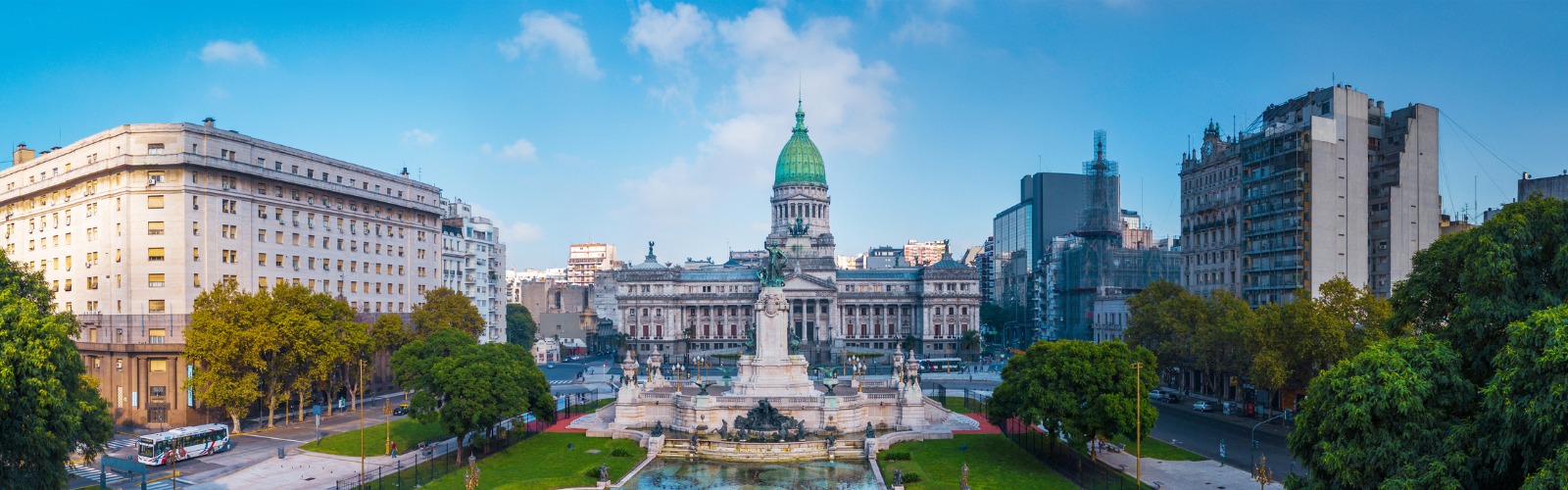
You will take one course while on the UW Global Experience in Argentina.
Global Immersion in International Business: Argentina: Innovation, Investment, Inflation & the IMF (3 credits)
This course will be taught by Professor
Sachin Tuli.
Immersion into the unique business culture of Argentina. A wide variety of international business related topics will be explored, including Argentina’s political, social and cultural environment; market research and entry opportunities; the investment climate; challenges of doing business in an economy where inflation is entrenched; and more.
Program Leader
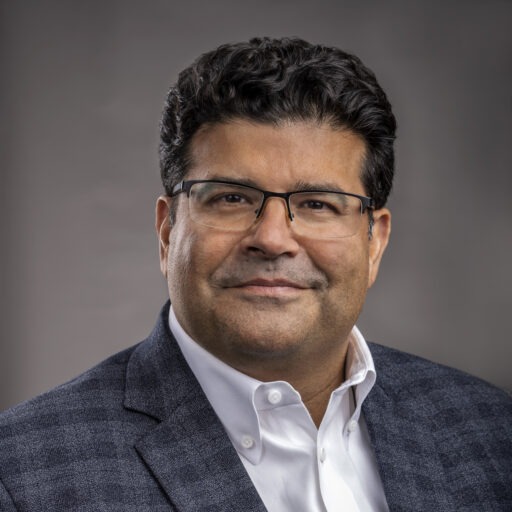
Sachin Tuli
Director, International Business Program, Wisconsin School of Business
Mr. Tuli brings over 15 years of teaching experience to his courses in international business and global marketing, which include Business in the Global Economy and Global Marketing Strategy. He has also developed, taught and led international business seminars to China, Cuba, India, Thailand, United Arab Emirates, and Vietnam for graduate and undergraduate students, as well as for other faculty.
As director of the international business major, he oversees curriculum, advises students on academics and careers, and collaborates with other professionals to ensure that the department is well represented at UW-Madison and its communities.
Mr. Tuli is an active leader, and serves on the Institute for International and Regional Studies (IRIS) Advisory Board, Center for South Asia Steering Committee, University International Travel Committee (UITC), Program Committee of Madison Committee on Foreign Relations (MCFR). He also is a member of the Madison International Trade Association (MITA) and Academy of International Business.
From 2007-2012, he served as director of International Programs, working to expand study abroad and exchange offerings for the School, and advising faculty, staff and students on effective management of short-term international academic programs. From 2002-2006, he served as assistant director of the UW-Madison Center of International Business Education and Research (CIBER).
Mr. Tuli has traveled extensively throughout Europe, Central America and Asia, and spent a summer abroad as an undergraduate in Grenoble, France. He holds a BBA in Marketing and an MS in Higher Education Administration, both from the University of Wisconsin-Madison. Prior to his roles on campus, Mr. Tuli worked in business analysis and international trade promotion.
Location
Not sure where Buenos Aires is? See it on a
map here.
Buenos Aires, officially the Autonomous City of Buenos Aires (Spanish: Ciudad Autónoma de Buenos Aires), is the capital and primate city of Argentina. The city is located on the western shore of the Río de la Plata, on South America's southeastern coast. “Buenos Aires” can be translated as “fair winds” or “good airs,” but the former was the meaning intended by the founders in the 16th century, by the use of the original name “Real de Nuestra Señora Santa María del Buen Ayre,” named after the Madonna of Bonaria in Sardinia, Italy. Buenos Aires is classified as an alpha global city, according to the Globalization and World Cities Research Network (GaWC) 2020 ranking.
The city of Buenos Aires is neither part of Buenos Aires Province nor the Province's capital; rather, it is an autonomous district. In 1880, after decades of political infighting, Buenos Aires was federalized and removed from Buenos Aires Province. The city limits were enlarged to include the towns of Belgrano and Flores; both are now neighborhoods of the city. The 1994 constitutional amendment granted the city autonomy, hence its formal name of Autonomous City of Buenos Aires. Its citizens first elected a Chief of Government in 1996; previously, the Mayor was directly appointed by the President of Argentina.
The Greater Buenos Aires conurbation, which also includes several Buenos Aires Province districts, constitutes the fourth-most populous metropolitan area in the Americas, with a population of around 15.6 million. The quality of life in Buenos Aires was ranked 91st in the world in 2018, being one of the best in Latin America. In 2012, it was the most visited city in South America, and the second-most visited city of Latin America.
It is known for its preserved eclectic European architecture and rich cultural life. It is a multicultural city that is home to multiple ethnic and religious groups, contributing to its culture as well as to the dialect spoken in the city and in some other parts of the country. This is because since the 19th century, the city, and the country in general, has been a major recipient of millions of immigrants from all over the world, making it a melting pot where several ethnic groups live together. Thus, Buenos Aires is considered one of the most diverse cities of the Americas.
Cost of living varies by location. Be sure to consult a variety of resources when researching cost of living.
Housing
During your time in Buenos Aires, you will stay in hotels with other UW-Madison program participants. You will share a room with another participant. Breakfast is included.
We typically place students in rooms with others students of the same sex. In some locations this is necessary for legal or cultural reasons. We understand that not all students may identify as female or male, and we want to create a welcoming environment for you while you are abroad. We are happy to work with students who identify as transgender, genderqueer, gender-non-conforming, and/or non-binary regarding life abroad. If you have questions or concerns regarding housing as it relates to your gender identity, please contact your study abroad advisor.
Program Considerations
In a physical sense, the on-site experience may be very different from life on the UW campus. You may walk or take public transportation more than you are used to in Madison. The physical activity level will vary by program, but in general you should be prepared for extended periods of time walking, potentially on uneven terrain.
For many students, discovering and experiencing new foods is a part of the experience. It is important to consider any dietary restrictions, whether they are due to health conditions, religious beliefs, or individual needs, and look into whether you can get the foods you need locally.
How you identify yourself in Madison may differ from how people will view you on-site. Consider exploring our Identity Resources to reflect on how your identities may impact your experience. Students with disabilities should keep in mind that attitudes and laws related to disabilities vary by country, and these differences may impact the level of accommodation available in a particular location. More details are available on our page on Study Abroad for Students with Disabilities.
We encourage you to contact your Study Abroad Advisor and share your accommodation needs with us as early as possible. This will allow us to help you explore your options in advance.
Excursions and Activities
Students will travel to Colonia del Sacramento, Uruguay, for a day visit. (Some international students may need to apply for an additional visa to travel to Uruguay.)
Doing business in Argentina requires an understanding of how its culture differs from other cultures - including those of its South American neighbors. An awareness of its unique business and social culture is also paramount for anyone doing business in Argentina. Get some insight into Argentina's social and cultural environment, while learning fun idiosyncrasies that make this Latin American nation a favorite among many foreigners.
The program consists of company visits, guest speakers, and cultural activities. Company visits may include the following (subject to change):
• Cofeidas Group
• Pan-American Energy
• Compañía Mega
• Globant
• The Food Market
• Wayra Argentina
• American Chamber of Commerce
• US Foreign Commercial Service
Cultural visits may include the following (subject to change):
• Buenos Aires City Tour
• Recoleta Cemetery
• Plaza de Mayo
• Casa Rosada Presidential Palace
• La Boca
• Traditional Tango Show
• Day trip to Colonia del Sacramento, Uruguay
On-Site Support
The UW-Madison program leaders, Sachin Tuli and Mike Judge, will be available for on-site assistance.
Orientation
WSB expects you to be an active participant in preparing yourself for your study abroad experience. A pre-departure orientation will be scheduled with program leaders prior to departure. Once you arrive in Buenos Aires, you will attend a comprehensive on-site orientation led by on-site partners.
Visa
For entry into Argentina or Uruguay, a visa is not required for this program. US citizens must have a US passport valid for 6 months beyond the end of the program. Non-US-passport holders may have different visa requirements. Ask you study abroad advisor if you have any questions.
Getting to Your Program
You will be responsible for arranging your own transportation to and from Buenos Aires using the dates provided after acceptance.
Insurance
You will be enrolled in the UW System required health insurance through Cultural Insurance Services International (CISI), and the cost of the insurance coverage is included in program fees.
If you are a citizen of a country other than the United States and will remain/study in, or travel to your country of record (the location of your permanent residence), the insurance provided for you is the same as the “study away” insurance provided to U.S. citizens studying on domestic U.S. programs. You may want to explore alternative or additional international health and medical insurance that will cover your needs both while in and during any period of transit to/from your country of record. This may include participation in a national healthcare plan or coverage provided under a personal healthcare plan in your country of record. If you have questions about the coverage of the “study away” plan, please speak with your Study Abroad Advisor.
All other students participating on an international program will automatically be enrolled in Cultural Insurance Services International (CISI), the university's international health, medical and repatriation insurance policy.
Program cost information includes program fees, as well as out-of-pocket expenses with notes to help explain costs. Program fees are estimated and can be adjusted at any time. Once accepted, you will receive a cost sheet that includes confirmed program fees and additional out-of-pocket expenses. "The IAP Program Fee" and all processes and policies stated on this cost sheet apply to all participants on programs managed by International Academic Programs (IAP) and in partnership with the College of Agricultural and Life Sciences, the College of Engineering, and Wisconsin School of Business. All students participating on approved programs are all eligible to apply for scholarships administered through IAP when they meet the scholarship eligibility and selection criteria.
Financial Aid
UW–Madison students can typically use their financial aid on UW–Madison study abroad, domestic study away, and international internship programs. You need to complete a FAFSA if you want to be eligible to receive federal and state financial aid.
Beginning in 2026-27, the Office of Student Financial Aid will require all incoming undergraduate students to submit a CSS profile.
Review our financial aid and funding your experiences pages for more information.
Scholarships
Check out our scholarships page to find:
- A scholarship chart listing internal and external opportunities, with descriptions, deadlines, and amounts.
- Timelines of when UW-Madison study abroad scholarship applications open and close.
- Tips for writing scholarship essays.
Find scholarships
Program Scholarships
This scholarship list includes scholarships we know are relevant to this program. It is not an exhaustive list of all available scholarship opportunities for study abroad. Although we make our best effort to ensure the list is up-to-date, this information changes frequently, and it is the responsibility of the applicant to verify information. For additional scholarship information, please visit our scholarship page and Wisconsin School of Business Financial Resources page for more information regarding study abroad scholarships specific to business study abroad programs.
IAP Administered
Bryan Davia Scholarship
George and Lisa McReddie Scholarship
Study Abroad Alumni & Friends Scholarship
IAP Study Abroad Scholars
Sarah Perry Fund for International Study
Rothschild Study Abroad Scholarship
Dorothy E. Paull Fund
Great People - International Studies Scholarship
National Scholarships
Benjamin A. Gilman Int'l Scholarship Prgm
Going Abroad Scholarship
Phi Kappa Phi Study Abroad Grants
Corinne Jeannine Schillings Foundation
UW-Madison
History Department Global Perspectives Scholarship
Nave Scholarship
Featured Scholarships
Each student selected for the program will receive a scholarship from Global Programs to help defray the costs.
Returned Student Network
View the Returned Student Network to contact a returned student
Student Quotes
"My trip to Argentina with the Wisconsin School of Business was one of the highlights of my time at UW-Madison. The emphasis placed on innovation, combined with the cultural context provided along the way, made for an engaging, worthwhile, and even fun experience. I also thought it was great practice for what an international business program will be like in the future, which made it an invaluable opportunity to practice. Don’t be afraid to step outside of your comfort zone and try new things, especially if they’re empanadas!”
—Nicholas Santas, Global Immersion in Argentina graduate student participant, January 2023
“I had a wonderful experience at the Global Immersion in Argentina. It not only strengthened my understanding of global business by meeting with business executives from various industries but also broadened my understanding of different cultures. It was particularly inspirational to see how two women at Daravi, a company we visited, bought their idea to life. I am convinced that this kind of international study trip can lead to something wonderful, just like Daravi!”
—Swaroopa Mallikarjun, Global Immersion in Argentina graduate student participant, January 2023
Returned Student Network
The Returned Student Network is a collection of recent program participants who are willing to answer your questions and share details about their study abroad experience. If you're curious to know what a study abroad program is like, especially from the perspective of being a student abroad, one of your best resources is connecting with a former participant of a program. Returned students may be able to provide you with tips in navigating the academics, share local insider knowledge, and even help with those pre-departure questions, like what to pack!
| Session |
Application Status |
Disclosure
Students Requiring Accommodations: Consult and register with the McBurney Disability Resource Center McBurney Services if you will need academic, housing, and/or other disability-related accommodations or services abroad.
International Students: Talk with International Student Services about your visa status and study abroad.
Military-Connected Students with Veteran’s Benefits: Talk with University Veteran Services about how your benefits can be used for study abroad.