Limited Capacity Program: This program can accept a limited number of students each term, and in the past we have received more qualified applicants than available spots. To determine selection for a limited capacity program, reviewers consider a variety of criteria. You may only have one open application per term, but should have an alternate program in mind in the event that you are not accepted to this program.
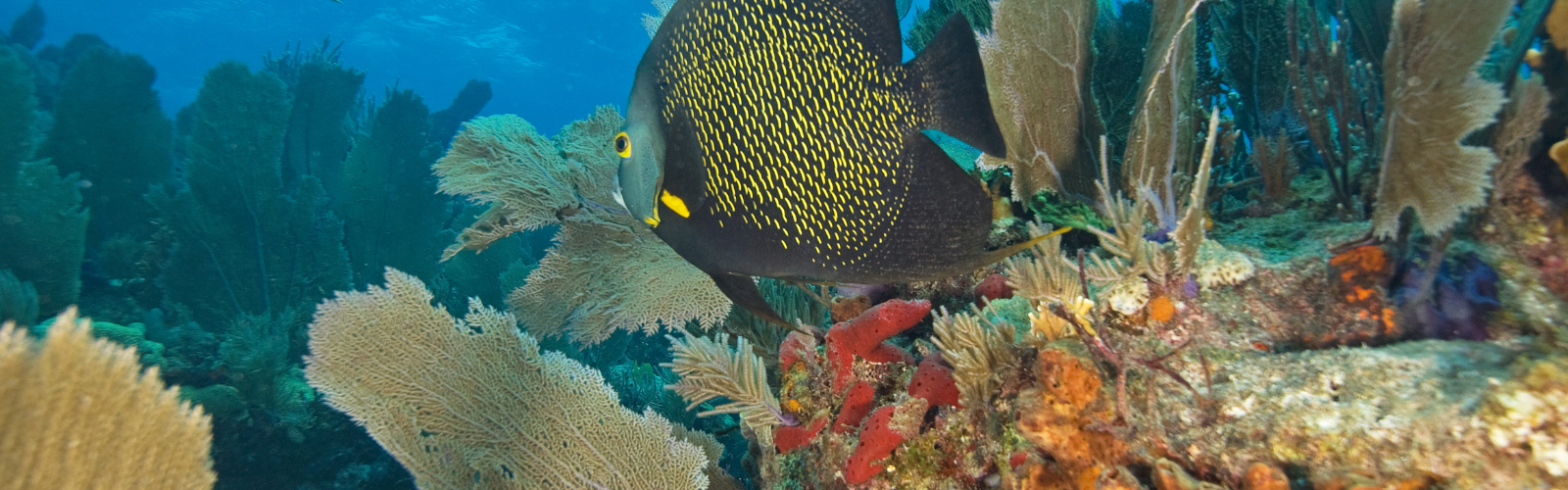
Experience a hands-on introduction to coral reefs, seagrasses, mangroves and other coastal marine habitats in Florida. Under the direction of 3 UW-Madison instructors, students on the UW Marine Biology in the Florida Keys program will spend time at the Florida Keys Marine Lab (KML), attending lectures and participating in field-based research projects in the local coastal marine environment.
This 2-week program runs during the winter intersession in January, so you can earn 3 credits before the start of the spring semseter.
The Florida Keys Marine Laboratory (KML) is operated by the Florida Institute of Oceanography, a consortium of universities. KML's facilities offer a unique opportunity to study the only tropical marine ecosystem in the continental United States. KML is ideally located in Layton, with easy access to Florida Bay, the Everglades National Park, the Florida Current, and the Florida Keys National Marine Sanctuary.
Describe how habitat structures communities of marine fishes and invertebrates
Identify common marine fish and invertebrate species and their adaptations to the unique challenges of feeding, predator avoidance, and reproduction in the marine environment.
Describe threats to marine biodiversity and strategies used to mitigate these threats.
Develop and execute a data collection plan for investigating the hypotheses/questions.
Communicate research findings verbally and in writing, including using data and figures.
Diversity & Inclusion
We are committed to providing quality study abroad and domestic study away programs for every UW-Madison student. We work strategically to identify, address, and remove barriers that may prevent participation and to provide a welcoming and inclusive environment for students. Our staff actively engages with students, faculty, and staff from diverse backgrounds and prioritizes the continuous development of our knowledge and cultural competence. We also recognize the importance of increasing access to study abroad for historically underrepresented student populations. We are committed to diversity and inclusion so that every student can engage with and understand their identity through a new lens and continue to develop and make progress on their personal, professional, and academic goals.
Sustainability
We recognize that the future of study abroad, domestic study away, and international internship programming requires a Commitment to Sustainability. We are devoted to examining, developing, and improving sustainability in all our endeavors, aligning with campus priorities and following through with UW-Madison's climate action and Resilience Commitment. Join our efforts and learn more about how to study abroad sustainably.
Request Information
Join our email list to receive program updates-including application notices, scholarship information, and more!
Eligibility
Students should be able/comfortable swimming and snorkeling in open water.
Applicants must have completed BIO 152 or BIO 101&102 or BIOCORE 381 & 382 (or have relevant test credits) before the program start date.
2.0 cumulative GPA
Sophomore, Junior, Senior
Open to UW-Madison degree-seeking students only
Good academic and disciplinary standing
At the time of application and the semester prior to participation, UW-Madison students must be currently enrolled. Transfer Students to UW-Madison need to be currently enrolled at their home institution
Students will earn 3 credits for Zoology 320: Field Marine Biology.
Aiming to provide students with a hands-on, research-driven experience within a marine environment, the course will expose you to:
1) the diverse organisms and ecological interactions of coastal marine habitats
2) conservation issues relevant in these habitats
3) the research process from formulating interesting biological questions to conducting scientific research.
Each day will consist of a combination of lectures and presentations by experts on marine conservation issues, as well as immersive experiences snorkeling in marine habitats. As part of the course, students will develop and execute individual research projects that address scientific questions in marine biology.
Students will be graded on participation (engage on daily outings and in scientific conversations, ask questions, report observations), a field practical, a field journal, and a research presentation.
Course Equivalents
Use the links below to see a list of courses that past students have taken
on this program and the UW equivalents. Note: This list only includes
pre-approved courses for your program and may not be an exhaustive list of
courses, departments or equivalents. Courses may not be available the
semester you are abroad. You will receive instructions on the course
equivalent process after acceptance.
View Course Equivalents
Program Leader
Dr. Ray Allen, NSF Postdoctoral Research Fellow in Biology, UW-Madison
Peter Conowall, PhD Candidate, UW-Madison
Dr. Libby Wilson, Postdoctoral Researcher, UW-Madison
Location
The Keys Marine Laboratory is located in the heart of the Florida Keys on Long Key in the city of Layton, Florida. The facility is 68 miles from Key West and overlooks Florida Bay. The location provides immediate access to many tropical marine habitats, coral reefs, and the Gulf Stream.
It is a full-service marine station that offers a unique opportunity for college level education and researchers studying the only tropical marine ecosystem in the continental United States. The KML facility is seven acres in size and consists of seven buildings including dormitories, labs and classrooms.
Housing
You will reside in dormitory accommodations at the Florida Keys Marine Lab (KML). The facility was built for student groups. You will be placed in rooms with bunkbeds and shared (not divided by gender) bathrooms and living spaces. Space in the dorm is limited, but this typically fosters a strong community of participants. It's all about the location!
Rooms will range in size from 2 or 4 beds up to 10 beds. Depending on the gender makeup of the group and overall cohort size, it may not be possible to grant specific housing accommodation requests, and single rooms are not available at KML. Please reach out to your Study Abroad Advisor in advance if you have any concerns about this or to let us know about accommodation needs.
Dorms have fully equipped kitchens, air conditioning and Wi-Fi. Most meals will be prepared by the group and shared, so it's important to communicate dietary restrictions well in advance of the program so they can be accommodated. Coin-operated laundry facilities are available on-site. All participants will share bathroom facilities that are not divided by gender.
We understand that not all students may identify as female or male, and we want to create a welcoming environment for you while you are studying away. We are happy to work with students who identify as transgender, genderqueer, gender non-conforming, and/or non-binary regarding housing on program. If you have questions or concerns regarding housing as it relates to your gender identity, please contact your Study Abroad Advisor.
Program Considerations
In a physical sense, the on-site experience may be very different from life on the UW campus. You may walk or take public transportation more than you are used to in Madison. The physical activity level will vary by program, but in general you should be prepared for extended periods of time walking, potentially on uneven terrain.
For many students, discovering and experiencing new foods is a part of the experience. It is important to consider any dietary restrictions, whether they are due to health conditions, religious beliefs, or individual needs, and look into whether you can get the foods you need locally.
How you identify yourself in Madison may differ from how people will view you on-site. Consider exploring our Identity Resources to reflect on how your identities may impact your experience. Students with disabilities should keep in mind that attitudes and laws related to disabilities vary by country, and these differences may impact the level of accommodation available in a particular location. More details are available on our page on Study Abroad for Students with Disabilities.
We encourage you to contact your Study Abroad Advisor and share your accommodation needs with us as early as possible. This will allow us to help you explore your options in advance.
Students will need to be okay with a communal living situation and mixed-gender bathrooms.
Students should feel comfortable swimming. Snorkeling will begin in shallow water, with opportunities for deeper-water snorkeling as the program proceeds. Life jackets are available to increase a student's comfort level in the water as needed.
Excursions and Activities
Snorkeling is a large part of this program, so students should be able to swim. A review of snorkeling equipment and techniques will be provided on-site.
On-Site Support
The UW-Madison program leaders as well as staff from the KML will provide on-site support for the duration of the program.
Orientation
IAP expects you to be an active participant in preparing yourself for your study away experience. As a participant on an IAP program, you will receive a pre-departure orientation, either in-person or online. The type and format of this orientation will vary by program and will be provided to you upon acceptance to the program.
You will also have an on-site orientation upon arrival from the UW-Madison Program Leaders and from KML staff who will provide an overview of the facilities.
Visa
No visa is required for this domestic study away program.
Getting to Your Program
You are responsible for arranging your own transportation to Miami, Florida. Program Leaders will meet students at Miami International Airport (MIA) and travel as a group to the site. It is about a 2-hour drive.
Insurance
You will be enrolled in the UW System required health insurance through Cultural Insurance Services International (CISI) and the cost of the insurance coverage is included in program fees.
If you are a citizen of a country other than the United States and will remain/study in, or travel to your country of record (the location of your permanent residence), the insurance provided for you is the same as the “study away” insurance provided to U.S. citizens studying on domestic U.S. programs. You may want to explore alternative or additional international health and medical insurance that will cover your needs both while in and during any period of transit to/from your country of record. This may include participation in a national healthcare plan or coverage provided under a personal healthcare plan in your country of record. If you have questions about the coverage of the “study away” plan, please speak with your Study Abroad Advisor.
All other students participating on an international program will automatically be enrolled in Cultural Insurance Services International (CISI), the university's international health, medical and repatriation insurance policy.
Program cost information includes program fees, as well as out-of-pocket expenses with notes to help explain costs. Program fees are estimated and can be adjusted at any time. Once accepted, you will receive a cost sheet that includes confirmed program fees and additional out-of-pocket expenses. "The IAP Program Fee" and all processes and policies stated on this cost sheet apply to all participants on programs managed by International Academic Programs (IAP) and in partnership with the College of Agricultural and Life Sciences, the College of Engineering, and Wisconsin School of Business. All students participating on approved programs are all eligible to apply for scholarships administered through IAP when they meet the scholarship eligibility and selection criteria.
UW–Madison students can typically use their financial aid on UW–Madison study abroad, domestic study away, and international internship programs. You need to complete a FAFSA if you want to be eligible to receive federal and state financial aid.
Beginning in 2026-27, the Office of Student Financial Aid will require all incoming undergraduate students to submit a CSS profile.
This scholarship list includes scholarships we know are relevant to this program. It is not an exhaustive list of all available scholarship opportunities for study abroad. Although we make our best effort to ensure the list is up-to-date, this information changes frequently, and it is the responsibility of the applicant to verify information. For additional scholarship information, please visit our scholarship page.
"Being able to learn something in the classroom and then immediately see it later that day in the field was amazing - I was able to retain so much more than I ever have in a traditional classroom setting. The professors also did a great job pointing out and reiterating things learned in lecture when we were in the field."
"I'm extremely satisfied with the academics of my program. I was able to develop and become much more confident in various skills that will help me build my future and career, including field work, designing and conducting research, and working with data for statistical analysis."
"As a conservation biology major, this program worked really well with the classes I've taken at UW. The course material and field experiences reflected, reinforced, and built upon what I've learned in several different courses at UW and being able to see what I've learned in the classroom play out first hand in the field was very beneficial."
"This program helped me feel more confident in my decision to pursue graduate studies in the marine science field. It stimulated my interest in marine ecosystems, and working closely with the professors helped me feel far more capable in data handling and analysis than an entire semester of introductory statistics was able to. I made valuable connections that I will use when applying to a master's program, potentially much farther away than I ever previously envisioned for myself, because I developed so much newfound confidence and curiosity during this program."
"I really appreciated how we had the ability to cook our own meals in the dorm with items provided/bought by the professors and that we could make requests for meals/certain foods. I also really liked how when we went out to eat, the program fee included these outings so students did not have to worry on the spot about being able to eat out/if they could afford to participate."
"This program was amazing. The instructors were so nice and helpful and were very engaging in what they were teaching. The snorkeling was amazing, and the instructors showed us so many new and interesting things. I can not describe how much fun I had during this experience."
"My time at the Keys Marine Lab (KML) in Layton, Long Key, FL was a remarkable experience. It provided me with first-hand experience into the field of marine biology, fueling my desire to continue marine studies. This program gave me the chance to get up-close and personal with species that I've dreamed about seeing in person, while providing me the chance to live the life of a true octonaut." - Judah O.
Video Description and Transcript: During his Instagram takeover, Malachi shows his classwork and other activities in the Florida Keys, including his interactions with various sea creatures like dolphins and mollusks! Read the full transcript of the takeover.
How to Apply
First, make sure you have reviewed the information for Prospective Students on the IAP website.
There is also specific Academic Planning information that you should review.
IAP completes a review of all applications to determine if students meet minimum eligibility requirements.
Session
Application Status
Winter Intersession 2025-26
Application Closed
Winter Intersession 2026-27
Application Closed
Disclosure
Students Requiring Accommodations: Consult and register with the McBurney Disability Resource Center McBurney Services if you will need academic, housing, and/or other disability-related accommodations or services abroad.
Military-Connected Students with Veteran’s Benefits: Talk with University Veteran Services about how your benefits can be used for study abroad.
This program is offered by International Academic Programs. We have a team that works with each program. Each member of this program team is able to help students with different kinds of questions. Visit the advising webpage to learn how to schedule an appointment.
Enrollment Manager
For questions on application advising, program eligibility, course equivalency request process, grade processing.
This competitive scholarship provides students with financial awards starting at $1,500 towards the eligible study abroad program of your choice, and the chance to share your experience with the UW-Madison community upon return. Students attending any program, except the funded Global Gateway programs, in IAP, CALS, ENGR, or WSB are encouraged to apply to become a Study Abroad Scholar. Please read full scholarship details, including eligibility requirements, and considerations on the Study Abroad Scholars page.
CALS majors must apply for Study Abroad Scholars to be considered for CALS donor scholarships. Award Amount
$1,500-$8,000
Eligibility Criteria
In order to be considered for the Study Abroad Scholars scholarship for this application round, an applicant must:
Be in the process of applying, or have already applied, to an IAP study abroad program (UW Global Gateway Programs are not eligible)
Be a full-time, degree-seeking undergraduate UW-Madison student
Academic merit and financial need will be considered
Submit completed application materials online by the posted deadline
Description
IAP will provide a guaranteed $1000 scholarship to students applying to the Benjamin A. Gilman International Scholarship for the first time and meet the Gilman's scholarship eligibility requirements and application deadlines.
Students can only receive the IAP Gilman Incentive one time in their academic career. No additional application to IAP is needed and our staff will notify recipients after the Gilman scholarship deadline. Award Amount
$1000
How to Apply
For more information and to apply, visit the Benjamin A. Gilman International Scholarship website. No additional application is needed for the IAP Gilman Incentive award. Students can only receive the IAP Gilman Incentive one time.
IAP WISc Scholarship
Description
This scholarship was established by International Academic Programs (IAP) to assist undergraduate student participants in the Wisconsin International Scholars (WISc) Program with building their global competence and citizenship skills, which is the core goal of the WISc Program. Each WISc Scholar is eligible to receive scholarships as follows:
1) 1 scholarship of $2500 toward participation on a short-term study abroad program duration (winter intersession, spring break, or summer), and
2) 1 scholarship of $4000 toward participation on a semester program OR 1 $6000 towards a year long program.
These scholarships can be used for students attending any approved UW-Madison study abroad program.
Award Amount
$2500-$6000
Eligibility Criteria
Eligible for student participants of the Wisconsin International Scholars (WISc) Program at UW-Madison.
Description Each year, the L&S Honors Program supports Honors students intending to study abroad at a UW-Madison-approved academic study abroad program through the L&S Honors Study Abroad grants. Award Amount
$1250
Eligibility Criteria
L&S Honors student studying on an approved UW-Madison Study Abroad Program How to Apply Students can apply for this award at Wisconsin Scholarship Hub (WiSH).
Social, Environmental, and Economic Development (SEED) Scholarship
Description
SEED stands for Social, Environmental and Economic Development. The Authentica SEED Scholarship is a $1,500 study abroad sustainability scholarship — $1,200 toward your program cost and a further $300 once you submit a post-program report on your project — awarded twice a year to a student who turns a real observation abroad into a practical, SDG-aligned idea. It is open to students worldwide, with any program or provider — no application fee and no minimum GPA. Award Amount
$1500 $1,200 applied toward your program cost · $300 released once you submit your post-program repor
How to Apply
For more information and to apply, visit the scholarship website.