Students will earn a total of 3 credits of Marketing on the program, split into two parts:
- MARKETNG 350 (2 credits): Students will enroll in this course for Fall 2025. Enrollment is required for participation in the component of the program in January. Permission to enroll in the course will be given to students accepted in the program.
This course will meet once a week with the aim of preparing students with pre-departure readings, discussions, guest speakers and a start to their personal reflection. It will be a hybrid course with some content delivered online via Canvas and some content delivered in-person. This will include time in lectures & class meetings (in-person and online), presentations, tutorials, preparation, reading, studying, hands-on experiences, and other learning activities.
- MARKETNG 349 (1 credit): Students will automatically be awarded this credit after completion of the program's international component in January 2026. This course will appear under the Spring 2026 term.
The in-country portion will enhance classroom knowledge with a mix of first-hand experiences including guest lectures from Senegalese local entrepreneurs, academics, and non-profit leaders, and field study that includes day-trips, company-visits, and community engagement.
Together, these two courses can fulfill a Marketing elective for the Marketing major, similar to MARKETNG 365.
For further questions about the coursework, please email the program leader (see below).
Program Leader
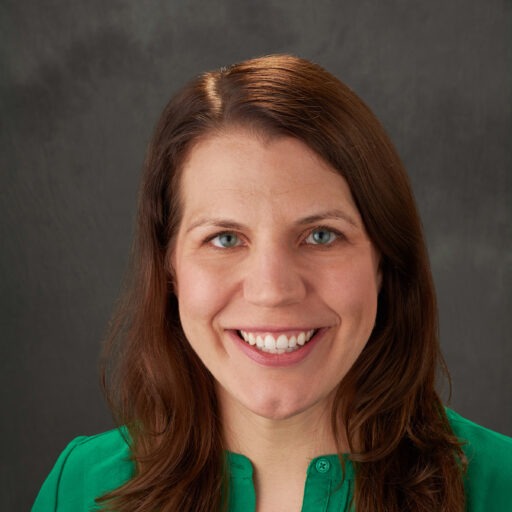
Katie Krueger
Program leader Katie Krueger is a lecturer at the University of Wisconsin-Madison, where she teaches Marketing in the Digital Age and Consumer Behavior. She graduated from UW-Madison Wisconsin School of Business with her MBA in Entrepreneurship. Katie lived in Senegal in 2003-2004, doing graduate study. She was enrolled in the University of Cheikh Anta Diop during that time.She has returned for varying length visits in 2004, 2005, 2009. She is fluent in French and has a conversational level of Wolof. Katie also created a non-profit organization that ran in Dakar, Senegal between 2004-2014. She has a network of contacts in Dakar and beyond in Senegal, both personal and professional, which will help as she organizes the program.
Katie.Krueger@wisc.edu
Location
Not sure where Dakar is? See Dakar on a map.
Dakar is the capital of Senegal, in West Africa. It’s an Atlantic port on the Cap-Vert peninsula. Its traditional Médina quarter is home to the Grande Mosquée, marked by a towering minaret. The Musée Théodore Monod displays cultural artifacts including clothing, drums, carvings and tools. The city’s vibrant nightlife is inspired by the local mbalax music.
Housing
During your time in Senegal, you will stay in hotels with other UW-Madison program participants. You will share a room with another participant. Breakfast is included.
We typically place students in rooms with others students of the same sex. In some locations this is necessary for legal or cultural reasons. We understand that not all students may identify as female or male, and we want to create a welcoming environment for you while you are abroad. We are happy to work with students who identify as transgender, genderqueer, gender-non-conforming, and/or non-binary regarding life abroad. If you have questions or concerns regarding housing as it relates to your gender identity, please contact your study abroad advisor.
Program Considerations
In a physical sense, the on-site experience may be very different from life on the UW campus. You may walk or take public transportation more than you are used to in Madison. The physical activity level will vary by program, but in general you should be prepared for extended periods of time walking, potentially on uneven terrain.
For many students, discovering and experiencing new foods is a part of the experience. It is important to consider any dietary restrictions, whether they are due to health conditions, religious beliefs, or individual needs, and look into whether you can get the foods you need locally.
How you identify yourself in Madison may differ from how people will view you on-site. Consider exploring our Identity Resources to reflect on how your identities may impact your experience. Students with disabilities should keep in mind that attitudes and laws related to disabilities vary by country, and these differences may impact the level of accommodation available in a particular location. More details are available on our page on Study Abroad for Students with Disabilities.
We encourage you to contact your Study Abroad Advisor and share your accommodation needs with us as early as possible. This will allow us to help you explore your options in advance.
Excursions and Activities
The program may include the following activities (tentative, may change for 2026):
- Visit Goree Island, which was a center of slave trade for five centuries. Students will learn about the history of the island in class and reflect on it following the visit.
- Overnight visit to the Sine-Saloum Delta, providing an opportunity to see how three major components of Senegal's economy intersects with cultural and current issues: rural life, tourism, and the environment.
- Overnight visit to Lompoul desert to experience a very remote setting and learn about nomadic ethnic groups and their role in business and commerce.
- Visit local businesses and hear from entrepreneurs about conducting business in Senegal.
- Network with Senegalese students from the top business school in Dakar.
- Visit local non-profits and get hands-on experiential learning through volunteering
- Visit cultural institutions including museums, art & dance hubs
- Explore and observe business at the largest market in Dakar
On-Site Support
A UW-Madison program leader provides on-site support, and the program provider will provide additional support in country.
Handbooks
Use the links below to find out more information on academics, daily life and student impressions for this program.
SIT Senegal Country Overview & Packing Guidelines (2025-26)
Orientation
WSB expects you to be an active participant in preparing yourself for your study abroad experience. A pre-departure orientation will be scheduled with program leaders prior to departure. Once you arrive in Dakar, you will attend a comprehensive on-site orientation led by on-site partners.
Visa
For entry into Senegal, a visa is not required for this program. US citizens must have a US passport valid for 6 months beyond the end of the program. Non-US passport holders may have different visa requirements. Ask you study abroad advisor if you have any questions.
Getting to Your Program
You will be responsible for arranging your own transportation to and from Dakar using the dates provided after acceptance. Insurance
If you are a citizen of a country other than the United States and will remain/study in, or travel to your country of record (the location of your permanent residence), the insurance provided for you is the same as the “study away” insurance provided to U.S. citizens studying on domestic U.S. programs. You may want to explore alternative or additional international health and medical insurance that will cover your needs both while in and during any period of transit to/from your country of record. This may include participation in a national healthcare plan or coverage provided under a personal healthcare plan in your country of record. If you have questions about the coverage of the “study away” plan, please speak with your Study Abroad Advisor.
All other students participating on an international program will automatically be enrolled in Cultural Insurance Services International (CISI), the university's international health, medical and repatriation insurance policy.
Program cost information includes program fees, as well as out-of-pocket expenses with notes to help explain costs. Program fees are estimated and can be adjusted at any time. Once accepted, you will receive a cost sheet that includes confirmed program fees and additional out-of-pocket expenses. "The IAP Program Fee" and all processes and policies stated on this cost sheet apply to all participants on programs managed by International Academic Programs (IAP) and in partnership with the College of Agricultural and Life Sciences, the College of Engineering, and Wisconsin School of Business. All students participating on approved programs are all eligible to apply for scholarships administered through IAP when they meet the scholarship eligibility and selection criteria.
Winter Intersession 2025-26 Cost Details
Financial Aid
UW–Madison students can typically use their financial aid on UW–Madison study abroad, domestic study away, and international internship programs. You need to complete a FAFSA if you want to be eligible to receive federal and state financial aid.
Beginning in 2026-27, the Office of Student Financial Aid will require all incoming undergraduate students to submit a CSS profile.
Review our financial aid and funding your experiences pages for more information.
Scholarships
Check out our scholarships page to find:
- A scholarship chart listing internal and external opportunities, with descriptions, deadlines, and amounts.
- Timelines of when UW-Madison study abroad scholarship applications open and close.
- Tips for writing scholarship essays.
Find scholarships
Program Scholarships
This scholarship list includes scholarships we know are relevant to this program. It is not an exhaustive list of all available scholarship opportunities for study abroad. Although we make our best effort to ensure the list is up-to-date, this information changes frequently, and it is the responsibility of the applicant to verify information. For additional scholarship information, please visit our scholarship page and Wisconsin School of Business Financial Resources page for more information regarding study abroad scholarships specific to business study abroad programs.
UW-Madison
History Department Global Perspectives Scholarship
Global Scholars Scholarship
IAP Administered
Bryan Davia Scholarship
Study Abroad Alumni & Friends Scholarship
IAP Study Abroad Scholars
Sarah Perry Fund for International Study
IAP Gilman Incentive
IAP WISc Scholarship
National Scholarships
Benjamin A. Gilman Int'l Scholarship Prgm
Fund for Education Abroad
Phi Kappa Phi Study Abroad Grants
National
Social, Environmental, and Economic Development (SEED) Scholarship
Returned Student Network
View the Returned Student Network to contact a returned student
Student Reflections
Check out blogs and reflections of current or recently returned program students and alumni!
Read student experiences on this program
Student Quotes
"To anyone considering this program, say yes. Studying abroad in Senegal was transformative. From the energy of Dakar to the traditions of Yayème and the Lompoul Desert, I gained a holistic understanding of culture, community, and business beyond the classroom. Experiencing Senegal's teranga (hospitality) firsthand showed me how hospitality and cultural values influence economic activity and business practices. This experience strengthened my adaptability, cultural awareness, and global perspective, skill that I will carry with me in my future career. Most importantly, I leave with lifelong friendships and a deeper understanding of myself and the world." - Azaria S.
Photos
Program photo album
Videos
Instagram Reel: Caasi W.
How to Apply
In order to apply, students must submit a short essay answering the following prompts:
Why do you want to study in Senegal? How does this program fit into your academic and career goals?
What skills or qualities do you think you could contribute to this class that would benefit the other students either in the classroom or during the program abroad?
Applications will be considered on a rolling basis.
| Session |
Application Status |
| Winter Intersession 2025-26 |
Application Closed |
Disclosure
Students Requiring Accommodations: Consult and register with the McBurney Disability Resource Center McBurney Services if you will need academic, housing, and/or other disability-related accommodations or services abroad.
International Students: Talk with International Student Services about your visa status and study abroad.
Military-Connected Students with Veteran’s Benefits: Talk with University Veteran Services about how your benefits can be used for study abroad.


