We are not accepting applications for this program for Summer 2024. Click here for a full list of programs currently accepting applications.
Virtual, Virtual
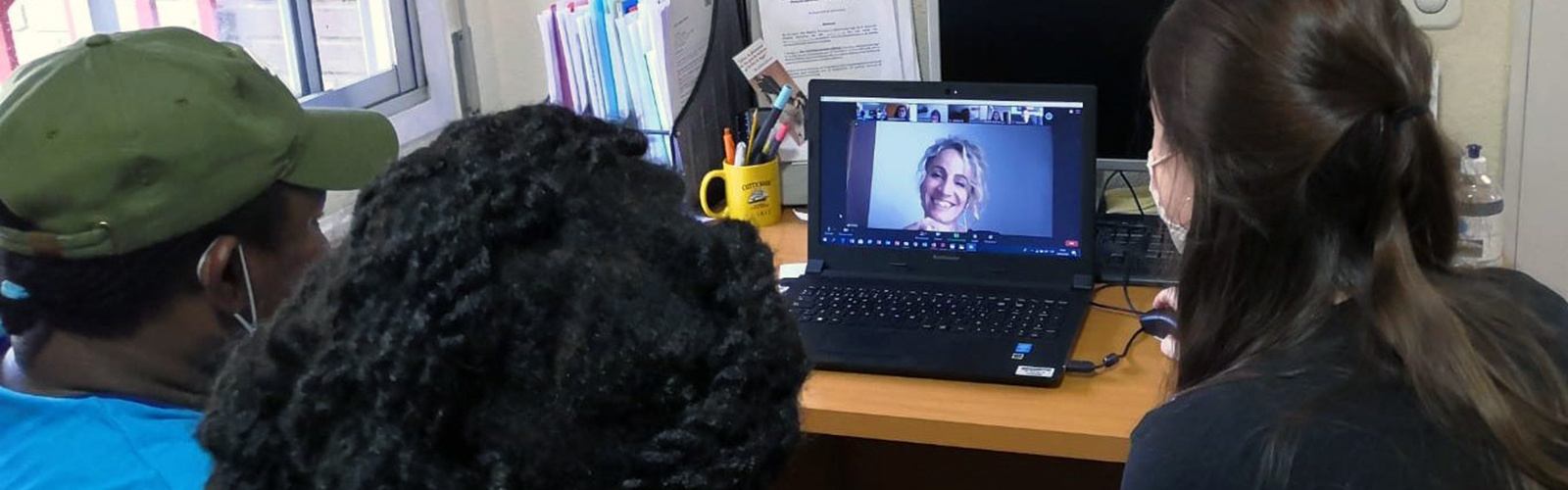
UW Circle of Care for Global Health and Human Rights is a virtual study abroad program offered by the College of Agricultural and Life Sciences (CALS) in partnership with International Academic Programs (IAP). This virtual program expands the idea of an international “Field Experience” and allows students to address issues of sex-trafficking and human rights violations by engaging with individuals and organizations on the ground in Spain, Morocco, and Nigeria in an online format.
In a time when the meaning of borders has dramatically shifted, this course will help us reexamine borders and explore human trafficking and human rights. It will cover three of the key territories on the route of migrant women from West Africa (specifically Nigerian women): Spain, Morocco, and Nigeria. It will take place over three weeks, one for each territory. In each territory there will be organizations that will manage the infrastructure, technology, and resources (human and material) necessary to carry out the virtual activities.
This course will use trauma-informed virtual participatory techniques and collective discourses to develop a circle of Care and Communication between UW students/course leaders, victims/survivors, and the staff of organizations in Spain, Morocco, and Nigeria. In order to elevate the experiences and suppressed voices of victims and survivors of human trafficking, this course will heavily rely on collective narratives and life stories, drawing upon the lived experience, leadership, wisdom, and courage of these remarkable human beings. “Care” and “communication” techniques will be used to approach victims/survivors in a virtual way. Our goal is to open up virtual spaces for interaction and communication.
Geographic Focus - Spain, Morocco, and Nigeria
Spain is one of the major destination countries in Europe for women and girls trafficked from African countries, primarily from Nigeria (Benin City), for the purpose of commercial sexual exploitation. Every year, hundreds of women and girls begin a tremendously dangerous and harsh trip throughout the African continent towards the North, with the dream of reaching Europe; by the time they arrive at the Spanish border with Morocco, most of them are already caught up in sex-trafficking networks. Morocco is a major transit country for migrants from sub-Saharan countries trying to reach Europe. In the last few years, however, strict border control initiatives established by the European Union between Spain and Morocco have resulted in an increased number of migrants who reside more permanently in Morocco, especially in larger cities like Rabat and Casablanca.
UNESCO Chair on Gender, Wellbeing, and a Culture of Peace at UW-Madison
This course is offered within the institutional international framework of the UNESCO Chair on Gender, Wellbeing, and a Culture of Peace at UW-Madison. UNESCO’s mission during these difficult times of COVID 19 pandemic, is to strengthen education systems to ensure international collaboration and prevent abuse, exploitation and other human rights violations. Investing in virtual education during this crisis would help to increase resilience and social cohesion across communities, organizations and academic institutions. The UW UNESCO Chair is pursuing a line of work with the 4W UW-Madison STREETS Project (Social Transformations to End the Exploitation and Trafficking for Sex) on human and sex-trafficking as extreme violations of human rights. Through its transnational collaborative nature, the 4W-UNESCO Chair is devoted to fostering community engagement and applied research, as well as interdisciplinary and intersectoral dialogue with specific pragmatic goals to combat human and sex-trafficking.
Define human trafficking in historical and geographical contexts, and gain an understanding of the scope and magnitude of human trafficking, both domestically and internationally
Contextualize key terminology associated with human trafficking
Use different trauma-informed virtual tools and techniques to identify different aspects of the trafficking process
Understand the construction of silence in the lives of victims and survivors
Through collective narratives based primarily on the visual arts (painting, collage, photography, etc.), help the staff of organizations, and also victims and survivors to find and use their previously silenced life experience.
Recognize the roles of various disciplines, organizations, and professionals working on anti-trafficking efforts
Understand sex trafficking from multiple perspectives including non-governmental organizations, governmental organizations, academics and researchers, civil society, victims and survivors
Engage in a series of educational virtual workshops and activities with international human rights activists, survivors, government agencies, and non-governmental organizations
Understand and analyze the demand side of trafficking
Identify efforts undertaken in Spain and Morocco to assist trafficking victims, prosecute traffickers, prevent trafficking, and reduce the demand for commercial sex
Share final projects with specialized anti-trafficking organizations in Spain, Nigeria, Morocco
Diversity & Inclusion
We are committed to providing quality study abroad and domestic study away programs for every UW-Madison student. We work strategically to identify, address, and remove barriers that may prevent participation and to provide a welcoming and inclusive environment for students. Our staff actively engages with students, faculty, and staff from diverse backgrounds and prioritizes the continuous development of our knowledge and cultural competence. We also recognize the importance of increasing access to study abroad for historically underrepresented student populations. We are committed to diversity and inclusion so that every student can engage with and understand their identity through a new lens and continue to develop and make progress on their personal, professional, and academic goals.
Sustainability
We recognize that the future of study abroad, domestic study away, and international internship programming requires a Commitment to Sustainability. We are devoted to examining, developing, and improving sustainability in all our endeavors, aligning with campus priorities and following through with UW-Madison's climate action and Resilience Commitment. Join our efforts and learn more about how to study abroad sustainably.
Request Information
Join our email list to receive program updates-including application notices, scholarship information, and more!
Eligibility
Depending on the number of applicants, a short interview may be required with the instructor.
2.0 cumulative GPA
Knowing a foreign language is not a requirement for this course.
Freshman, Sophomore, Junior, Senior
Open to UW-Madison degree-seeking students only
Good academic and disciplinary standing
At the time of application and the semester prior to participation, UW-Madison students must be currently enrolled. Transfer Students to UW-Madison need to be currently enrolled at their home institution
Advising Location
Program Structure
UW Signature
Subjects
Sex Trafficking, Human Trafficking, Public Health, Global Health
Students receive three credits of Nutritional Sciences 421 for the completion of this program.
The advocacy-training component of this program will focus on topics related to the mechanics of commercial sexual exploitation with attention to supply and demand issues, vulnerability factors, immigration legislation, and the overall impact on survivors’ rights, health, and their status in society. Students will learn about the physical and psychological health consequences as well as principles for promoting the human and health rights of trafficked women and girls. This program will give a deep perspective on the connections between global and local by focusing on the lives of trafficked persons, the work of traffickers, and both the opportunities and limitations for action by policymakers, law enforcement, researchers, and human rights activists.
Tentative Program Schedule (day by day activities will be shared with the students during orientation)
Program dates are 5/24/2021 through 6/13/2021.
Most program activities and interactive workshops will take place between 9:00 AM and 12:00 PM Central Time, although some days will finish later; the schedule is subject to change, so please keep your calendar as flexible as possible during the program dates.
Week 1 – Spain (multiple locations within the country)
Main Topics: Contextualization of European destination and demand sites. Introduction to the course. Exploring destination sites of human trafficking—Madrid and the Mediterranean (Benidorm city). What does “destination” mean for women who have migrated from central-west Africa and who have been involved in trafficking networks? Interaction with Nigerian women in destination sites, some of them in rehabilitation and others still in trafficking networks; creative interviews based on lived experiences, personal narratives through the arts. Legal aspects of trafficking in destination.
Week 2 – Morocco (multiple locations within the country)
Main Topics: Contextualization of migration route from West Africa. Control and outsourcing of European borders from the human rights perspective. African migration and gender. Strategies and resources to support the migrant population during their transit in Morocco, especially women. Creative interviews with migrant women through the arts, some still in trafficking networks hoping to arrive in destination countries: What does Europe mean while still in transit? Reconstruction of migration and trafficking routes through the arts—body expression.
Week 3 – Nigeria (multiple locations within the country)
Main Topics: Conceptualization of Nigeria as the main country of origin in trafficking for sexual exploitation in Europe. Sociocultural keys to approach the characteristics of Nigerian Trafficking. Recruitment of victims of trafficking. Trafficking networks. What is happening in Nigeria? More precisely, what is happening in Benin City? Vulnerabilities. Prevention and sensitization programs. Voluntary return and deportation programs. Creative interview with women who have returned to Nigeria after being trafficked.
Final Group Project Examples
Course Equivalents
Use the links below to see a list of courses that past students have taken
on this program and the UW equivalents. Note: This list only includes
pre-approved courses for your program and may not be an exhaustive list of
courses, departments or equivalents. Courses may not be available the
semester you are abroad. You will receive instructions on the course
equivalent process after acceptance.
View Course Equivalents
Program Leader
Dr. Araceli Alonso and Dr. Esperanza Jorge-Barbuzano
This program is co-led by UW faculty member Dr. Araceli Alonso (located in Madison) and Dr. Esperanza Jorge-Barbuzano (located in Spain).
Location
Virtual activities occur in multiple locations in Spain, Morocco, and Nigeria.
Program Considerations
In a physical sense, the on-site experience may be very different from life on the UW campus. You may walk or take public transportation more than you are used to in Madison. The physical activity level will vary by program, but in general you should be prepared for extended periods of time walking, potentially on uneven terrain.
For many students, discovering and experiencing new foods is a part of the experience. It is important to consider any dietary restrictions, whether they are due to health conditions, religious beliefs, or individual needs, and look into whether you can get the foods you need locally.
How you identify yourself in Madison may differ from how people will view you on-site. Consider exploring our Identity Resources to reflect on how your identities may impact your experience. Students with disabilities should keep in mind that attitudes and laws related to disabilities vary by country, and these differences may impact the level of accommodation available in a particular location. More details are available on our page on Study Abroad for Students with Disabilities.
We encourage you to contact your Study Abroad Advisor and share your accommodation needs with us as early as possible. This will allow us to help you explore your options in advance.
Excursions and Activities
The group will also participate in specialized virtual workshops and activities as part of the program.
On-Site Support
Professor Araceli Alonso and Dr. Esperanza Jorge-Barbuzano, both experts on human trafficking, lead the program and teach the program course.
Orientation
We expect you to be an active participant in preparing yourself for your study abroad experience. As a participant on an approved program, you will receive a pre-departure orientation, either in-person or online. The type and format of this orientation will vary by program and will be provided to you upon acceptance to the program.
Visa
Not required.
Getting to Your Program
Accessible via a computer with a strong internet connection.
If you are a citizen of a country other than the United States and will remain/study in, or travel to your country of record (the location of your permanent residence), the insurance provided for you is the same as the “study away” insurance provided to U.S. citizens studying on domestic U.S. programs. You may want to explore alternative or additional international health and medical insurance that will cover your needs both while in and during any period of transit to/from your country of record. This may include participation in a national healthcare plan or coverage provided under a personal healthcare plan in your country of record. If you have questions about the coverage of the “study away” plan, please speak with your Study Abroad Advisor.
All other students participating on an international program will automatically be enrolled in Cultural Insurance Services International (CISI), the university's international health, medical and repatriation insurance policy.
Program cost information includes program fees, as well as out-of-pocket expenses with notes to help explain costs. Program fees are estimated and can be adjusted at any time. Once accepted, you will receive a cost sheet that includes confirmed program fees and additional out-of-pocket expenses. "The IAP Program Fee" and all processes and policies stated on this cost sheet apply to all participants on programs managed by International Academic Programs (IAP) and in partnership with the College of Agricultural and Life Sciences, the College of Engineering, and Wisconsin School of Business. All students participating on approved programs are all eligible to apply for scholarships administered through IAP when they meet the scholarship eligibility and selection criteria.
Financial Aid
UW–Madison students can typically use their financial aid on UW–Madison study abroad, domestic study away, and international internship programs. You need to complete a FAFSA if you want to be eligible to receive federal and state financial aid.
Beginning in 2026-27, the Office of Student Financial Aid will require all incoming undergraduate students to submit a CSS profile.
This scholarship list includes scholarships we know are relevant to this program. It is not an exhaustive list of all available scholarship opportunities for study abroad. Although we make our best effort to ensure the list is up-to-date, this information changes frequently, and it is the responsibility of the applicant to verify information. For additional scholarship information, please visit our scholarship page.
“I really enjoyed the opportunity to speak with people from organizations in Spain, Morocco, AND Nigeria because it allowed me to learn about more than one culture. The organizations in each country took a slightly different approach in the ways that they assisted the women they worked with. Throughout the three weeks, we interacted with the women or people from the organizations every weekday...I gained cultural knowledge and had the opportunity to interact with a diverse group of people. It was also a meaningful experience because I was able to speak with these people directly while learning about their stories - this was different from any opportunity I would have in a regular class. – Cassie B.
“This was one of the most valuable experiences I have had in my life- it opened my eyes to issues I could have lived my whole life without hearing about, and it was earth shattering and inspiring to observe the resilience of the women that we spoke to...All of the teaching staff involved clearly cared deeply and personally about the program and the impact it had on the students. The program also successfully connected UW Madison students to organizations across the globe without us leaving our own homes. We were able to have powerful conversations and build relationships with individuals, creating a circle of care, through virtual meetings because of the techniques we were taught through the program and the strength of the women we met.” Justine H.
“We engaged with local cultures and communities on a daily basis for hours each day and it was such an inspiring and unique opportunity. Being able to still partake in something like this in a virtual format goes to show that meaningful interaction can still take place with technology. I think the relationships I developed with the teaching staff was very important to me. I know have all of these amazing mentors to look up to and reach out to. I am honored to have been taught by them. ” – Rachel B.
“I was able to learn more about Morocco, a country that I have never studied before. I learned more about its border policies and how their government works with the European Union. I was also able to learn more about Nigerian women and their graphical location. I was fortunate enough to listen to their music and hear more about their cuisine. I would participate in another virtual study abroad. The cost was very low and I like that we gave the money back to the organizations. I also liked the 3-week course length. It was comfortable to be sitting from my own home but still engaging with international NGO's.” – Angelica C.
IAP completes a review of all applications to determine if students meet minimum eligibility requirements.
Session
Application Status
Additional Application Information
This course addresses sensitive, sexually-themed material that will require strict respect for dignity and privacy from participants and may, at times, create emotionally challenging circumstances.
Underrepresented and LGBTIQ-identifying students are especially encouraged to apply.
Students of all schools, majors, and certificate programs are eligible and encouraged to apply to this program.
Disclosure
Students Requiring Accommodations: Consult and register with the McBurney Disability Resource Center McBurney Services if you will need academic, housing, and/or other disability-related accommodations or services abroad.
Military-Connected Students with Veteran’s Benefits: Talk with University Veteran Services about how your benefits can be used for study abroad.
This program is offered by the College of Agricultural and Life Sciences. We have a team that works with each program. Each member of this program team is able to help students with different kinds of questions. Visit the advising webpage to learn how to schedule an appointment.
Enrollment Manager
For questions on application advising, program eligibility, course equivalency request process, grade processing.
Pending annual renewal, this scholarship is available to degree-seeking UW-Madison undergraduate students studying abroad on an IAP study abroad program, in partnership with CALS, Engineering, and Business.
This award was established by Mrs. Paull in 1984 and is awarded to students to promote world peace via participation in study abroad programs.
Award Amount
Varies
Eligibility Criteria
This scholarship is available to degree-seeking UW-Madison undergraduate students studying aborad on an IAP study abroad program.
This scholarship is available for degree-seeking UW-Madison undergraduate students attending an IAP study abroad program. Applicants must demonstrate financial need (to be determined by FAFSA submission) and maintain Minnesota or Non-Resident residency. Scholarship will be awarded to students participating on a fall, spring, or year-long program. Scholarship award can range from $200-$2,000.
This scholarship was established by International Academic Programs (IAP) in order to provide assistance to students looking to expand their educational opportunities abroad.
Award Amount
Varies
Eligibility Criteria
This scholarship is available for degree-seeking UW-Madison undergraduate students attending an IAP study abroad program. Applicants must demonstrate financial need (to be determined by FAFSA submission) and maintain Minnesota or Non-Resident residency. Scholarship will be awarded to students participating on a fall, spring, or year-long program.
How to Apply
Students accepted to an approved IAP study abroad program for a semester or year are automatically considered for this scholarship if they have completed a FAFSA and submitted all necessary supplemental forms to the Office of Student Financial Aid Office. Students should submit a FAFSA as soon as possible. Funds are disbursed until exhaused for the term.
Julie and Michael Gerend Scholarship
Description
This scholarship is available to degree-seeking UW-Madison undergraduates participating on an IAP study abroad program. Preference is given to Evans Scholars with a minimum 3.0 cumulative GPA. Awards range from $500 - $1,000 depending on program duration.
This award is made possible by generous donation from Julie and Michael Gerend to help provide financial support to students who wish to study abroad since their own study abroad opportunities profoundly influenced their lives.
Award Amount
$500 - $1,000
Eligibility Criteria
Degree-seeking UW-Madison undergraduate participating on an IAP program. Preference is given to Evans Scholars with a minimum 3.0 cumulative GPA.
How to Apply
This scholarship is an auto-match application. Students who submit an application for the IAP Study Abroad Conditional Application in the Wisconsin Scholarship Hub (WiSH) will be automatically considered if they meet the eligibility criteria.
Mary and Wilbert DuPont Fund Scholarship
Description
This scholarship is available to UW-Madison degree-seeking undergraduates or graduates studying abroad on a UW-Madison IAP program, in partnership with CALS, Engineering, and Business, for a semester or longer. There is a preference for academic year long programs, and those in STEM fields.
This award is made possible through the generous donation of Mary and Wilbert DuPont. It is their wish to help current UW-Madison students study abroad as they strongly believe the experience to be fulfilling and a factor in leading an engaged, positive and successful life.
Award Amount
Varies
How to Apply
This scholarship is an auto-match application. Students who submit an application for the IAP Study Abroad Conditional Application in the Wisconsin Scholarship Hub (WiSH) will be automatically considered if they meet the eligibility criteria.
Morton and Lena Wax Scholarship
Description
This scholarship is available to degree-seeking UW-Madison undergraduate students studying abroad on an IAP program.
This scholarship is made possible through the generous donation of the children of Morton and Lena Wax as a tribute to their parents and to express their appreciation for the excellent education family members have received at UW-Madison.
Award Amount
$500
Eligibility Criteria
This scholarships is available to degree-seeking UW-Madison students studying abroad on an IAP program.
How to Apply
This scholarship is an auto-match application. Students who submit an application for the IAP Study Abroad Conditional Application in the Wisconsin Scholarship Hub (WiSH) will be automatically considered if they meet the eligibility criteria.
Study Abroad Alumni & Friends Scholarship
Description
This scholarship is available to degree-seeking UW-Madison students participating on an IAP study abroad program. This award is made possible through generous donations from UW-Madison alumni and friends of study abroad programs. These donors value the benefits of study abroad and are committed to making this opportunity available to UW-Madison students.
Award Amount
Varies
Eligibility Criteria
This scholarship is available to degree-seeking UW-Madison students participating on an IAP study abroad program.
How to Apply
This scholarship is an auto-match application. Students who submit an application for the IAP Study Abroad Conditional Application in the Wisconsin Scholarship Hub (WiSH) will be automatically considered if they meet the eligibility criteria.
IAP Study Abroad Scholars
Description
This competitive scholarship provides students with financial awards starting at $1,500 towards the eligible study abroad program of your choice, and the chance to share your experience with the UW-Madison community upon return. Students attending any program, except the funded Global Gateway programs, in IAP, CALS, ENGR, or WSB are encouraged to apply to become a Study Abroad Scholar. Please read full scholarship details, including eligibility requirements, and considerations on the Study Abroad Scholars page.
CALS majors must apply for Study Abroad Scholars to be considered for CALS donor scholarships. Award Amount
$1,500-$8,000
Eligibility Criteria
In order to be considered for the Study Abroad Scholars scholarship for this application round, an applicant must:
Be in the process of applying, or have already applied, to an IAP study abroad program (UW Global Gateway Programs are not eligible)
Be a full-time, degree-seeking undergraduate UW-Madison student
Academic merit and financial need will be considered
Submit completed application materials online by the posted deadline
UW Global Gateway Fellowships for Semester and Year-long Study Abroad are designed to provide undergraduate students the access to the UW-Madison approved semester or year-long study abroad program of their choice, including the semester-long domestic study away program, UW Wisconsin in Washington, DC Internship Program, which best meets their academic and professional goals.
The Global Gateway Initiative is based on the following values:
Global competency and experience is necessary to succeed in today’s world.
Global learning continues throughout a student’s career at UW-Madison, both on campus and away.
Financial barriers should not prevent access to these opportunities.
This prestigious scholarship was established by International Academic Programs, in partnership with the Office of Student Financial Aid, to introduce students to the issues of globalization and prepare students for success in an increasingly interconnected world.
Description This funding comes from Sarah Perry, who having studied abroad for a year, wishes to support the same opportunity for students. Recipients may attend the University’s Approved Study Abroad Program of their choice (of any duration, international location, or subject matter), but may lack the necessary financial resources to do so.Award Amount
$5000
How to Apply
This scholarship is an auto-match application. Students who submit an application for the IAP Study Abroad Conditional Application in the Wisconsin Scholarship Hub (WiSH) will be automatically considered if they meet the eligibility criteria.
Lois E. Hack Study Abroad Scholarship
Description
Pending annual renewal, this scholarship is available to UW-Madison undergraduate students pursuing degrees in the School of Education who are studying abroad on an IAP program. Any School of Education undergraduate major is eligible to apply. Preference will be given to applicants for whom this would be their first study abroad experience, as well as for students on a program to Africa, Asia, or Latin America.
This award is made possible from alumni of the School of Education who share the school's value of international education.
Award Amount
$3,000
Eligibility Criteria
This scholarship is available to UW-Madison undergraduate students pursuing degrees in the School of Education who are studying abroad on an IAP program. Any School of Education undergraduate, including students in "pre" status (e.g., pre-Elementary Education, pre-Kinesiology), or students earning the Certificate in Educational Policy Studies or the Certificate in Education and Educational Services are eligible to apply. Preference will be given to applicants for whom this would be their first study abroad experience, as well as for students on a program to Africa, Asia, or Latin America.
How to Apply
Students who are eligible are automatcially considered for this award.
History Department Global Perspectives Scholarship
Description
History majors at UW-Madison are eager to study and intern abroad and bring what they learn in the classroom to life. The Department of History’s Global Perspectives Scholarship hopes to make this possible for History Majors and those pursuing a Certificate in History. This scholarship provides students with financial awards starting with $1500 towards short term study abroad and intern abroad programs, $3000 towards semester programs, and $4000 towards year-long programs. The scholarship can be used toward the eligible study or intern abroad program of your choice. Award Amount
$1500-$4000
Eligibility Criteria
To be considered for the Department of History Global Perspective Scholarship, an applicant must be: 1. a full-time, degree-seeking undergraduate student at UW-Madison in good academic and disciplinary standing 2. a History Major or pursuing a Certificate in History 3. Be in the process of applying, or have already applied, to a UW-Madison Study or Intern Abroad program for Summer, Fall, Winter Intersession Spring, or Academic Year. International Internship participants must be enrolled in the Worldwide Internship Program (WIP) online course. Additional consideration will be given to:
-Members of traditionally underrepresented groups in higher education: African American, Hispanic/Latinx, American Indian, and Southeast Asian (i.e., Cambodian, Hmong, Laotian, Vietnamese) -Students with financial need (EFC of $12,000 or lower preferred) -Students from socioeconomically disadvantaged backgrounds (educational or social disadvantage, such as coming from a low-income family, an underserved rural or farming community, attending a school with a limited college preparatory curriculum, or other family circumstances that have affected your educational opportunities) -First generation college students -Students traveling abroad for the first time -Additional funding may be available for students completing internships in Africa while enrolled in the Worldwide Internship Program (WIP).
How to Apply
This scholarship is an auto-match application. Students who submit an application for the IAP Study Abroad Conditional Application in the Wisconsin Scholarship Hub (WiSH) will be automatically considered if they meet the eligibility criteria.
Phi Kappa Phi Study Abroad Grants
Description
Phi Kappa Phi Study Abroad Grants are designed to help support undergraduates as they seek knowledge and experience in their academic fields by studying abroad. Fifty $1,000 grants are awarded each year. Students do not have to be a member of Phi Kappa Phi to apply.
Award Amount
$1,000
Eligibility Criteria
1. The competition is open to Phi Kappa Phi members and nonmembers in all fields of study. 2. You must be enrolled as an undergraduate student at an institiution that has an active Phi Kappa Phi chapter. 4. You must have a cumulative grade point average (GPA) of at least a 3.75 on a 4.0 scale (3.74 GPA does not qualify). 5. You must be accepted into an accredited study abroad program before the date provided and provide the letter of acceptance as part of your application. 6. Your study abroad plan should relate directly to your academic preparation, potential career choice, or commitment to the welfare of others.
The Foundation supports Silver or Gold Award Girl Scouts undergrads who plan to study abroad, regardless of their major/minor. It is not necessary to be an Academic Scholarship recipient to apply; nor are Academic Scholarship recipients excluded from applying. Study abroad may occur during first/second/summer semester, or the full academic year.
Award Amount
$1000
Eligibility Criteria
Provide proof verifying receipt of the Silver and/or Gold Award. Submit a letter of recommendation from a Girl Scout volunteer or staff member who is not a relative. The letter of recommendation MUST be written within the past six months, specifically for this scholarship. Provide proof of acceptance to study in an accredited “study abroad” program. Show proof that the cumulative grade point is at least a “B”. ----------------------- How to Apply
Follow instructions on website for application details
State of Wisconsin Study Abroad Travel Grant
Description
Grants available for undergraduate students attending an approved UW-Madison study abroad program who demonstrate financial need. Maximum award is $2,000 for semester or year long program durations.
Award Amount
$200 - $2,000
How to Apply
Students accepted to an approved UW-Madison study abroad program for a semester or year are automatically considered for this grant if they have completed a FAFSA and submitted all necessary supplemental forms to the Office of Student Financial Aid Office.