China, Beijing
Virtual Course Description (Summer 2023)
Join us for an exciting three week, three-credit program combining well-being, public health, art, history, the environment, and sustainable design in China. Over 400 students from UW Madison have benefited from this summer program in the last 16 years. After succesful past virtual offerings, this valuable experience will be offered virtually again for summer 2023. This course will provide both synchronous and asynchronous opportunities to engage.
This course offers a unique and exciting opportunity to study Chinese Feng Shui culture, well-being, environmental history, the impact of economic development to the arts, public health, and sustainable design. In addition to guided readings and lectures by course leaders, the class will also offer virtual lectures. These lectures will be given by various individuals, many of whom are among the world’s leading experts in their fields.
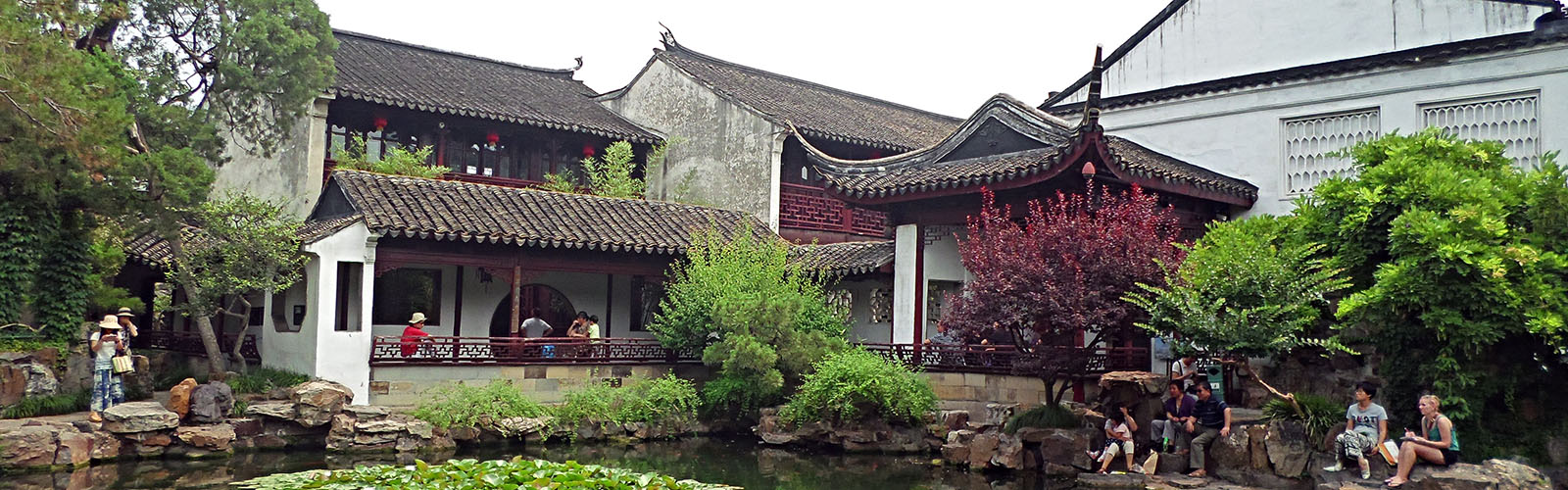
There will be opportunities to study Chinese well-being through simple physical exercises, brush painting, calligraphy, Chinese words and cooking. We will virtually travel to five unique cities in China and take “field trips'' to the following: The Great Wall, Summer Palace, The Forbidden City, Temple of Heaven, Azure Cloud Temple, as well as Chinese gardens, and villages. We will also explore modern architecture and art/design museums in the newly developing areas of Beijing and Shanghai.
This class will allow students to see firsthand examples of a variety of approaches for well-being. We will explore this topic by learning about Chinese Medicine/Health Centers (Acupuncture and Herbal Medicine), Tea Houses, Public Exercise Parks, Panda Museums and Breeding Centers.
In addition, one-on-one interviews and exchanges of life/education experiences with Chinese students, ordinary citizens, and professionals in your field will be offered through the course.
In-person Course Description (in-person tentative for Summer 2024)
Spend four weeks traveling through China while studying art, design and wellness. Students from diverse majors are encouraged to participate in this UW-Madison faculty-led seminar focusing on Chinese culture, arts, design, history development, and wellbeing. Places to visit may include Beijing, Chengdu, Suzhou and Shanghai.
The leading center of learning for over 700 years, China is home to breathtaking historical sites such as the Forbidden City and Imperial Palace, as well as modern building innovations of sleek office high rises and emerging industrial quarters. The extremely unique and important concept of Feng Shui has shaped many aspects of the way Chinese buildings, palaces, and other public and private spaces have been designed and built, making the entire city a laboratory for studying Feng Shui's impact on design, culture and economical development.
Over 5,000 years old, China has been developing at an amazing speed and now welcomes visitors from all around the world to explore its past and present. The biggest country in Asia and having the largest population in the world, China displays an extraordinarily rich cultural art design heritage.
With Feng Shui principles deeply embedded within the East Asian’s way of life, China is a perfect venue for studying Asian culture, art, design, and its impact on human development and wellbeing. You can read more about Feng Shui and Professor Wei Dong in this Active Times article.
Learning Objectives
We have overall Goals and Expectations for Study Abroad Participants, covering the personal, academic and professional aspects of study abroad. Additionally on this program, you can:
Gain a basic understanding of Chinese culture, arts, design and wellbeing through hands-on information gathering at key historical sites
Be able to articulate own view of well-being through exposure to Western and Eastern concepts of well-being
Demonstrate an understanding of Chinese culture and act in culturally appropriate ways
Engage in meaningful cross-cultural interaction with Chinese citizens
Understand how individual citizens can play an integral role in fostering foreign relations
Diversity & Inclusion
We are committed to providing quality study abroad and domestic study away programs for every UW-Madison student. We work strategically to identify, address, and remove barriers that may prevent participation and to provide a welcoming and inclusive environment for students. Our staff actively engages with students, faculty, and staff from diverse backgrounds and prioritizes the continuous development of our knowledge and cultural competence. We also recognize the importance of increasing access to study abroad for historically underrepresented student populations. We are committed to diversity and inclusion so that every student can engage with and understand their identity through a new lens and continue to develop and make progress on their personal, professional, and academic goals.
Sustainability
We recognize that the future of study abroad, domestic study away, and international internship programming requires a Commitment to Sustainability. We are devoted to examining, developing, and improving sustainability in all our endeavors, aligning with campus priorities and following through with UW-Madison's climate action and Resilience Commitment. Join our efforts and learn more about how to study abroad sustainably.
Request Information
Join our email list to receive program updates-including application notices, scholarship information, and more!
Eligibility
- 2.0 cumulative GPA
- Sophomore, Junior, Senior, Graduate Student
- Open to UW-Madison degree-seeking students and Wisconsin residents seeking a degree at a US college or university. Preference is given to UW-Madison students
- Good academic and disciplinary standing
- At the time of application and the semester prior to participation, UW-Madison students must be currently enrolled. Transfer Students to UW-Madison need to be currently enrolled at their home institution
Advising Location

Program Structure
UW Signature
Subjects
Humanities
Classroom Language
English
Housing
Hotels, Residence Hall
Program Duration
Summer 2023: May 15 June 2
Application Deadline(s)
Future durations will be posted at a later date.
APPLY NOW
This course offers a unique and exciting opportunity to study Chinese culture, arts, design and wellbeing. In addition to guided readings and lectures by course leaders, the class will also attend lectures by local professors, many of whom are among the worlds leading experts in their fields.
While making cultural observations and visiting historic sites will provide context, the program’s primary academic theme is to gain a deep comprehension of China's culture, arts, design and wellbeing. Students from varied academic disciplines will examine issues relating to culture and environment through a variety of lenses. It is vital to examine these issues while also observing the strong contrast between undeveloped and developed areas in China.
Course Equivalents
Use the links below to see a list of courses that past students have taken on this program and the UW equivalents. Note: This list only includes pre-approved courses for your program and may not be an exhaustive list of courses, departments or equivalents. Courses may not be available the semester you are abroad. You will receive instructions on the course equivalent process after acceptance. View Course Equivalents
Program Leader
Professor Wei Dong